Ahead of the U.S. Federal Reserve's (Fed) benchmark interest rate decision, concerns have emerged from some officials that the recent easing trend in inflation may be 'temporary.' Fed officials are reportedly still worried about whether wages and inflation can sufficiently slow down without triggering a recession.
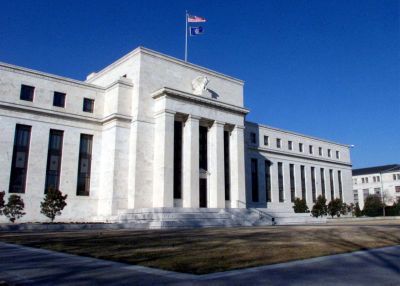
The Wall Street Journal (WSJ) reported these concerns from officials in an analysis article titled "Why the Fed Is Not Ready to Declare Victory Over Inflation" on the 24th (local time).
WSJ stated, "Due to uncertainty about the inflation trajectory, it is difficult to predict the Fed's next move after raising rates by 0.25 percentage points this week," adding, "Some officials and economists worry that the easing of inflation will be temporary. They see that underlying inflationary pressures persist, requiring the Fed to raise rates further and keep them elevated for longer."
With the July Federal Open Market Committee (FOMC) regular meeting scheduled for the 25th-26th, the market has already factored in a baby step (a 0.25 percentage point increase in the benchmark interest rate) as a given. The key focus is on the meetings after September. Currently, the market views the scenario where the Fed's tightening cycle ends with one more rate hike this month as the most likely. This is largely due to recent major inflation indicators, including the Consumer Price Index (CPI), showing clear signs of easing, which has increased expectations for a 'soft landing.'
However, WSJ's assessment is that even within the Fed, there is still caution that the fight against inflation has a long way to go. Karen Dynan, an economist at Harvard University, pointed out, "Inflation seems to be moving in the right direction, but this is only the beginning of a long process."
Those advocating for additional tightening are wary that it is difficult to be confident inflation will return to the 2% price stability target within a few years. Indicators suggesting an overheated labor market, such as recent wage growth trends, continue to emerge. The Fed has stated that ending the tightening cycle and shifting to rate cuts requires below-trend low growth and a cooling labor market. WSJ reported, "Many economists are concerned about strong wage growth," adding, "If there is no recession, the labor market is expected to push core inflation higher next year."
According to the Chicago Mercantile Exchange (CME) FedWatch, the federal funds (FF) rate futures market currently reflects a more than 98% probability that the Fed will raise rates by 0.25 percentage points at the FOMC meeting on the 25th-26th. This would bring the U.S. benchmark interest rate to 5.25-5.5%, the highest level since 2001. The probability that the Fed will hold rates steady at the next meeting in September is about 83%. The forecast for another baby step increase in September is only in the 15% range.
Accordingly, investors' attention is focused on Fed Chair Jerome Powell's remarks. With about two months between this week's FOMC and September, the key will be what clues Chair Powell provides at the press conference on the afternoon of the 26th. Later in the week, the Personal Consumption Expenditures (PCE) price index, the Fed's preferred inflation gauge, will also be released. The core PCE price index is expected to have risen 4.2% year-over-year, slowing from the previous month’s 4.6%.
© The Asia Business Daily(www.asiae.co.kr). All rights reserved.
!["The Woman Who Threw Herself into the Water Clutching a Stolen Dior Bag"...A Grotesque Success Story That Shakes the Korean Psyche [Slate]](https://cwcontent.asiae.co.kr/asiaresize/183/2026021902243444107_1771435474.jpg)
















