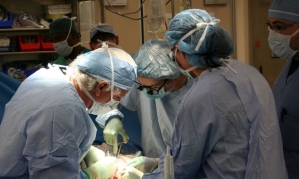
Ministry of Foreign Affairs Announces Crackdown Policy on 'Contaminated Water Fake News'
Controversy Over Exclusion of Critical Media at Tokyo Electric Power Briefing
As the release of contaminated water from the Fukushima Daiichi Nuclear Power Plant approaches, Japan's Ministry of Foreign Affairs has announced that it will actively respond to critical articles in foreign media, intensifying the controversy. Previously, during a briefing session on the nuclear plant's discharge facilities held by Tokyo Electric Power Company (TEPCO) for foreign media, some South Korean outlets were explicitly excluded, leading to international criticism.
According to NHK on the 24th, Foreign Minister Yoshimasa Hayashi held a press conference the previous day, stating, "There is fake information based on groundless speculation circulating on the internet regarding the plan to release contaminated water from the Fukushima Daiichi Nuclear Power Plant," and added, "We will focus on measures such as disseminating information based on scientific evidence."
He cited the case of verifying fake news involving "allegations of the Japanese government's financial contributions to the International Atomic Energy Agency (IAEA)." NHK reported, "The Ministry of Foreign Affairs' fake news task force found reports by South Korean internet media claiming that the Japanese government made large political donations to the IAEA," and "the Ministry of Foreign Affairs denied these claims as unfounded." This is interpreted as a declaration of intent to actively respond not only to domestic media but also to critical articles by foreign media.
The Ministry of Foreign Affairs intends to strengthen crackdowns on fake news related to the contaminated water release. They will use artificial intelligence (AI) to collect information and, upon discovering information not based on facts, will demand its removal and have the government issue rebuttals.
Foreign Minister Hayashi stated, "We firmly oppose the spread of fake news and false information," and "We will take necessary measures against the dissemination of malicious information."
Not only the Ministry of Foreign Affairs but also the Ministry of Economy, Trade and Industry and TEPCO, which manages the Fukushima nuclear plant, have joined the publicity efforts. On the 19th, the Ministry of Economy, Trade and Industry held a press conference for the diplomatic corps in Japan, announcing that it was the 122nd briefing session since the Fukushima nuclear accident.
During the briefing, they introduced the contents of the IAEA's final report, which Japan uses as the basis for the release, and conveyed that the IAEA plans to establish a local office to manage the situation even after the contaminated water discharge.
TEPCO also held consecutive briefing sessions for embassy staff in Japan and foreign journalists. On the 20th, they held an online briefing for 56 embassy staff members from 46 countries and regions, including South Korea, China, and Hong Kong, and the following day, they invited 15 foreign journalists, including those from South Korea, to the Fukushima Daiichi Nuclear Power Plant for an on-site briefing showcasing the discharge facilities.
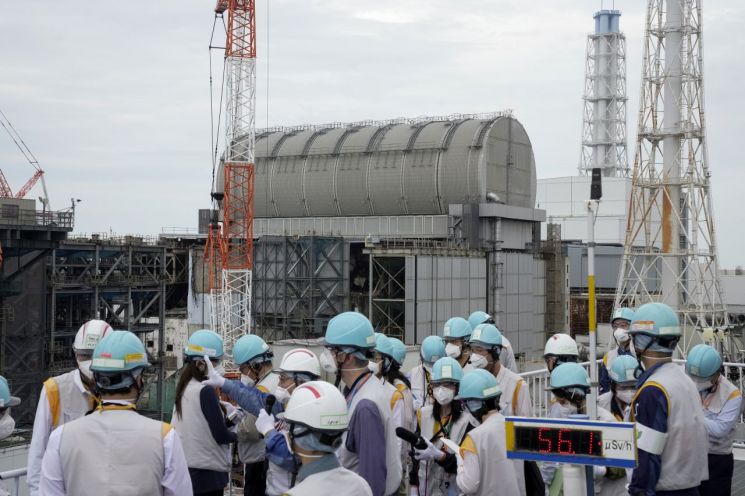
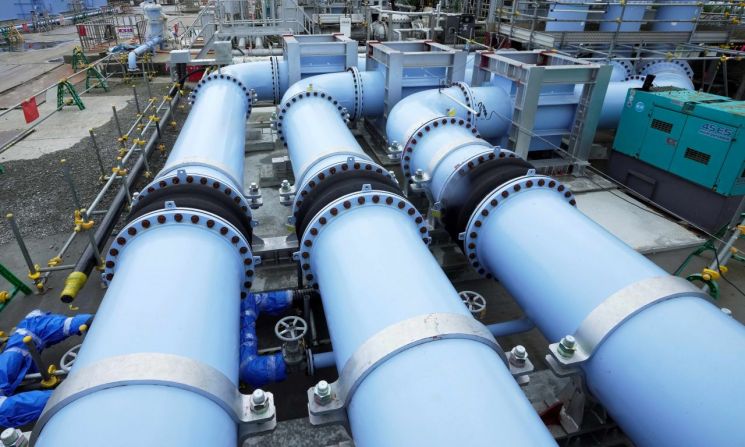
At this briefing, TEPCO introduced the radioactive measurement tanks, transfer pumps, and emergency shut-off valves for contaminated water that had passed through the Advanced Liquid Processing System (ALPS), emphasizing safety. They repeatedly mentioned the IAEA report's content that "the impact on the human body and others is negligible," similar to other briefings.
However, controversy has arisen over TEPCO's method of selecting participants, with accusations that "certain media outlets were excluded," which seems to have worsened public opinion. TEPCO excluded only Hankyoreh and MBC among the media outlets that applied for on-site inspections. This led to criticism that they refused coverage from media outlets critical of Japan. TEPCO has not provided a specific response to this issue.
© The Asia Business Daily(www.asiae.co.kr). All rights reserved.