Rapid Decline in Driving Range Starting at 37.7°C
"No Long-Term Damage to Battery Performance"
Electric vehicles have been found to be vulnerable not only to severe cold but also to extreme heat. Driving range significantly decreases during intense heat.
On the 22nd (local time), automotive news outlet Automotive News reported that the recent heatwave in the southwestern United States has brought to light the issues electric vehicles face in hot weather.
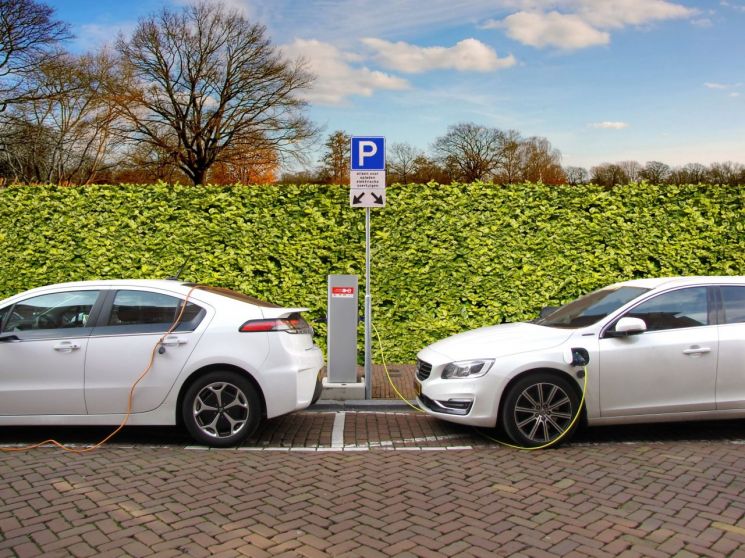
Recurrent, a U.S.-based battery and driving range analysis company, recently released a report after testing electric vehicles under various weather conditions. The test included 65 pure electric and plug-in hybrid models, such as all Tesla models including the Model 3, Chevrolet Bolt, Hyundai Motor's Kona EV, Nissan Leaf, Ford F-150 Lightning, and Mustang Mach-E.
According to the report, most electric vehicles on the market experienced a significant reduction in driving range as temperatures rose, with some models seeing a drop of up to 31% when temperatures reached above 37.7 degrees Celsius.
However, the loss rate was moderate below 37.7 degrees Celsius. At 32.2 degrees, the average loss was 5%, and at 26.7 degrees, it was 2.8%.
Recurrent did not disclose the worst-performing models in this test. Tesla was identified as the model with the least performance degradation due to the heatwave.

Scott Case, CEO of Recurrent, analyzed, "Tesla vehicles perform better in hot conditions because they use a heat pump instead of a standard air conditioning system."
Greg Less, technical director at the University of Michigan's Battery Lab, explained, "When temperatures exceed 40 degrees Celsius, the passive release layer of the cathode begins to decompose, consuming the liquid electrolyte and shortening battery performance," but added, "Since vehicles are not always operated in temperatures above 40 degrees and there are systems to cool the battery, heat does not cause long-term damage to electric vehicle battery performance."
Previously, electric vehicles showed issues such as reduced charging speed and shorter driving range in severe cold. At low temperatures, internal battery resistance increases, leading to longer charging times. The slower charging speed not only causes inconvenience due to the extended time required but also results in higher charging costs.
© The Asia Business Daily(www.asiae.co.kr). All rights reserved.


















