Court: Designating Children as Insurance Beneficiaries Grants Unique Rights According to Contract
The Supreme Court has ruled that the insurance payout from an 'inheritance-type immediate annuity insurance' received by children after their parents' death is not considered inherited property. The ruling states that the children, designated as beneficiaries in the insurance contract, acquired the payout according to the contract's effect, rather than inheriting the parents' assets.
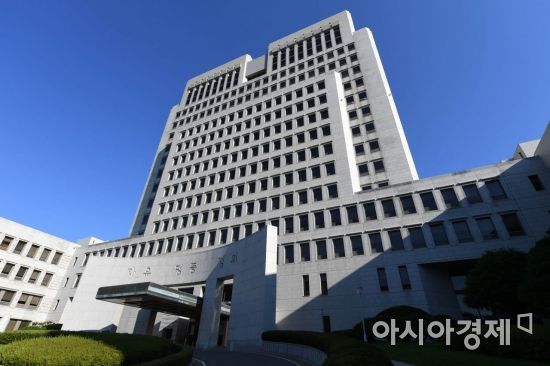
The Supreme Court's Second Division (Presiding Justice Jo Jae-yeon) announced on the 24th that it overturned the lower court's ruling in favor of plaintiff A in a loan lawsuit against the children of deceased B and remanded the case to the Busan District Court.
B had promised to repay 30 million won to A in 1998 but failed to do so. A filed a lawsuit against B in 2008 and won the case. However, B did not repay the money to A until B's death in 2015.
B had subscribed to an inheritance-type immediate annuity insurance during his lifetime, where the subscriber pays a lump sum premium of 100 million won and then receives a fixed monthly survival annuity. If the subscriber survives until maturity, they receive the annuity, but if they die before maturity, the beneficiary receives the principal (insurance premium paid).
After B's death, B's children received 38 million won in insurance proceeds in 2016 and in 2017 made a 'limited acceptance of inheritance,' agreeing to repay debts within the limits of B's remaining estate. A, who was owed money, filed a lawsuit against B's children demanding repayment.
The dispute in court centered on whether B's children’s receipt of the insurance payout without listing it in the inheritance property inventory constituted a case of 'statutory simple acceptance.' Statutory simple acceptance means that if an heir disposes of, conceals, or fraudulently consumes the inherited property or intentionally omits assets from the inventory, they are deemed to have accepted the inheritance outright, even if they had made a limited acceptance.
The first trial court ruled that B's children had made a limited acceptance of inheritance and ordered them to fulfill debts only within the scope of the inherited estate. However, the appellate court held that the insurance payout received by B's children was part of the inherited estate and that receiving and consuming the insurance money constituted statutory simple acceptance under civil law, requiring debt repayment without limit.
However, the Supreme Court's judgment differed. The Supreme Court ruled that the insurance payout acquired by B's children was their own property, not inherited property.
The court stated, "The inheritance-type immediate annuity insurance contract provides for payment of insurance proceeds if the insured dies before maturity, thus it is a life insurance contract covering both death and survival as insured events. The right to claim death insurance proceeds is a unique right acquired by the defendants, designated as beneficiaries upon the insured's death, according to the contract's effect, and is not inherited from the deceased."
© The Asia Business Daily(www.asiae.co.kr). All rights reserved.

















