Will this really be the last rate hike? Ahead of this week's interest rate decision by the U.S. Federal Reserve (Fed), the market has already priced in a 'baby step' (a 0.25 percentage point increase in the benchmark interest rate). With another rate hike highly likely, the key focus is on the 'next step' following September. Attention is therefore centered on whether hints of an imminent end to the tightening cycle can be gleaned from Fed Chair Jerome Powell's press conference. This week, the Fed's preferred inflation gauge, the Personal Consumption Expenditures (PCE) Price Index, will also be released.
According to the Chicago Mercantile Exchange (CME) FedWatch on the 23rd (local time), the federal funds (FF) futures market currently reflects a 99.8% probability that the Fed will raise interest rates by 0.25 percentage points at the Federal Open Market Committee (FOMC) meeting scheduled for June 25-26. This is up from around 71% a month ago and 96% last week, solidifying expectations for a baby step. If this happens, the U.S. benchmark interest rate will reach 5.25-5.5%, the highest level since 2001.
Unlike the Fed, which indicated two rate hikes this year through its dot plot, the market views a scenario where the Fed's tightening cycle ends after one additional hike this month as the most likely. The futures market currently prices in about an 85% chance of a rate hold in September following this month's baby step. Expectations for another baby step in September stand at only 15%.
This is based on analyses that, given the recent clear easing in key inflation indicators such as the Consumer Price Index (CPI) and Producer Price Index (PPI), the Fed is unlikely to pursue further tightening aggressively. The growing optimism around a so-called 'soft landing,' where inflation falls without a recession, is also related. Deutsche Bank recently noted in an investor memo that "the line between a mild recession and a soft landing is becoming increasingly blurred," and that "the likelihood of the latter (soft landing) is increasing." Former Fed Chair Ben Bernanke predicted, "It will take more time for inflation to fall to the Fed's price stability target of 2%," but also said, "This hike could be the last."
However, there are still many voices pointing out that the battle against inflation is far from over. Core inflation, which excludes food and energy, remains close to 5%. James Knightley, Chief Economist at ING Financial Markets LLC, noted, "Inflation is slowing, but not fast enough for the Fed." Indicators suggesting an overheated labor market could also pose obstacles. The Fed has stated that ending the tightening cycle and shifting to rate cuts requires below-trend low growth and a cooling labor market. Joseph Gagnon of the Peterson Institute for International Economics (PIIE) said, "I don't think they (the Fed) will stop."
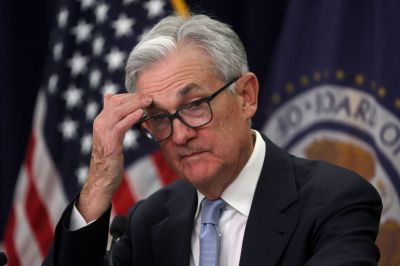
Currently, market attention is focused on Chair Powell's remarks. With about two months between this week's FOMC and September, the clues Powell provides during the press conference on the afternoon of the 26th are expected to be crucial. Anna Wong, an economist at Bloomberg Economics, conveyed that "mixed economic data following the June FOMC suggests that internal Fed debates about whether the July rate hike will be the last have not been resolved." Nationwide's Chief Economist Kathy Bostjanick described Powell's press conference as "key." Morgan Stanley also predicted in an investor memo that "Powell will clarify which indicators the FOMC will monitor to justify extending the pause." Some analysts suggest that Powell may refrain from giving a clear stance at this press conference and instead wait to review additional data, delivering a clearer message at the Jackson Hole meeting at the end of August.
This week, major indicators that could impact Fed monetary policy are also scheduled for release. The core PCE Price Index, expected to be announced later in the week, is forecast to rise 4.2% year-over-year, down from 4.6% the previous month. If the PCE Price Index surprises on the upside, concerns about further tightening by the Fed could intensify again. Other data to be released during the week include the preliminary estimate of U.S. second-quarter Gross Domestic Product (GDP), June durable goods orders, and the July University of Michigan Consumer Sentiment Index.
The earnings season continues as well. Bloomberg News reported that about 170 companies, representing 40% of the S&P 500's market capitalization, will release earnings this week. Alphabet, Google's parent company, Microsoft (MS), General Electric (GE), General Motors (GM), Coca-Cola, McDonald's, Ford Motor Company, Intel, and ExxonMobil are among those scheduled to announce second-quarter results. Although S&P 500-listed companies are expected to report a third consecutive quarter of earnings decline, future profit outlooks are improving.
© The Asia Business Daily(www.asiae.co.kr). All rights reserved.

















