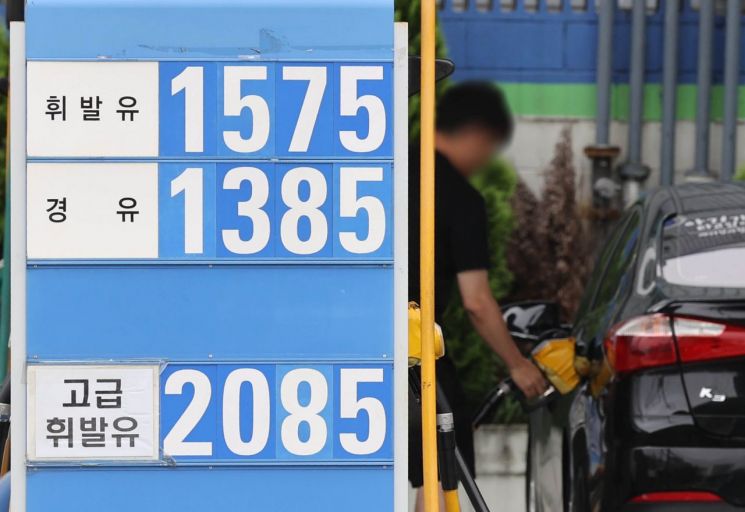
Due to the rise in international oil prices, the selling prices of gasoline and diesel at domestic gas stations have increased for two consecutive weeks.
According to the Korea National Oil Corporation's oil price information system OPINET on the 22nd, the average selling price of gasoline at gas stations nationwide in the third week of July (16?20) recorded 1,583.7 KRW per liter (L), up 11.5 KRW from the previous week. The diesel selling price rose 12.8 KRW from the previous week to 1,394.9 KRW.
The average price this week in Seoul, the region with the highest gasoline price in Korea, rose 15.1 KRW to 1,657.7 KRW, while Ulsan, the region with the lowest price, increased by 13.5 KRW to 1,554.8 KRW. By brand, SK Energy gas stations were the most expensive at 1,592.1 KRW, and budget gas stations were the cheapest at 1,549.3 KRW.
This week, international oil prices are on the rise due to factors such as a weekly decrease in U.S. oil inventories and a sharp increase in China's crude oil imports in June. The average price of Dubai crude, the benchmark for imported crude oil prices, recorded 80.3 USD per barrel, up 0.3 USD from the previous week.
New York oil prices have continued to rise for four consecutive weeks through this week.
On the 21st (local time), the price of West Texas Intermediate (WTI) crude oil for September delivery on the New York Mercantile Exchange closed at 77.07 USD per barrel, up 1.42 USD (1.88%) from the previous day, marking a four-week consecutive increase.
With U.S. economic indicators stronger than expected and inflation rapidly slowing, expectations for a soft landing of the economy are growing. The outlook that the U.S. Federal Reserve's (Fed) interest rate hikes are nearing the end and the weakening of the dollar also contributed to the rise in oil prices.
The Korea Petroleum Association forecasted that domestic gasoline and diesel prices will continue to rise for the time being due to the increase in international oil prices. This is because China, the largest crude oil importer, is strengthening its government’s economic stimulus policy, and the U.S. driving season is in full swing, pushing up international petroleum product prices.
© The Asia Business Daily(www.asiae.co.kr). All rights reserved.

















