Seoul apartment prices have risen for nine consecutive weeks, with all 25 autonomous districts escaping from declines. Nationwide, prices have turned upward for the first time in about 18 months.
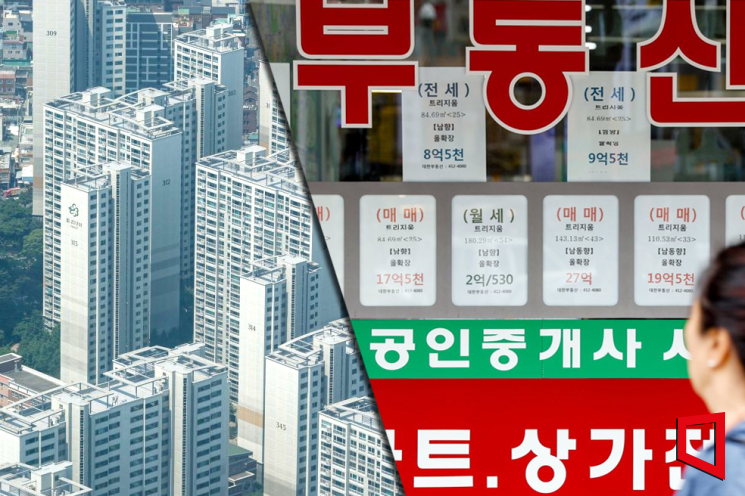
According to the 'Weekly Apartment Price Trend' announced by the Korea Real Estate Board on the 20th, Seoul apartment prices rose by 0.07% in the third week of July (as of the 17th). This marks the ninth consecutive week of increase, with the largest rise during this period.
The Real Estate Board explained, "After the rapid sale of major complex's urgent sale listings, asking prices have risen and transactions are cautious, but rising transactions in some preferred areas have spread expectations to surrounding regions."
By district, all rose except Dobong-gu (0.00%). Mapo-gu increased by 0.15%, followed by Songpa-gu (0.14%), Gangnam and Gangdong-gu (each 0.11%), Seongdong and Eunpyeong-gu (each 0.10%). Gangbuk-gu, which had been declining until last week, turned to a 0.01% increase, and Nowon-gu also rose 0.03% after two consecutive weeks of decline.
Apartment prices in the metropolitan area including Seoul (0.07%) also rose for the seventh consecutive week. Both Gyeonggi (0.04%→0.07%) and Incheon (0.05%→0.08%) saw an expanded rate of increase compared to the previous week.
In Gyeonggi, Gwacheon-si (0.50%), Hanam-si (0.49%), Hwaseong-si (0.41%), and Bundang-gu in Seongnam-si (0.39%) showed strong performance. Among these, Cheoin-gu (0.12%), which benefits from the development of a national industrial complex, rose for 17 consecutive weeks. In Incheon, Jung-gu (0.28%), Yeonsu-gu (0.23%), Bupyeong and Namdong-gu (each 0.07%) rose, while Gyeyang-gu (-0.05%) and Dong-gu (-0.02%) declined.
Nationwide, prices rose by 0.02%, marking the first increase in about 18 months since the fourth week of January last year (0.02%). However, there were regional differences, with declines except in Sejong (0.30%), the metropolitan area, Daejeon (0.02%), and Chungnam (0.01%).
Seoul apartment jeonse prices (0.07%) also rose for nine consecutive weeks. It is analyzed that the rise in transactions occurred after low-priced listings were exhausted mainly in complexes with relatively large declines or good residential conditions such as near subway stations. The Real Estate Board reported that jeonse prices continue to rise due to increased rental demand caused by apartment preference trends.
However, among the 17 cities and provinces, Sejong, which had the largest increase until last week, recorded no change (0.00%), resulting in nationwide jeonse prices also remaining flat.
© The Asia Business Daily(www.asiae.co.kr). All rights reserved.
![User Who Sold Erroneously Deposited Bitcoins to Repay Debt and Fund Entertainment... What Did the Supreme Court Decide in 2021? [Legal Issue Check]](https://cwcontent.asiae.co.kr/asiaresize/183/2026020910431234020_1770601391.png)
















