Korean Medicine Institute Reveals Efficacy in Alleviating Chronic Obstructive Pulmonary Disease
Advancing Respiratory Health Functional Product Development
The traditional herbal medicine 'Nahan-gwa,' widely used for respiratory diseases, has been found to have alleviating effects on chronic obstructive pulmonary disease (COPD) symptoms such as cough and phlegm, which are common among smokers.
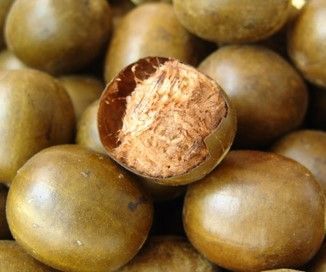
On the 20th, the Korea Institute of Oriental Medicine announced that Dr. Seong Yoon-young's research team from the Department of Korean Medicine Science discovered the COPD alleviation efficacy of Nahan-gwa extract. The research results were published on January 16 this year in the international academic journal Nutrients (IF 6.706).
COPD initially begins with mild shortness of breath, cough, and phlegm, and in its advanced stages, it can impair heart function, making it a significant social health issue. The most important risk factor is known to be smoking, but recently, fine dust and other air pollutants have also been identified as major causes.
The research team has been dedicated to developing therapeutic substances and health functional foods using natural products. This time, they conducted a study to find clues for COPD treatment from Nahan-gwa (scientific name Siraitia grosvenorii), a traditional herbal medicine well known for its sweetness. To verify the efficacy of Nahan-gwa extract, experiments were conducted using a COPD-induced animal model and human bronchial epithelial cells.
In the animal model, the extract suppressed inflammation 81.6% more effectively compared to the control group and showed improvement in phlegm. It significantly inhibited inflammatory responses by regulating hypersensitive immune reactions. Additionally, in bronchial epithelial cells, it was confirmed that the extract calmed inflammatory responses by an average of 76.7%. This demonstrates that Nahan-gwa extract can directly contribute to the treatment of pulmonary diseases. Since Nahan-gwa has been widely used to treat various respiratory diseases since ancient times, it was expected to be a material with high safety and minimal side effects.
The institute plans to transfer the technology to a private company for commercialization of respiratory health functional products based on these research results. Clinical trials have already begun.
© The Asia Business Daily(www.asiae.co.kr). All rights reserved.

















