US Security Company Strider Claims in Report
Among Them, "History of Releasing Reports Filled with False Information"
China has been accused of inducing more than 30,000 people who worked at European semiconductor and other technology companies over the past 20 years to relocate to China, thereby extracting important industrial secrets and know-how. Although the Chinese government strongly denies these claims, suspicions are growing in the United States and Western countries that the leakage of China’s core technologies has been carried out in an organized manner over a long period.
According to Bloomberg News and others on the 19th (local time), Strider Technologies, a security company headquartered in Salt Lake City, Utah, released a report on the same day claiming that over the past 20 years, the Chinese Communist Party’s United Front Work Department has focused on seeking semiconductor technology and talent across Europe to develop China’s semiconductor industry.
Strider pointed out that the Federation of Chinese Professional Associations in Europe (FCPAE) and one of its subsidiaries, the Europe-China Microelectronics Expert Forum, have taken on this role in Europe.
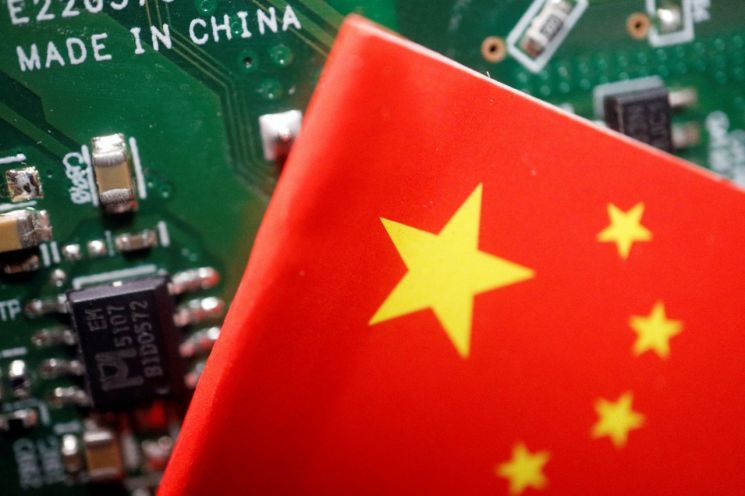
Strider analyzed global talent mobility data and found that more than 30,000 individuals who worked at major technology companies in Europe, including top-tier semiconductor firms, moved to companies headquartered in China over the past 20 years. Technical experts who had been staying in Europe relocated to China through various talent development programs supported by the Chinese government.
Personnel left companies such as Nokia, Ericsson, Siemens, Robert Bosch, and NXP, and many moved to companies like Huawei, ZTE, Lenovo, and Nexperia of Wingtech.
To illustrate this process, Strider cited an individual named Jin Xing (金星). He moved from China to Belgium in 1996 to work as a postdoctoral researcher at IMEC, a Belgian semiconductor research group. Later, in 1999, he joined the Dutch semiconductor company NXP as a senior engineer, acquiring European semiconductor technology and reportedly traveling to China at least seven times on business trips before leaving the company in 2010.
After leaving NXP, he returned to China in 2010 and began building a research and development (R&D) team in Europe that could collaborate with him on automotive semiconductor design work. Three years later, in 2013, he founded the semiconductor company AutoRock in China. In 2015, the company appeared at the Shanghai Motor Show. According to Strider, this individual was listed as the Chief Technology Officer (CTO) of the Shanghai Automotive Semiconductor Engineering Center until June of this year.
Bloomberg reported that "Strider states there is no evidence that this individual stole IP," but also noted that "in an interview with Chinese state media, he boasted that although he tried to protect confidential information at his previous European workplaces, he could not undo the knowledge and experience in his mind."
In addition to talent mobility, Strider claims that over the past 20 years, there have been more than 3,000 cases of cooperation between the Chinese government and European semiconductor companies, and about 200 Chinese government-related organizations, including state-owned enterprises, appear to have invested in European semiconductor companies.
Greg Levesque, CEO of Strider, said, "China is persistently and systematically striving to acquire advanced technology and know-how necessary to achieve its military and economic ambitions." He added, "Although European governments and the semiconductor industry are responding to these challenges, more must be done to protect talent and industrial competitiveness amid the semiconductor hegemony competition."
In response to these claims, the Chinese Ministry of Foreign Affairs stated in a release sent to Bloomberg, "This American company has previously issued reports full of fake information that slanders and attacks China," emphasizing that "China’s exchange of talent with foreign countries is no different from that of other nations."
© The Asia Business Daily(www.asiae.co.kr). All rights reserved.

















