Expansion of QR Code Application Starting with 'Budweiser Zero'
OB Beer announced on the 20th that it has joined the Ministry of Food and Drug Safety’s ‘Food Label Simplification Project,’ which provides some food labeling information via QR codes, by introducing a ‘Smart Label (QR code).’
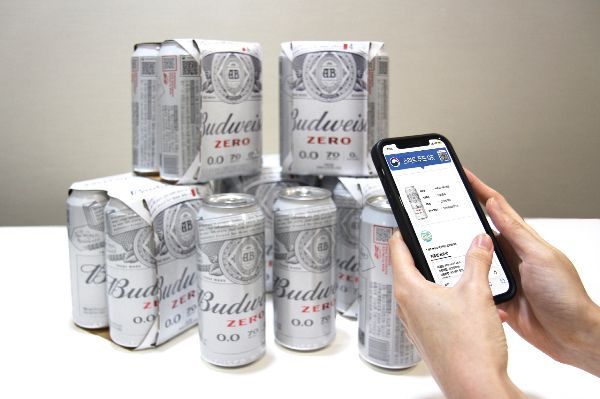
The Ministry of Food and Drug Safety is promoting a pilot project for ‘Food Label Simplification’ using smart labels to enhance consumer convenience and readability of food labeling information. The plan aims to improve the issue of poor readability caused by displaying a large amount of information in a limited space and to reduce label disposal costs incurred whenever label information is revised.
Through the introduction of smart labels, OB Beer guarantees consumers’ right to know and actively participates in reducing unnecessary packaging waste. The first product to apply the smart label, the ‘Budweiser Zero’ can package, was launched on the 14th, and the smart label will be expanded to other beer brands such as Cass.
With the adoption of the smart label, OB Beer has increased the font size and width of the seven mandatory labeling items previously printed on the packaging, making them significantly larger than before, while providing the remaining information via QR code. Consumers can intuitively grasp the essential information needed for safe food selection and easily access more detailed information by scanning the QR code.
The seven mandatory labeling items required by the Ministry of Food and Drug Safety are ▲Product Name ▲Content (Calories) ▲Manufacturer Name ▲Expiration Date ▲Storage Method ▲Consumer Safety Precautions ▲Sodium Comparative Labeling. Other information such as ▲Ingredients ▲Nutritional Information ▲Manufacturer Location ▲Product Report Number ▲Nonconformity Information ▲Traceability Information can be checked through the QR code.
An OB Beer official stated, “We proactively introduced the smart label in agreement with the government pilot project’s purpose to enhance the readability of essential food labeling information critical to consumer safety and product choice and to strengthen consumers’ right to know. By providing information digitally, we also expect to significantly contribute to environmental management by reducing packaging waste generated from label information changes.”
© The Asia Business Daily(www.asiae.co.kr). All rights reserved.

















