Blaming the West for Grain Agreement Termination
Pressuring with Five Key Demands
Russian President Vladimir Putin directly blamed the West for the collapse of the Black Sea Grain Initiative, stating that everything is the West's fault. At the same time, he presented five key demands to the West, including rejoining the international payment system, and pressured that if these demands are accepted, Russia will immediately return to the agreement.
Following the termination of the agreement, Russian forces have continued airstrikes on Ukraine's major grain export ports, while international grain prices have surged sharply, heightening concerns over a food crisis.
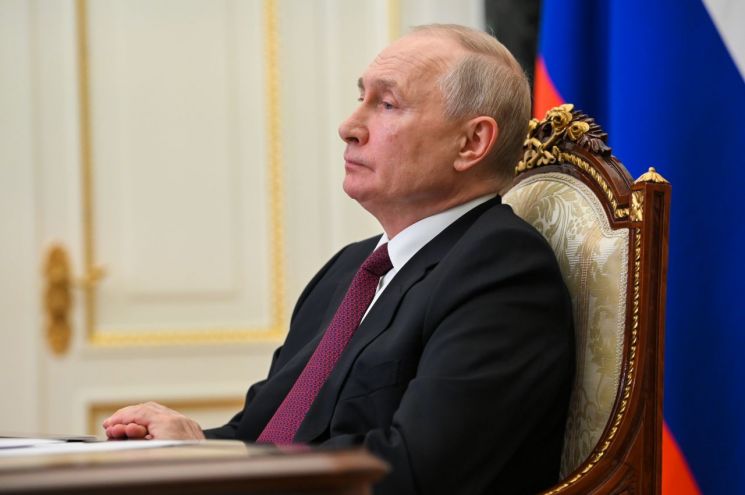
According to TASS news agency on the 19th (local time), President Putin directly mentioned the Black Sea Grain Initiative during a video government meeting held at the Kremlin and harshly criticized the West. Putin said, "The agreement was originally concluded on humanitarian grounds, but the West distorted the essence of the agreement, used it as political intimidation, and exploited it to fatten multinational corporations and speculators in the global grain market," strongly condemning the West.
He continued, "Over the past year since the agreement took effect, 32.8 million tons of Ukrainian grain were exported through the Black Sea route, but less than 3% of that volume was supplied to the poorest countries," emphasizing, "Russia exported 262,000 tons of fertilizer to support the poorest countries, but most of it was stuck at European ports due to sanctions against Russia."
Additionally, President Putin stated, "If the West fulfills the five key demands that Russia wants, we will immediately return to the agreement." The five key demands presented by Putin are: ▲ Russia Agricultural Bank's re-entry into the Society for Worldwide Interbank Financial Telecommunication (SWIFT) payment network ▲ lifting sanctions on agricultural machinery and spare parts exports to Russia ▲ lifting insurance and port entry restrictions on Russian ships and cargo ▲ restoring the ammonia pipeline section through Ukraine for fertilizer exports ▲ unfreezing accounts of Russian fertilizer companies. Ultimately, this indicates that Russia intends to use the grain agreement as a pressure card to ease sanctions against it.
Russian forces have also intensified their offensive on major Black Sea grain export ports, pressuring Ukraine and the West. Key grain export ports along the Black Sea coast, such as Odesa, Kherson, and Mykolaiv, have been subjected to airstrikes by Russian drones and cruise missiles for two consecutive days following Russia's withdrawal from the grain agreement.
As damage to major Black Sea ports continues, international grain prices are also soaring. The price of the September contract for U.S. wheat futures, a major indicator of international wheat prices, surged 8.5% from the previous session to 727.75 cents per bushel.
© The Asia Business Daily(www.asiae.co.kr). All rights reserved.

















