National Security Office, Joint Chiefs Receive Reports and Review Response Measures
New Negotiation Basis with North America May Be Established by SSBN Arrival at NCG
Presidential Office: "Consistently Delivering Messages of International Solidarity and Support"
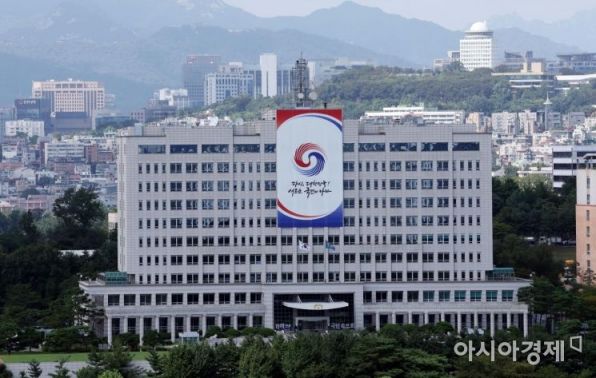
The National Security Office held a security situation review meeting in the early hours of the 19th immediately after North Korea's short-range ballistic missile launch. This provocation is assessed as a backlash against the previous day's launch meeting of the Korea-US Nuclear Consultative Group (NCG) and the visit of the US strategic nuclear submarine (SSBN) to Busan. However, the Presidential Office stated that it is not a matter warranting a National Security Council (NSC) meeting and plans to respond through real-time information sharing with the military and others.
At around 3:30 a.m. that day, after confirming North Korea's missile launch, the National Security Office held a security situation review meeting chaired by Lim Jong-deuk, the second deputy director of the National Security Office, received a report from the Joint Chiefs of Staff on the missile specifications and background, and reviewed response measures. North Korea's ballistic missile launch came just a week after the solid-fuel propelled intercontinental ballistic missile (ICBM) launch on the 12th, and all processes including the National Security Office's review meeting have been reported to President Yoon Suk-yeol.
The Presidential Office interprets this provocation as a show of force in response to the Korea-US NCG meeting in Seoul to strengthen extended deterrence against North Korea and the arrival of the US SSBN in Busan. Since the Washington Declaration adopted by President Yoon and US President Joe Biden in April included an agreement to "further enhance the regular visibility of US strategic assets," this is the first occasion in just over three months where that agreement has been translated into "action," making the NCG and SSBN inherently threatening to the North.
Moreover, the SSBN can operate ballistic missiles equipped with nuclear warheads, and since North Korea cannot detect the covertly submerged location of the SSBN, it has been regarded as the best means to deter North Korea's willingness for military provocations. At the first NCG meeting the previous day, Kurt Campbell, US NSC Indo-Pacific Coordinator, publicly stated, "For the first time in decades, a US nuclear strategic submarine is visiting Busan Port," reflecting this confidence. The SSBN visit to Korea is the first in 42 years since the visit of the Robert E. Lee (SSBN 601) in March 1981. Kim Tae-hyo, the first deputy director of the National Security Office, warned in a briefing immediately after the meeting that "any nuclear attack by North Korea against the US and its allies will lead to the end of the North Korean regime, and both Korea and the US will face an immediate, overwhelming, and decisive response to any nuclear attack against Korea."
The Presidential Office expects that, since an agreement was reached at the previous day's Korea-US NCG on "regular deployment and movement of nuclear power assets within Korea to periodically send strategic messages," measures to concretize and diversify this will be implemented. This is a strategy to deter North Korea's missile provocations, and President Yoon also urged the Korea-US delegations the previous day, saying, "I hope that from now on, with the determination that this is just the beginning, the will of the two heads of state will be concretized swiftly." A Presidential Office official stated, "The government's stance on the Korea-US alliance and the North Korean missile threat has always been consistent," adding, "So far, North Korea's missile provocations require accountability for violating UN Security Council resolutions, and the government will continue to send messages of solidarity and cooperation not only to the US but to the entire international community."
© The Asia Business Daily(www.asiae.co.kr). All rights reserved.

















