On the 18th, Dong-gu, Gwangju Metropolitan City announced the publication of a book containing stories related to the 'Inmunhakdang' (Humanities Hall).
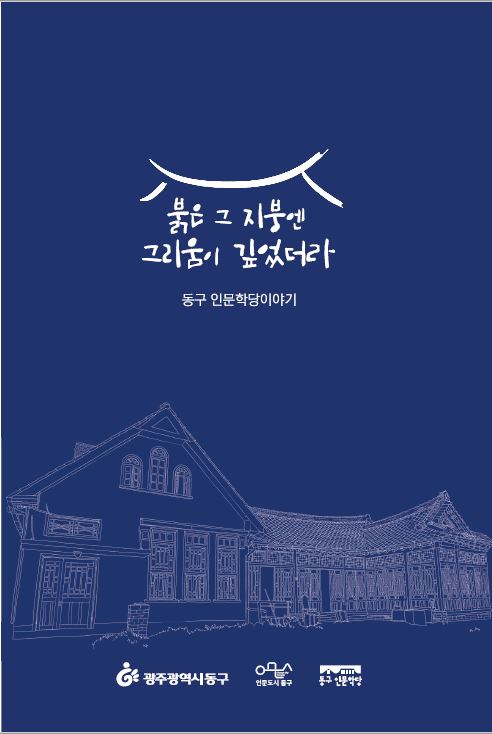
Part 1, titled ‘Stories of Dong-gu Inmunhakdang,’ weaves together the biography of Kim Seong-chae’s family, who built the old house in Dongmyeong-dong in 1954, with the modern history of Gwangju and the changes in the Dongmyeong-dong area during the Japanese colonial period and the liberation era, like warp and weft threads.
It warmly recounts children’s traditional games such as Ddakjichigi (playing with folded paper cards), Dabanggu (a traditional Korean game), and Ojingeo (Squid game), as well as the street scenes of the time including candy sellers and the culture of wooden benches, evoking nostalgic memories.
Part 2, ‘A House Reflecting the Era, A House Reflecting History,’ covers the architectural background and the significance of the space of Dong-gu Inmunhakdang, which features a unique structure combining hanok (traditional Korean house), Western-style, and Japanese-style elements.
Architect Jeong Gwang-min stated, “The old house in Dongmyeong-dong is an architectural example of an eclectic style that maintains tradition while reflecting new needs, fully embodying the changes in housing for common people,” adding, “It is a valuable asset that shows the changes in Gwangju and our modern architecture.”
The appendix introduces the newly established humanities hub space of Dong-gu Inmunhakdang and explains how to use it with accompanying photos.
Im Taek, Mayor of Dong-gu, said, “I hope this book will serve as a guide to understanding Dong-gu as a humanities city and widely promote the value of Inmunhakdang.”
© The Asia Business Daily(www.asiae.co.kr). All rights reserved.

















