Written during the 1940 Kanto Army reorganization
Contains information such as unit members' names and ranks
An official document containing the organizational structure and personnel list of the Japanese Kwantung Army’s biochemical unit, 'Unit 731,' which conducted horrific human experiments under the pretext of preparing for biological warfare, has been discovered.
According to Kyodo News on the 17th, the document, created by the Kwantung Army during a 1940 reorganization, includes information on the unit’s composition as well as the names and ranks of its members. The list of officers included 97 names with ranks, such as Commander Ishii Shiro. In addition to military doctors, medical scientists dispatched from medical schools were also recorded under the title 'Kishi' (engineer or technician).
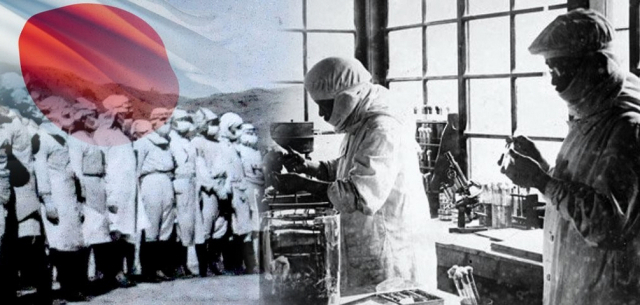 An official document containing the organizational structure and member list of Unit 731, a biochemical unit of the Japanese Kwantung Army that conducted horrific biological experiments under the pretext of preparing for germ warfare, has been discovered.
 [Photo by Yonhap News]
Alongside Unit 731, a personnel list of Unit 100, another so-called 'biological warfare unit,' was also found.
This is the first time that Japanese military records detailing the composition, names, and ranks of Unit 731 personnel have been discovered. Seiya Matsuno, a researcher at Meiji Gakuin University’s Institute of International Peace Studies who found the documents, said, "This will serve as evidentiary material to reveal who was involved in the unit and how they lived after the war."
Unit 731 was a secret Japanese unit established during World War II in the southern suburbs of Harbin, China, for the development of biochemical weapons. The unit was also colloquially known as the 'Maruta Unit,' where 'Maruta (丸太)' means a log stripped of its bark and shaped into a round or large cut piece. The Japanese military used this term metaphorically to refer to human subjects.
Doctors and scientists belonging to Unit 731 conducted cruel experiments by infecting subjects with various bacteria such as plague and anthrax, observing them, or performing vivisections. According to the list secured by Harbin city, it is estimated that more than 3,000 people died in the unit’s laboratories.
However, because Japan ordered the destruction of records related to Unit 731 just before its defeat, there has been a lack of concrete evidence to prove the atrocities. Kyodo News reported that with the official lists destroyed, it was common for those who conducted human experiments to conceal their past and find employment in hospitals or pharmaceutical companies. Attempts to uncover the truth have relied on fragmentary or indirect materials and testimonies.
Underground Laboratory of Unit 731 Revealed in China After 78 Years
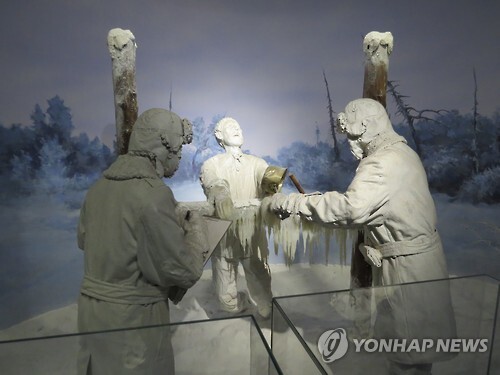 At the "Exhibition Hall of Crimes Committed by the Japanese Invading Army Unit 731" located in Harbin, China, various experimental scenes conducted on living people by the Japanese military are recreated. The scene shows Unit 731 members performing frostbite experiments on test subjects.
 [Photo by Yonhap News]
Earlier in June, traces of a torture chamber where the World War II war criminal nation Japan’s 'Unit 731' conducted inhumane human experiments during the war were revealed to the world for the first time in 78 years. Although numerous witness testimonies and experimental evidence have long suggested the existence of the 'Maruta experiments,' this is the first time physical traces of the laboratory have been found in 78 years.
A research team composed of Chinese archaeologists and Japanese scientists began an investigation in 2019 based on historical records that Unit 731 conducted human experiments at an underground base in Anda County, Heilongjiang Province. Using various techniques such as drilling and excavation, they confirmed the reality of the underground torture chamber and published the results in the Chinese archaeological journal 'Northern Cultural Relics.'
Understanding of the newly discovered underground facility is still at an early stage. The research team believes that additional excavation work is necessary to fully grasp the extent of the site. They expect that further excavations will secure more evidence of the brutal human experiments carried out by the Japanese military.
Meanwhile, Kyodo News speculated that more government documents may exist and pointed out, "The Japanese government needs to actively investigate and clarify the facts, including materials reportedly returned from the U.S. military."
© The Asia Business Daily(www.asiae.co.kr). All rights reserved.


















