"Everyone thought a hurricane was coming, but it hasn't arrived yet." The so-called 'soft landing' expectation?that inflation can be lowered without a recession?is gaining momentum on Wall Street. Recent economic indicators supporting this view have helped the stock market continue its rally. However, concerns remain that the mood could change at any time. This week, investors are closely watching upcoming data releases, including retail sales, as well as earnings reports from major companies like Tesla.
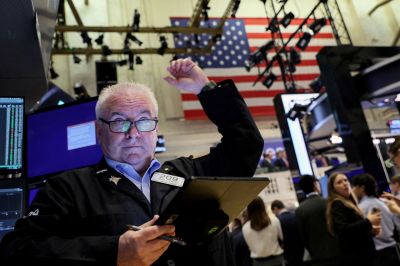
The daily Wall Street Journal (WSJ) reported on the 16th (local time) that Wall Street is more confident than ever in the trend of slowing inflation.
The previously released June Consumer Price Index (CPI) showed a 3% increase compared to the same month last year. This marks a drop from the peak of 9.1% in the same month last year to 3% in just one year. The core CPI, which the Federal Reserve (Fed) has been concerned about, also came in below market expectations, leading to widespread analysis that the tightening cycle is nearing its end. The Producer Price Index (PPI) for June, a wholesale price measure, rose by only 0.1%, the smallest increase since August 2020, reaffirming the trend of slowing inflation. U.S. import prices also declined for the second consecutive month.
WSJ stated, "Last week's data couldn't have been better," adding that "it gives investors hope that the Fed can curb inflation without pushing the economy into a recession." According to WSJ, a recent survey of economists showed the probability of a recession in the next 12 months at 54%, down from 61% in the previous two surveys. The forecast for U.S. second-quarter Gross Domestic Product (GDP) growth was sharply revised upward from 0.2% to 1.5%.
These expectations have already been reflected in the U.S. financial markets. The S&P 500 index, which is centered on large-cap stocks, surged 2.4% last week alone, marking the largest weekly gain in about a month. The year-to-date gains for the S&P 500 and Nasdaq indices stand at 17% and 35%, respectively. Meanwhile, expectations that the Fed's tightening could end soon have led to a decline in Treasury yields last week. In the New York bond market, the benchmark 10-year U.S. Treasury yield fell from 4.047% the previous week to 3.818% on the 14th. WSJ added that this weekly drop was the largest since March.
Additionally, large banks such as JPMorgan Chase and Wells Fargo, which were at the starting line of the earnings season, posted earnings surprises last week, further boosting soft landing expectations. These strong earnings indicate that U.S. consumers and businesses continued to borrow and spend in the second quarter.
Brad Conger, Deputy Chief Investment Officer (CIO) at Hirtle Callaghan, said, "Corporate earnings have been resilient, and inflation has not been a problem," adding, "Combining these two factors, the stock market can only go up." WSJ noted that while some indicators, such as declining median existing home prices and contraction in ISM manufacturing activity, confirm a slowing economy, the overall economy is avoiding a recession.
In particular, on Wall Street, there is speculation that if the Fed's rate hikes are limited to just one more increase this year as investors expect, the possibility of a rally in the New York stock market could increase. Previously, the Fed had signaled two baby steps (0.25 percentage point rate hikes) this year, citing inflation that was not falling as expected and an overheated labor market. However, if the cumulative tightening effects become visible in inflation indicators, the Fed would have no need to push further.
According to the Chicago Mercantile Exchange (CME) FedWatch tool, the federal funds (FF) rate futures market currently sees the highest probability for a rate hold in September following a baby step in July. Jeremy Siegel, a professor at the Wharton School of the University of Pennsylvania, recently told foreign media, "The June CPI is at a Goldilocks level," and assessed that "we are winning the war against inflation. It is an ideal environment for the stock market."
However, the soft landing expectations could be dashed. Reese Williams, Chief Strategist at Spurting Rock Asset Management, pointed out, "The market is clearly saying inflation has peaked," but also noted, "The data suggest the Fed still has work to do." The Personal Consumption Expenditures (PCE) price index, the Fed's preferred inflation gauge, rose 3.8% year-over-year in May. Although this was the smallest increase in two years, it still far exceeds the Fed's price stability target of 2%.
Another risk highlighted by WSJ is that economic momentum is faltering. The yield curve in the bond market is a prime example. Typically, an inverted yield curve?where long-term bond yields fall below short-term yields?is seen as a precursor to recession. This inversion has persisted for over a year. Additionally, indicators from the Conference Board also confirm recession concerns. Jason Ware, CIO of Albion Financial Group, said, "I still believe a recession is coming," predicting it will lead to corporate earnings hits and stock market declines.
Some analysts argue that the financial markets have already priced in soft landing expectations, leaving limited room for further gains. Deputy CIO Conger mentioned this possibility of forward pricing, saying, "It's hard to know what will push the market to higher levels."
This week, data releases including retail sales and earnings reports from Morgan Stanley and Tesla are scheduled. Despite high inflation and aggressive tightening, retail sales last month showed unexpectedly strong performance. Retail sales are considered a pillar of the U.S. real economy, accounting for two-thirds of it, and serve as a comprehensive gauge of economic health. Real estate and economic indicators such as the housing price index, new housing starts, existing home sales, and leading economic indicators will also be released.
Among financial firms, Morgan Stanley, Bank of America (BoA), Goldman Sachs, American Express, and PNC Financial are set to report earnings. It will be crucial to see if the earnings surprise trend among large banks continues. Earnings reports from big tech companies like Tesla and Netflix, which attract significant investor attention, will also be announced. According to FactSet, the net earnings of S&P 500-listed companies for the second quarter of this year are estimated to decline by more than 7% compared to the same period last year.
© The Asia Business Daily(www.asiae.co.kr). All rights reserved.
![User Who Sold Erroneously Deposited Bitcoins to Repay Debt and Fund Entertainment... What Did the Supreme Court Decide in 2021? [Legal Issue Check]](https://cwcontent.asiae.co.kr/asiaresize/183/2026020910431234020_1770601391.png)















