Continued Shift from Intravenous (IV) to Subcutaneous (SC) Injection
Reduces Time and Cost Burden, Enhances Drug Efficacy
Roche's 'Ocrevus' SC Conversion Clinical Success
Celltrion's 'RemsimaSC' FDA New Drug Application Submitted
Alteogen Continues Overseas Export of 'ALT-B4' Technology
Patients with autoimmune diseases and cancer often need to visit hospitals regularly for injections depending on their condition. But what if they could easily administer these injections themselves at home? Recently, there has been an increasing trend of drugs that were previously administered only via intravenous (IV) infusion at hospitals being reformulated into convenient subcutaneous (SC) injections. This approach not only enhances patient convenience and reduces costs but also allows pharmaceutical developers to expand their market share, leading to ongoing efforts in this direction.
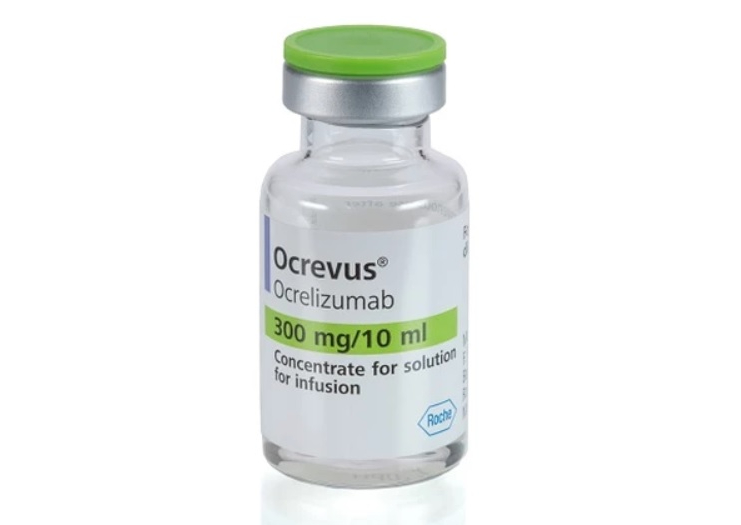
According to industry sources on the 17th, global big pharma Roche recently announced that the Phase 3 clinical trial 'OCARINA II' for converting the autoimmune disease multiple sclerosis treatment 'Ocrevus' (generic name: ocrelizumab) to an SC formulation demonstrated non-inferiority compared to the existing IV method.
Ocrevus, a blockbuster autoimmune disease treatment, generated global sales of 6.036 billion Swiss francs (approximately 9 trillion KRW) last year, maintaining its position as the top-selling drug in the global multiple sclerosis market. Previously, patients had to visit hospitals twice a year for injections, but going forward, they will be able to self-administer the injection at home in just 10 minutes.
The attempt to convert Ocrevus to an SC formulation is interpreted as a strategy to maintain its dominant position as its patent expires in the U.S. in 2029. With biosimilar development efforts becoming more visible?such as Celltrion rushing Phase 3 trials for 'CT-P53'?the company aims to strengthen the drug’s competitiveness and secure an advantage.
Switching to an SC formulation is analyzed to significantly reduce the time and cost burden of medication while maintaining efficacy. SC injections involve administering the drug at home using prefilled pens (PFP) into areas like the abdomen or upper arm, completing the process within 5 to 10 minutes. In contrast, IV administration requires medical staff at hospitals to insert a needle into a vein, which, while safe and accurate, can take from 2 hours up to 12 hours depending on the drug.
Regarding costs, a 2021 study predicted that introducing an SC formulation of the autoimmune drug infliximab in the UK could reduce related annual total costs by about half. In terms of efficacy, SC formulations can shorten dosing intervals compared to IV, which is expected to help maintain important in-body drug concentrations for sustained effectiveness.
Conversely, Biosimilars Lead SC Formulations... Celltrion's 'RemsimaSC'
For this reason, original drug developers often improve formulations to fend off generic competition as patent expiration approaches. Conversely, biosimilars have sometimes rapidly entered the market by launching SC products that the original manufacturers have not yet released. A prime example is Celltrion's 'RemsimaSC.'
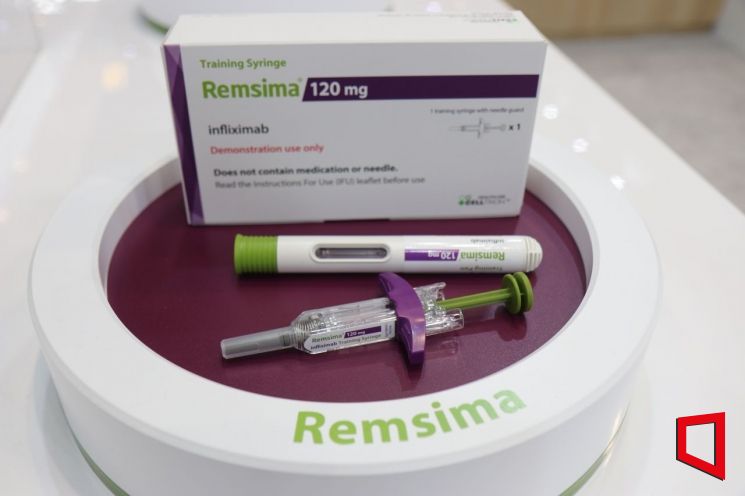
Remsima is Celltrion’s biosimilar of 'Remicade,' the world's first antibody biosimilar. It is the drug that established Celltrion's current position. Recently, Celltrion launched 'RemsimaSC,' an SC formulation of this drug. It is the only SC formulation among both original drugs and biosimilars. Because of this, the U.S. Food and Drug Administration (FDA) has recommended applying for approval as a new drug rather than a biosimilar, and the related approval process is underway. While biosimilars must compete fiercely on price with originals and other biosimilars, approval as a new drug can provide some freedom from such competition.
Domestic Companies with Platforms... Alteogen Collaborates with MSD
Expectations for SC formulation conversion are also growing in the oncology field. Roche’s immuno-oncology drug 'Tecentriq SC' is expected to have its FDA approval decision in September, and MSD (Merck & Co., U.S.), the maker of the world’s top-selling cancer drug 'Keytruda,' is conducting Phase 3 trials for SC conversion.
Industry insiders particularly speculate that the SC conversion platform 'ALT-B4' developed by Korean company Alteogen has been applied to Keytruda SC. In 2020, Alteogen exported ALT-B4 to one of the 'top 10 global pharmaceutical companies' under a contract worth up to $3.865 billion (approximately 5 trillion KRW), including an upfront payment of $16 million (about 2.04 billion KRW). Although the contracting party has not been disclosed, the inclusion of ALT-B4 in patents related to Keytruda’s SC formulation has led the industry to suspect MSD as the partner. In April, Alteogen also received a milestone payment of $13 million (about 1.65 billion KRW) related to this contract.
ALT-B4 is a technology based on human hyaluronidase. Alteogen and U.S.-based Halozyme Therapeutics, which provided the SC conversion technology for Ocrevus, are the only two companies worldwide to possess this technology. Alteogen claims that ALT-B4 has 1.5 times the activity and 10 times the productivity compared to Halozyme’s 'Enhanze.'
An industry insider explained, "In Korea, where access to medical institutions is good, patients sometimes prefer to receive IV injections at hospitals for safety reasons, so the benefits of SC may not be immediately apparent. However, overseas, patients may spend two hours just traveling to hospitals, effectively losing an entire day, and the cost of treatment is high. If SC conversion succeeds, competitiveness can greatly increase, leading to fierce development competition."
© The Asia Business Daily(www.asiae.co.kr). All rights reserved.



















