Seoul City announced on the 16th that it is boldly easing building regulations to increase urban green spaces and promote high-density, mixed-use development through the 'Green Ecological Urban Center Re-Creation Strategy,' currently being implemented in 10 locations within the city.
One of Mayor Oh Se-hoon's key policies, the Green Ecological Urban Center Re-Creation Strategy aims to reduce the building area on large-scale private development sites and create green and open public spaces on the lower floors, providing an environment where all citizens can freely enjoy rest and culture.
The city is promoting the Green Ecological Urban Center Re-Creation Strategy in 10 locations, including one urban planning facility project (Dadong Park) within an urban renewal redevelopment zone and nine districts proposed by residents, to allow citizens to directly experience the policy effects.
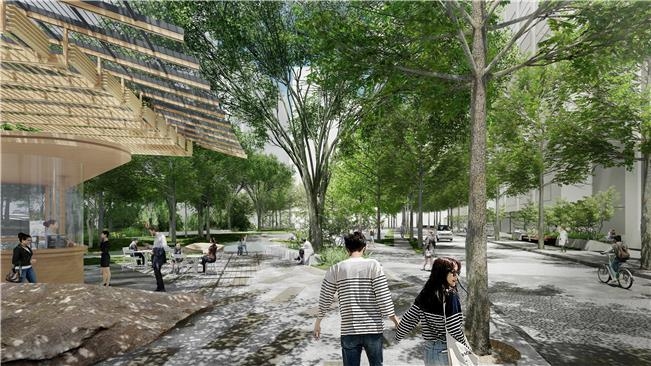
In the case of Dadong Park, part of the 'Mugyo-Dadong Urban Renewal Redevelopment Zone' project has not been implemented, resulting in the incomplete creation of the park, with the site currently used as a parking lot, police substation, and other facilities.
The city plans to proactively implement the Green Ecological Urban Center Re-Creation Strategy in this area to develop it into a standard urban park symbolizing Seoul's new vision.
For the partially developed park, the city will promote an urban planning facility project to create a park that blends cultural and environmental elements in a district dense with office and commercial facilities.
In the Seosomun area (Seosomun Building, Jungang Building, Donghwa Building), a large-scale green space will be created.
The existing open spaces in the three project districts lacked connectivity between adjacent sites, as they were designed considering only individual buildings, leading to privatization of green spaces and disconnection of green and pedestrian corridors. Through a public-private joint integrated planning, the city will create street-type green spaces, pine canopy areas, and valley forest spaces in this area.
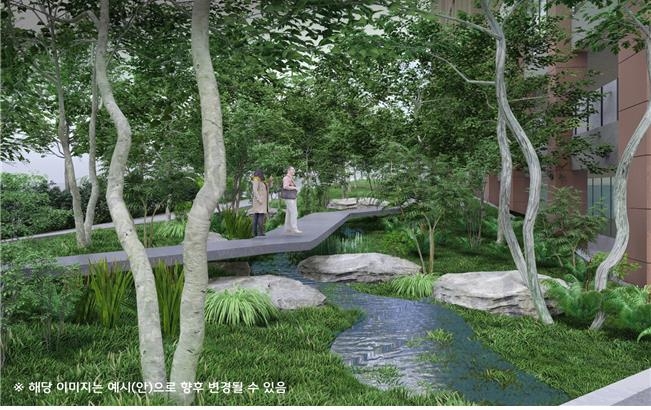
As a result, an open green space the size of Seoul Plaza (13,205㎡) will be created in the Seosomun area, and a new cultural hub featuring a large open garden accessible to everyone and a classical music performance hall will emerge amidst the building forest.
Specific guidelines for open green spaces will be established by the second half of this year.
The guidelines will cover all stages from planning to design, construction, and maintenance, focusing on five core concepts that open green spaces should embody: ecology, continuity, openness, vitality, and sustainability.
Mayor Oh said, "The more parks and green spaces we create in the city center, the more terrain is formed that allows rainwater to infiltrate," adding, "This increases permeability, allowing more rainwater to flow underground, which is expected to help control floods during heavy rains and mitigate urban heat island effects."
© The Asia Business Daily(www.asiae.co.kr). All rights reserved.
!["The Woman Who Threw Herself into the Water Clutching a Stolen Dior Bag"...A Grotesque Success Story That Shakes the Korean Psyche [Slate]](https://cwcontent.asiae.co.kr/asiaresize/183/2026021902243444107_1771435474.jpg)

















