Increase in Economic Activity Among Women and Elderly Interlinked
Experts Advise Active Preparation for the Era of Senior Economy
As women's participation in economic activities increases and the number of working elderly people continues to rise, it has been found that among women in their 60s, those earning money outnumber those engaged in childcare or housework.
According to the Statistics Korea National Statistical Portal (KOSIS) and the Economically Active Population Survey microdata on the 16th, the number of employed women in their 60s (aged 60?69) last month was recorded at 1,917,000, an increase of 145,000 (8.2%) compared to the same month last year.
Among the economically inactive population, 33,000 women in their 60s were engaged in childcare for preschool children, and 1,677,000 women in their 60s were doing housework. The number of employed women in their 60s exceeded the number of women in their 60s engaged in childcare or housework (1,710,000). The number of employed women in their 60s began to surpass those engaged in childcare or housework as of June last year.
Compared to last year, the number of women in their 60s engaged in childcare increased by 3,000, while those doing housework decreased by 17,000. This is interpreted as an increasing number of women in their 60s working for income instead of doing housework at home.
This phenomenon is linked to the trend of increasing economic participation of women along with the growing economic activity of the elderly. Last month, the economic activity participation rate of the elderly aged 60 and over was 48.2%, the highest for the same month since the related statistics began in June 1999. The employment rate also recorded an all-time high at 47.1%.
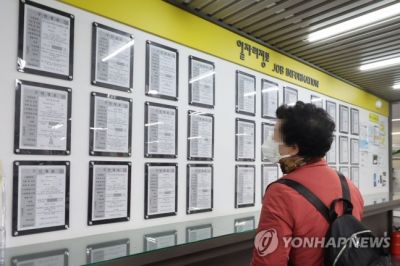
According to last year's supplementary survey on the economically active population, the proportion of elderly people (aged 55?79) who wish to work in the future also increased by 0.4 percentage points from a year earlier to 68.5%, indicating a continuous rise in elderly people wanting to work.
With the increase in dual-income households and the rising demand for care, the demand related to the health and social welfare services industry, where many women in their 60s are employed, also appears to have influenced this trend.
Among employed women in their 60s last month, 375,000 worked in the health and social welfare services sector, accounting for the largest share (20%) of all employed persons. Additionally, the number of employees in the health and social welfare services sector increased by 126,000 compared to a year ago, of which 37,000 were women in their 60s.
As the economic participation of elderly women increases, the overall employment of women is naturally on the rise. Last month, the female employment rate was 55.1%, the highest for the same month on record. The number of employed women last month increased by 332,000 compared to a year earlier, with 145,000 of them being women in their 60s, surpassing other age groups such as those in their 30s (96,000) and 50s (74,000).
As of 2022, South Korea's elderly population aged 65 and over exceeded 9 million, accounting for 17.5% of the total population. By 2025, this proportion is expected to surpass 20%, marking the entry into a full-fledged super-aged society.
Experts advise that the so-called 'Eldernomics,' referring to the elderly economy, should be proactively prepared for. The elderly should be viewed not as the opposite of youth but as an additional labor force and consumer group capable of working longer, and preparations should be made accordingly.
For example, Germany's employment rate for the elderly is the third highest among European Union (EU) countries, following Sweden and Denmark. According to the German Federal Ministry of Labour and Social Affairs (BMAS), as of 2021, the employment rate of the elderly population aged 55 to 64 was 72%, a 10 percentage point increase from 2012, nine years earlier. This is 12 percentage points higher than the average elderly employment rate of 60% among EU countries during the same period.
On the other hand, the proportion of non-regular employment among elderly workers is low. According to the German Federal Statistical Office, as of last year, the number of standard employees aged 55 to 65 was 6,539,000, while the number of atypical workers, including non-regular employees, was 1,775,000. This is the result of various policy supports to promote the labor market participation of the elderly.
© The Asia Business Daily(www.asiae.co.kr). All rights reserved.

















