Separate Billing and Collection of TV License Fees from Electricity Charges
Additional Costs Inevitable Due to Separate Collection
KEPCO "Considering Termination of Consignment Contract"
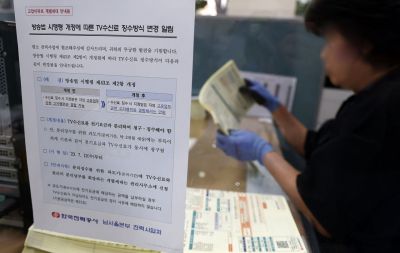
With the partial amendment to the Enforcement Decree of the Broadcasting Act, which mandates the separation of TV license fees from electricity bills for notification and collection, the increase in collection costs has become inevitable. Korea Electric Power Corporation (KEPCO), which is entrusted with collecting TV license fees, plans to pursue contract changes with KBS regarding the specific methods of separate collection and the burden ratio of increased costs. If negotiations prove difficult, KEPCO is also considering withdrawing from the entrusted collection business.
On the 16th, a KEPCO official stated, "We have requested KBS to change the entrusted collection contract for license fees and plan to discuss the collection methods and costs. If KEPCO ends up bearing all additional costs, we are also considering terminating the contract."
The Korea Communications Commission also said, "As soon as the amendment to the enforcement decree is promulgated, the legal basis for integrated collection disappears, so the 'integrated collection' part of the contract is considered null and void. KEPCO has no legal obligation to perform entrusted collection at a loss, and we believe KEPCO and KBS will negotiate contract matters such as appropriate cost-sharing plans."
Until now, KEPCO has been entrusted by KBS to collect TV license fees. This contract is renewed every three years, with the current contract valid until December 2024. KEPCO's position is that since the entrusted collection contract assumes integrated collection, additional costs arising from separate collection must be negotiated further. According to data submitted by KEPCO to the office of Kwon Myung-ho, a member of the People Power Party, the related costs incurred by KEPCO for separate notification and collection of TV license fees amount to 226.9 billion KRW. In 2021, integrated collection cost 41.9 billion KRW, but separate collection could incur an additional 185 billion KRW in expenses such as bill production and postal delivery fees.
A KEPCO official said, "If KEPCO has to bear all the increased collection costs, the losses incurred from TV license fee collection will be compensated through electricity charges. Complete separate collection is expected to be implemented as early as October, and we will try to negotiate contract changes with KBS as much as possible during this period to avoid public inconvenience."
It is also inevitable that KEPCO will have to increase the collection fees paid to management entities of collective buildings such as apartment management offices. KEPCO provides support funds to management offices for TV license fee tasks under the name of 'Apartment Management Support Fund.' In the case of apartments, electricity usage contracts are made with the management entity, not individual households. Until now, electricity charges and TV license fees have been collected together in the management fees, but if TV license fees are to be paid separately, individual households must apply to the management office. The management office must independently devise a method to collect TV license fees separately, which inevitably incurs additional costs due to separate bill issuance.
For KEPCO to completely separate the notification and collection of TV license fees from electricity charges through negotiations with KBS, a preparation period of about three months is required to establish infrastructure for bill production and dispatch, as well as to improve the payment system. Therefore, until a complete separate collection system is established, KEPCO will continue integrated billing as before but allow customers to pay TV license fees separately if they wish.
© The Asia Business Daily(www.asiae.co.kr). All rights reserved.

















