Yoon Administration Imposes Independent Sanctions on Four, Including Chief of Political Bureau Jeong Gyeong-taek
Rapid Promotion from National Security Minister Monitoring Ideology
Former Propaganda Chief Park Gwang-ho Sanctioned... "Warning Targeting High-Ranking Officials"
Director of the General Political Bureau of the Korean People's Army. This position is well known through the drama Crash Landing on You, which depicts the love story between the daughter of a chaebol family who crash-lands in North Korea and a Korean People's Army officer. As the drama shows with Captain Ri Jeong-hyeok (actor Hyun Bin)'s father wielding immense power, this is considered a key position within the North Korean military. The government has imposed unilateral sanctions targeting North Korea's General Political Bureau chief and other current and former high-ranking officials.
According to the Ministry of Foreign Affairs on the 16th, on the 14th the government added four officials involved in North Korea's nuclear and missile programs, including General Political Bureau Director Jeong Gyeong-taek and former Workers' Party Propaganda and Agitation Department head Park Gwang-ho, as well as three related institutions, to the sanctions list. With this, the Yoon Suk-yeol administration has designated 49 individuals and 50 institutions for unilateral sanctions over ten rounds since the first sanctions in October last year. This is a measure not seen in the previous administration.
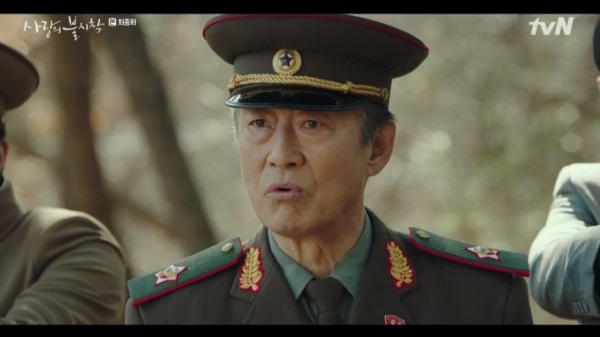 One of the characters in the drama 'Crash Landing on You,' Ri Chung-ryeol, Director of the General Political Bureau of North Korea.
 [Image source=tvN]
There is not much known information about Jeong Gyeong-taek. It is estimated that he is from Jagang Province and is in his 50s to 60s. He is a figure who rapidly rose through the ranks with unprecedented promotions during the Kim Jong-un era, reaching the position of General Political Bureau Director at high speed.
Jeong Gyeong-taek's prominence began in earnest when he was appointed Minister of State Security at the Party Plenary Meeting in October 2017. At the Party Congress in May 2016, Jeong was not even listed as a member of the Central Committee, but upon his appointment as Minister of State Security, he bypassed the Central Committee membership and was elected as a candidate member of the higher-ranking Political Bureau.
North Korean Workers' Party Political Hierarchy: Party Central Committee → Party Central Committee Political Bureau (Candidate Member → Member → Standing Member)
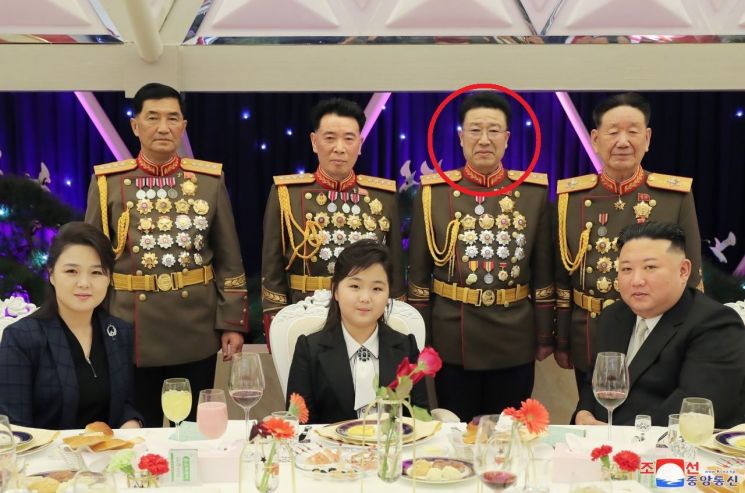 Chairman Kim Jong-un, First Lady Ri Sol-ju, and their daughter Ju-ae attending the 75th anniversary celebration of the founding of the Korean People's Army in February this year. Among the four people standing behind Kim Ju-ae, the person inside the red circle is General Director of the General Political Bureau, Jong Kyong-taek.
The Political Bureau is the de facto highest authority body established within the Workers' Party Central Committee that leads the North Korean regime. Members hold executive positions equivalent to directors, and Jeong Gyeong-taek was listed as a candidate member, the next rank below. Considering that Kim Jong-un's "only younger sister," Kim Yo-jong, was elected alongside him as a candidate member, Jeong's extraordinary promotion can be gauged.
Additionally, the position of Minister of State Security assigned to Jeong at that time is the head of the counterintelligence agency that monitors the ideological trends of all cadres and residents except the supreme leader. Although different in nature, it is a position similar to the head of South Korea's National Intelligence Service. The State Security Department he commanded is tasked with rooting out anti-regime elements, managing political prison camps, and conducting intelligence operations to protect the Kim family's hereditary rule.
Jeong Gyeong-taek was promoted to General Political Bureau Director at the Party Plenary Meeting in May last year, five years after emerging as a "powerful figure." He survived the revolving-door personnel changes of purges and reinstatements under the Kim Jong-un regime. Notably, it is quite unusual for a security official responsible for apprehending anti-regime figures to rise directly to the position of General Political Bureau Director, and this has been analyzed as reflecting disciplinary laxity within the military.
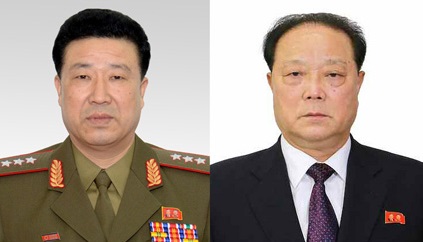 (From left) Jeong Gyeong-taek, Director of the General Political Bureau of the People's Army, Park Gwang-ho, former Head of the Propaganda and Agitation Department
Park Gwang-ho was appointed head of the Propaganda and Agitation Department in October 2017, when Jeong Gyeong-taek became Minister of State Security. Although little is known about his background, he is presumed to have earned the regime's trust as he received a medal commemorating the 100th anniversary of the Day of the Sun (Kim Il-sung's birthday) in spring 2012. In March 2018, he was reportedly part of the entourage when Kim Jong-un secretly visited China.
The Propaganda and Agitation Department led by Park forms one of the two pillars of the Workers' Party that protect the North Korean regime, alongside the Organization and Guidance Department. This organization is responsible for ideological education of the residents and the Party's leadership role, with Kim Yo-jong currently serving as the first deputy head of the Propaganda and Agitation Department. Kim Jong-il began his Party organizational career here after graduating from university, serving as section chief, deputy head, and head, indicating the department's status.
Park Gwang-ho, known to have Kim Jong-un's strong trust, disappeared from public view four years ago. He suddenly stepped down from the head of the Propaganda and Agitation Department in February 2019 and also resigned from his Political Bureau membership. However, his appearance in a documentary praising Kim Jong-un aired in April last year suggests retirement rather than purge. Born in the late 1940s, he is well over 70 years old.
"A Clear Warning That Sanctions Will Also Target North Korean High-Ranking Officials"
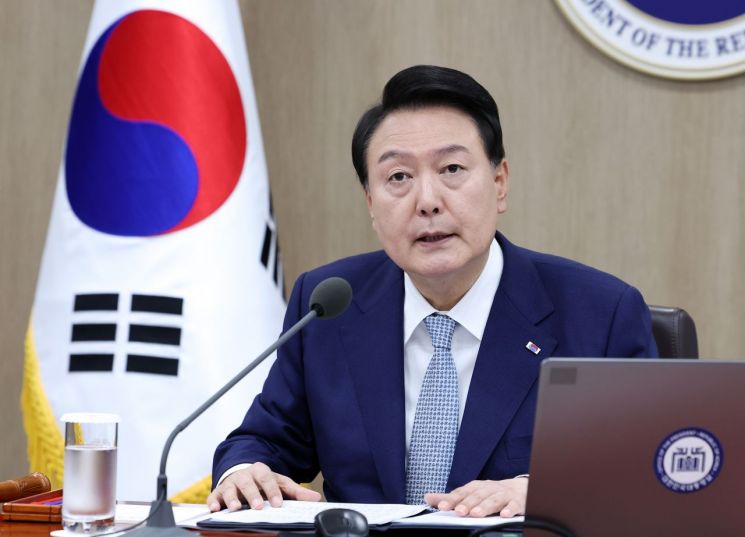
This unilateral sanction was announced immediately after the United Nations Security Council public meeting convened on the 13th (local time) over North Korea's intercontinental ballistic missile (ICBM) launch ended once again "empty-handed." Allies such as the United States and Japan launched a strong offensive, condemning it "in the strongest terms," but China and Russia blamed the United States for regional security instability, citing the deployment of U.S. strategic assets on the Korean Peninsula. North Korea's Ambassador to the UN, Kim Song, even defended the "Washington Declaration" as a "platform for nuclear decisive battle" against North Korea.
Sanctioning prominent North Korean figures and retired officials has been criticized for its effectiveness. However, a government official stated, "While military measures such as extended deterrence are ways to respond to North Korea's nuclear development, economic pressure must also be applied simultaneously," adding, "The results of no sanctions during the previous administration show this clearly." He emphasized, "It is also symbolically important to make it clear that if North Korea continues to focus on nuclear and missile development, sanctions will be imposed decisively on high-ranking officials without hesitation."
A Ministry of Foreign Affairs official explained, "The government has clearly stated that North Korea's reckless provocations will inevitably have consequences," and added, "We will strengthen close cooperation with the international community so that North Korea clearly understands this and stops actions that raise tensions."
© The Asia Business Daily(www.asiae.co.kr). All rights reserved.



















