Seven Power Companies Raise Electricity Rates by 15-40%
Government Accountability Raised Over Electricity Price Collusion
In Japan, it has been revealed that one in three people refrain from using air conditioners during the summer due to concerns about electricity bills, while the number of heatstroke patients is rapidly increasing, putting the Japanese government on high alert regarding electricity price management. Although power companies continue to raise electricity rates citing fuel price hikes, voices demanding strong government action are growing louder amid reports of suspected price-fixing among these companies.
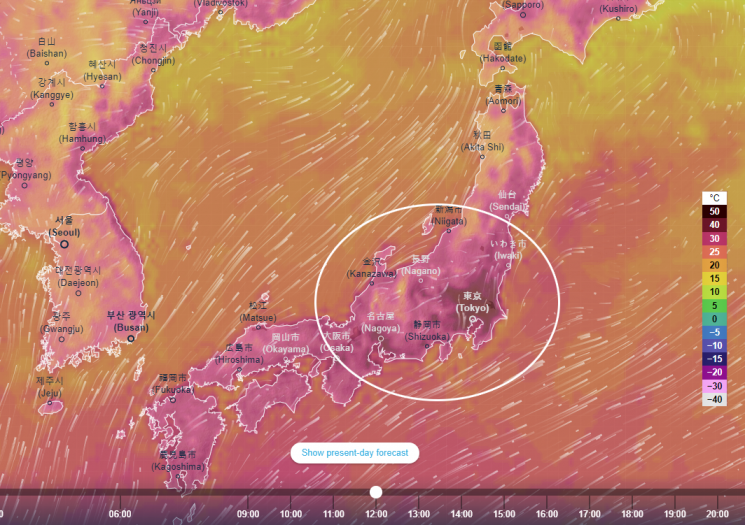
On the 14th, Asahi Shimbun reported that a survey conducted by air conditioner manufacturer Daikin on 1,046 men and women aged 20 to 60 measured air conditioner usage rates during the rainy season and midsummer. The results showed that 40.4% responded that they "do not use air conditioners" during the rainy season, and 31.3% said the same for the summer season.
The top reason given was "electricity bills are too expensive," with 46.7% of those who do not use air conditioners during the rainy season and 50.4% of those who do not use them in summer citing this reason. Additionally, 70% of those who do use air conditioners expressed dissatisfaction with the high electricity costs.
Air conditioners are known to account for about 34% of household appliance power consumption, the highest among appliances, but Japanese fire authorities are concerned that refraining from using air conditioners could lead to heatstroke. A survey by the Tokyo Fire Department revealed that over 90% of heatstroke fatalities occurred among those who did not use air conditioners.
However, electricity price hikes continue. As of the 1st of last month, seven major power companies, including Tokyo Electric Power Company, began raising residential electricity rates due to soaring fuel costs. The increase rates varied from 15% to 40%. Since these companies cited financial difficulties due to rising fuel costs, the Ministry of Economy, Trade and Industry requested that basic fees and labor costs not be reflected in the price hikes.
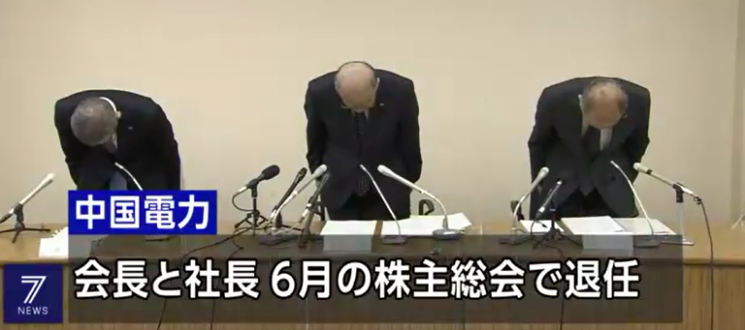 In March, officials from Chugoku Electric Power apologized at a press conference regarding the 'cartel controversy.' (Photo by NHK)
Moreover, the situation is expected to worsen as evidence has emerged that power companies violated antitrust laws. On the same day, the Ministry of Economy, Trade and Industry issued business improvement orders to five companies, including Kansai Electric Power and Kyushu Electric Power. The ministry pointed out that these companies exchanged information related to business strategies and formed cartels, which could hinder the development of the electricity business.
Since power companies are privately operated, cartels that restrict competition among companies and block new entrants frequently occur. Although the Ministry of Economy, Trade and Industry and the Fair Trade Commission are taking measures, dissatisfaction with power companies triggered by summer air conditioner use and debates over government responsibility are unlikely to subside easily.
© The Asia Business Daily(www.asiae.co.kr). All rights reserved.


















