Bank of Korea Financial Stability Report
Delinquencies in New Loans Since 2020 Concentrated in Secondary Financial Institutions
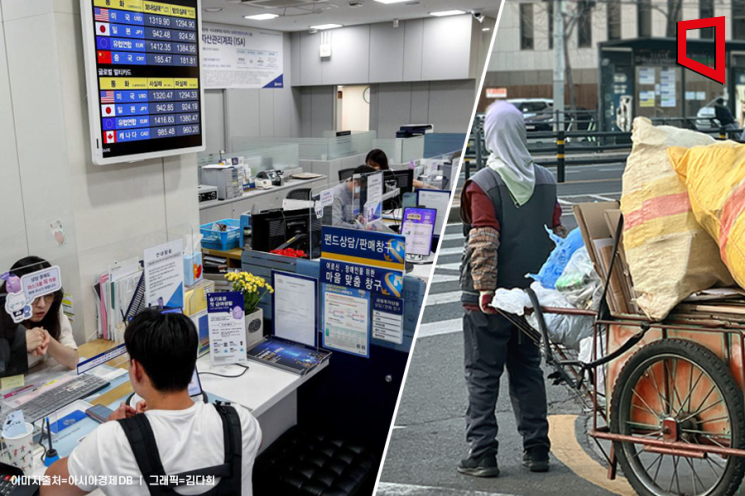
The main cause of the increase in household loan delinquency rates since the end of last year was primarily vulnerable borrowers. According to the Financial Stability Report released by the Bank of Korea on the 15th, the proportion of vulnerable borrowers among newly delinquent borrowers in the second half of last year was 58.8%.
New delinquencies refer to borrowers and the amount of delinquent balances that increased from the end of the second quarter of last year to the end of the fourth quarter of last year. In particular, the rise in delinquency rates for loans issued since 2020 is expected to be significant in non-bank financial institutions.
Moreover, 39.5% of newly delinquent vulnerable borrowers had new delinquent balances exceeding their annual income. The report stated, "A considerable portion of the recently increased delinquent loans are classified as non-performing loans overdue by more than three months, which could negatively impact the asset soundness of financial institutions."
Additionally, for loans issued since 2020, some increase in deferred delinquencies is inevitable due to rising loan interest rates and reduced policy support. The report noted, "Thanks to low interest rates and COVID-19 policy support, the upward trend in delinquency rates has been moderate compared to household loans issued between 2013 and 2019, and it is estimated that the peak has not yet been reached."
Since the second half of last year, household loan delinquency rates have been rising across the financial sector. However, these rates remain lower than during the global financial crisis and even below the long-term average before COVID-19 (2009?2019). As of the end of March, the delinquency rates for household loans at savings banks and credit card companies were relatively high at 5.6% and 2.8%, respectively. Nevertheless, these are still below the long-term average levels (9.3%, 3.2%) and significantly lower than during the global financial crisis (15.8%, 6.3%).
Nonetheless, the pressure for rising delinquency rates on loans issued since 2020 is expected to be more pronounced in non-bank financial institutions. This is because the delinquency rate of household loans received by vulnerable borrowers since 2020 has been sharply increasing recently, and vulnerable borrowers’ household loans are more concentrated in non-bank financial institutions than in banks.
The report stated, "The delinquency rate of household loans handled by non-bank financial institutions since 2020 is still considerably suppressed compared to loans issued earlier, suggesting significant room for future increases."
On the 13th, Lee Bok-hyun, Governor of the Financial Supervisory Service, said, "Although concerns about delinquency rates have been raised, the delinquency rates of small and medium-sized financial companies serving low-income households have recently shown a significant slowdown in the rate of increase, and are assessed to be at a manageable level." He added, "However, considering market uncertainties in the second half of the year, we will continue efforts to reduce delinquent loans through active sales and disposals, and manage capital and liquidity to ensure no problems arise even if market volatility expands."
© The Asia Business Daily(www.asiae.co.kr). All rights reserved.


















