Imsil-gun, Jeonbuk Province, is carrying out a joint pest control support project amid concerns over the spread of pepper diseases and pests during the rainy season.
According to the county on the 11th, to control the most problematic diseases and pests for peppers such as anthracnose, western flower thrips, and tobacco budworm, two types of joint control agents?fungicides and insecticides?have been supplied to pepper-growing farms.
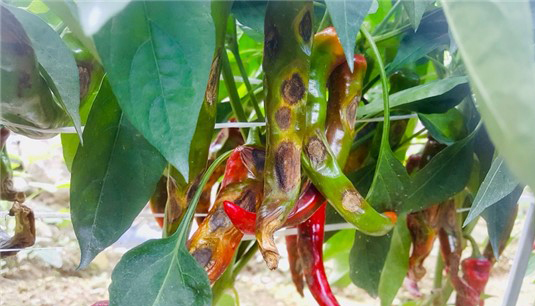 Imsil County is promoting a joint pest control support project for chili peppers.
 [Photo by Imsil County]
The joint pest control support project for peppers is being promoted with a budget of 160 million KRW targeting a cultivation area of 415 hectares to stabilize pepper production and increase farmers' income.
This project supports pest control agents for pepper diseases and pests. The agents were selected by the Joint Pest Control Council, and supplied based on demand surveys according to each farm’s pepper cultivation area.
The project has shifted from supporting only fungicides to providing both fungicides and insecticides, supplying one type of each.
With the completion of agent supply, the county has set the joint anthracnose control period from the 7th to the 21st of this month and is actively promoting full participation of farmers in the anthracnose joint control.
Pepper anthracnose easily spreads under hot and humid conditions (temperature above 29℃, humidity above 90%) and rain and wind.
It mainly occurs on pepper fruits, where small light green lesions gradually expand into round concentric rings that rot black, causing significant yield loss.
Especially, it starts occurring from mid to late June when pepper fruit set begins and rapidly increases during the rainy season in July and August. Therefore, for stable pepper production and securing yield, preventive pre-control before disease occurrence is necessary, and timely control according to weather forecasts to reduce pathogen density is very important.
The insecticides were selected focusing on the major pepper pests, western flower thrips and tobacco budworm.
Western flower thrips cause leaf distortion and transmit Tomato spotted wilt virus (TSWV), while tobacco budworm larvae enter the fruit and damage the seeds. The affected fruits often develop soft rot or decay and mostly drop prematurely.
These pests are small and mainly inhabit inside flowers and fruits, making control difficult. However, due to recent climate changes, their occurrence timing and frequency have changed, making pest control more challenging for farmers.
County Governor Shim Min said, “With the recent heatwave and the start of the rainy season, concerns over pepper diseases and pests are increasing. We will strengthen support and promotion so that local farmers can minimize damage by using the supplied joint control agents for early monitoring and timely control.”
Imsil = Park Nosik, Honam Reporting Headquarters, Asia Economy baekok@asiae.co.kr
© The Asia Business Daily(www.asiae.co.kr). All rights reserved.

















