American consumers' expected inflation rate for the next year has fallen for three consecutive months, reaching its lowest level in over two years. However, the expected inflation rate for five years ahead has risen, confirming concerns about 'persistent high inflation.' This suggests that achieving the 2% price stability target even five years from now will be difficult. Ahead of this week's release of the June Consumer Price Index (CPI) and Producer Price Index (PPI), Federal Reserve (Fed) officials have also made hawkish (monetary tightening-favoring) remarks.
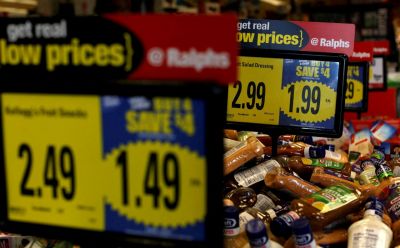
According to the June consumer outlook survey released on the 10th (local time) by the New York Federal Reserve Bank, the expected inflation rate for the next year was 3.8%. This is 0.3 percentage points lower than the previous month, marking the lowest level since April 2021. Expected inflation, which reflects economic agents' forecasts of future price increases, influences the pricing of various goods and services and wage increase demands, ultimately impacting actual inflation, making it a key economic indicator.
By category, price pressures on food and gas have eased. In contrast, the expected housing price increase rate (2.9%) rose for the fifth consecutive month, reaching its highest level since July 2022. The New York Fed stated, "While short-term inflation expectations remain moderate, housing price expectations are on an upward trend," adding that "households' perceptions and expectations regarding credit conditions and financial situations have both slightly improved."
This survey is particularly notable as it was conducted after the Fed held the benchmark interest rate steady at last month's Federal Open Market Committee (FOMC) meeting but is expected to resume hikes this month. According to the Chicago Mercantile Exchange (CME) FedWatch tool, the federal funds (FF) futures market currently prices in about a 93% chance of a July baby step (a 0.25 percentage point rate hike).
On June 12-13, the U.S. June CPI and PPI, key inflation indicators monitored by the Fed, will be released. Given the mixed signals from last week's ADP private employment report and the Labor Department's employment report, attention on the CPI is higher than ever. The market currently expects the U.S. June CPI to rise 0.3% month-over-month and 3.1% year-over-year, showing a slowing trend. However, if the June CPI exceeds these expectations ahead of the FOMC meeting at the end of this month, tightening forecasts surrounding the Fed are likely to strengthen. In that case, as Fed Chair Jerome Powell has indicated, consecutive rate hikes cannot be ruled out.
While the drop in short-term expected inflation to its lowest level in over two years is welcome news, many assessments suggest there is still a long way to go to reach the 2% inflation target. In this survey, unlike short-term inflation, long-term inflation expectations actually rose, increasing concerns about persistent high inflation. The expected inflation rate three years ahead remained unchanged at 3%, while the five-year expected inflation rate rose from 2.7% to 3%. This reaffirms the difficulty of the Fed's battle against inflation. The Wall Street Journal (WSJ) also noted the day before that the stronger-than-expected U.S. economy and labor market suggest that overcoming the 'final hurdle' in the ongoing fight against inflation will be particularly challenging.
Fed officials' hawkish remarks have continued. Loretta Mester, President of the Cleveland Federal Reserve Bank, said, "The economy has shown a stronger foundation than expected earlier this year, and inflation remains stubbornly high," adding, "Slightly higher interest rates will help balance the risks of tightening too little and tightening too much." Mary Daly, President of the San Francisco Federal Reserve Bank, supported tightening by stating, "It is necessary to raise rates twice more this year to bring inflation down to a sustainable 2%." This aligns with the Fed's previously projected year-end median interest rate forecast of 5.6% presented in the dot plot.
On the other hand, Raphael Bostic, President of the Atlanta Federal Reserve Bank and a representative dove (favoring monetary easing), expressed caution, saying, "There are signs that the economy is slowing," explaining that monetary policy has already reached a restrictive level and inflation can ease without further rate hikes.
Additionally, this survey showed that U.S. consumers are more pessimistic about future employment prospects. The average probability of losing a job within one year rose by 2 percentage points to 12.9%, the highest since November 2021. The likelihood of finding a new job if currently unemployed fell from 56.4% in May to 55.3% in June. Furthermore, the proportion of respondents expecting tighter credit conditions one year from now decreased.
© The Asia Business Daily(www.asiae.co.kr). All rights reserved.

















