Diple Association, Seongnam City-KETI-Fabless Association Join Hands
Fostering Micro Diple Companies with 47% Cost of XR Devices
The Korea Display Industry Association announced on the 10th that it has formed a 'Semiconductor Fabless Alliance' with Seongnam City, Korea Electronics Technology Institute (KETI), and the Korea Fabless (Semiconductor Design) Industry Association. This is to respond to the demand for extended reality (XR) display device components promoted by major customers of display companies such as the U.S. Apple.
The association stated that about 100 industry, academia, research, and government officials from seven demand industry organizations including display and the Korea Electronics and Telecommunications Industry Promotion Association, as well as system semiconductor companies, attended the event. Commercial XR devices accounted for 42% of the total XR device market as of 2020. Due to their practicality and scalability, they are showing rapid growth.
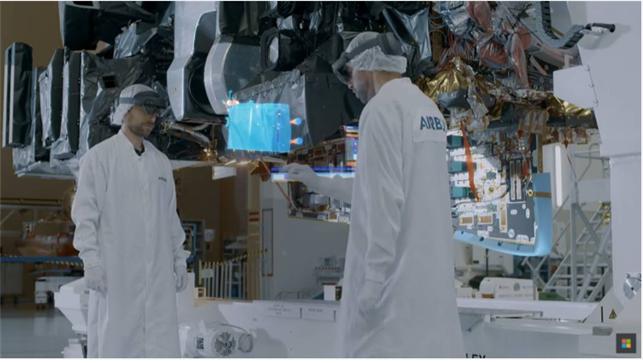
XR device usage is increasing in industries beyond display. Logistics company DHL employs enterprise 'Google Glass' to perform product selection, packaging, sorting, and assembly tasks. Aircraft manufacturer Airbus introduced Microsoft's (MS) B2B device 'HoloLens' and reduced the inspection period for A380 model parts from three weeks to three days, according to MS. Last month, Mira, a U.S. startup acquired by Apple, supplied 'Super Mario' red hat XR devices for the augmented reality (AR) theme park Nintendo World. Mira also produces U.S. Air Force and Navy military logistics products.
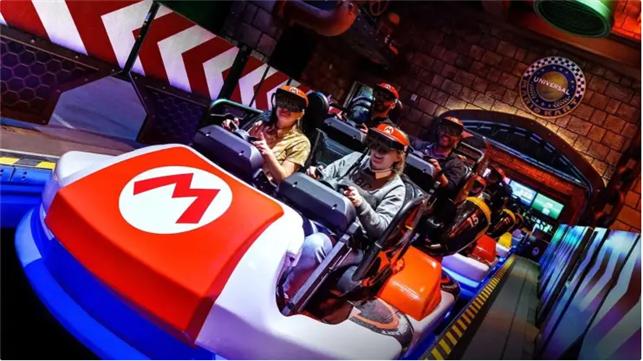 An extended reality (XR) headset for Mario Kart rides created by Mira, a startup acquired by Apple.
 [Photo by Universal Studios YouTube]
The consumer XR market is also expected to open soon. With Apple announcing its first XR device 'Vision Pro' last month, the market is projected to expand. From the perspective of display companies, it is urgent to enhance the performance and price competitiveness of micro displays, which account for 46.7% of XR device manufacturing costs. Micro displays are ultra-small, high-resolution panels under 2 inches.
The association judged that cooperation with fabless companies and foundry (semiconductor contract manufacturing) companies is essential to properly produce micro displays. Micro displays are made on complementary metal-oxide-semiconductor (CMOS) substrates. In addition to existing semiconductor processes, upper electrode formation for displays and Pixel Define Layer (PDL) processes must be performed.
Lee Dong-wook, vice chairman of the association, said, "To dominate the XR market, which has emerged as a game changer after mobile, it is necessary to secure unparalleled competitiveness in the micro display field that determines device performance and price," adding, "If fabless companies participate in the XR display market, it will expand the domestic XR market convergence ecosystem and nurture numerous 'star' companies."
Panel companies such as LG Display and Samsung Display, as well as small and medium fabless companies including May, Raontech, and Selcops, subsidiaries of Cellcos, are also preparing to enter the micro display market. Fabless companies participate in micro display production by designing display substrates and outsourcing (contract manufacturing). They simultaneously develop products for the B2B market such as military, medical, industrial XR devices, vehicle head-up displays (HUD), and projectors.
Vice Chairman Lee said, "The alliance formed today is already connected with the semiconductor, electronics, optical components, and content industries," adding, "In the future, it will also connect with platform industries to contribute to creating new business markets."
The association plans to start creating a roadmap necessary to target niche markets in military, logistics, and industrial XR sectors, using this alliance formation as an opportunity.
© The Asia Business Daily(www.asiae.co.kr). All rights reserved.


















