The US earnings season, led by major banks such as JP Morgan Chase and Wells Fargo, is kicking off in earnest this week, heightening tensions on Wall Street. Amid ongoing recession concerns, the net profits of S&P 500-listed companies are expected to decline for the 'third consecutive quarter.' The New York stock market, which showed a surprise rally in the first half of the year, is also said to be facing a critical test.
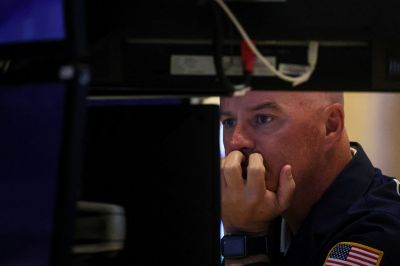
The Wall Street Journal (WSJ) cited FactSet on the 9th (local time), reporting that the net profits of S&P 500 companies in the second quarter of this year are expected to decrease by 7.2% compared to the same period last year. If this happens, it will mark three consecutive quarters of negative growth since the fourth quarter of last year. The decline is also estimated to be the largest since the second quarter of 2020 (-32%), during the early stages of the COVID-19 pandemic. WSJ conveyed the sentiment that "the corporate earnings season could be the next test for the stock market rally." Investing.com also warned that the year-over-year earnings per share of S&P 500 companies will plunge from -2% in the first quarter to -6.8% in the second quarter, advising "to prepare for more volatility."
The macro environment surrounding companies is currently challenging. Despite more than a year of aggressive tightening by the Federal Reserve (Fed), inflation has not fallen as expected, raising concerns that high interest rates and high prices will become entrenched. Warnings that the US economy will soon enter a recession continue. BlackRock, the world's largest asset manager, predicted that the Fed will maintain aggressive tightening due to high inflation, making a recession inevitable in the process. US Treasury Secretary Janet Yellen appeared on CBS's Face the Nation on the same day and assessed that the possibility of a recession is "not completely off the table."
Companies facing increased cost burdens have passed some of these costs onto consumers through price hikes on certain products, but this too has its limits. General Mills, Carnival, Walgreens, and others recently acknowledged in public that inflationary pressures are negatively impacting their earnings. General Mills' Chief Financial Officer, Kofi Bruce, pointed out during an earnings conference call that "the interaction of all interest rate environments and expectations of a potential economic slowdown on consumers is a very central variable when we set our earnings guidance."
PepsiCo and Delta Air Lines will announce their earnings on the 13th. The earnings reports of major banks such as JP Morgan, Wells Fargo, and Citigroup, which are typically regarded as the kickoff signals for Wall Street’s earnings season, will begin on the 14th. Earnings from regional banks like First Republic, which were directly hit by the Silicon Valley Bank (SVB) collapse in March, will also be disclosed. WSJ reported that Wall Street will focus on whether these companies can deliver results in the next quarter and whether future expected earnings can support stock valuations through these earnings announcements.
However, there is also speculation that, unlike the first quarter, companies might release solid earnings that exceed expectations and further fuel the stock market rally. WSJ analyzed that "considering the currently bleak earnings outlook on Wall Street, this could actually present a low barrier for companies and give investors confidence to buy." The S&P 500 index, dominated by large-cap stocks, and the Nasdaq index, dominated by tech stocks, rose nearly 16% and 32%, respectively, in the first half of the year.
Investors are closely watching inflation indicators such as the Consumer Price Index (CPI), which could influence the Fed’s future monetary policy moves, in addition to corporate earnings this week. Especially since last week’s ADP private employment report and the Labor Department’s employment report have sent mixed signals about the labor market, attention is highly focused on the CPI. Wall Street expects the US June CPI to rise 0.3% month-over-month and 3.1% year-over-year, showing a slowing trend.
Although the Fed decided to hold rates steady at the June FOMC meeting, it hinted at the possibility of two more hikes this year through its dot plot. The market widely expects rate hikes to resume at the July FOMC meeting scheduled for the 25th-26th. According to the Chicago Mercantile Exchange (CME) FedWatch tool, the federal funds (FF) futures market currently prices in about a 93% chance of a 0.25 percentage point rate hike (a baby step) in July. As Fed Chair Jerome Powell recently indicated, the possibility of consecutive hikes at the July and September FOMC meetings cannot be ruled out. The Labor Department’s employment report released on the 7th showed a slowdown in job growth compared to the previous month, but wage growth, which fuels inflation, remained high.
© The Asia Business Daily(www.asiae.co.kr). All rights reserved.

















