Promise of Panel Production and Employment at the Start of Construction in 2015
Promised 10,000 Panels per Day but Averaged 21 Panels per Week
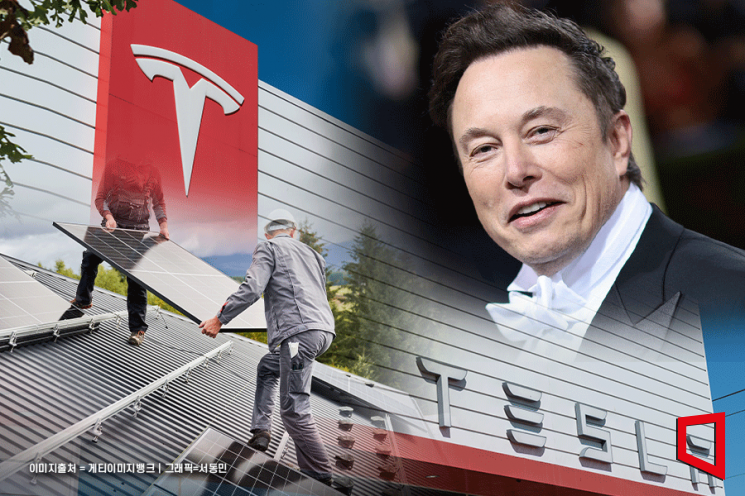
Elon Musk received subsidies worth $1 billion (approximately 1.3 trillion KRW) from the New York state government in 2015 to build a solar panel factory, but it has been pointed out that he has not properly fulfilled the initial conditions even after eight years.
On the 6th (local time), The Wall Street Journal (WSJ) reported, citing data from Wood Mackenzie, which analyzes energy, chemical, and metal industries, that the average weekly production at Tesla's Buffalo solar panel factory is only 21 units. Considering that Byron Brown, then mayor of Buffalo, announced at the groundbreaking ceremony that 10,000 solar panels would be produced daily at the new factory, the production volume is far too low.
Mayor Brown at the time introduced the factory as creating 3,000 jobs. However, as of February, the number of workers at the factory was counted at 1,700. WSJ reported, "While there are some factory workers, hundreds of low-paid data analysts are working here on other Tesla tasks."
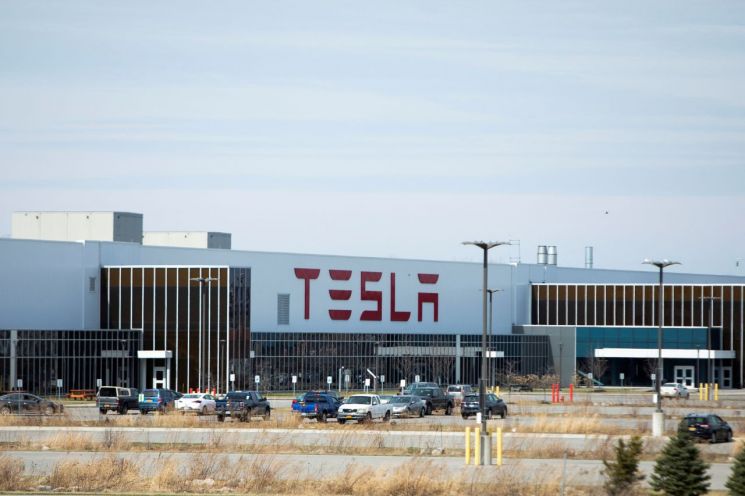
Although the conditions set in the contract with the state government have not been properly fulfilled over eight years, $1 billion in New York state subsidies has been invested in this factory.
At the time, the new factory was a project that SolarCity, which was later acquired by Tesla, had planned to build. Musk was the chairman of SolarCity. SolarCity was acquired by Tesla in 2016, one year after the investment announcement.
Criticism is growing locally over this situation. Sean Ryan, a state senator (Democrat, Buffalo), said, "This is a bad deal," and pointed out, "It shows that governors should not be given excessive power to talk to autocratic billionaires."
As the situation unfolded, an analysis showed that the economic effect of the subsidy payment was only 54 cents per dollar. At the groundbreaking ceremony in 2015, the state government expected manufacturing facilities to be built around the Tesla factory, but eight years later, WSJ reported that the only business established nearby is a coffee shop.
EJ McMahon, senior researcher at the Empire Center for Public Policy (ECPP), a conservative-leaning private public policy think tank, evaluated, "Regarding Tesla's solar panel factory, New York state became a direct investor in the project under the worst conditions," and added, "Since taxpayers bear the cost directly, this can be considered the biggest economic development blunder in a single case in American history."
These criticisms came amid the Biden administration's large-scale subsidy support policies for key industries such as semiconductors, bio, and electric vehicles. There are concerns that a situation like Tesla's, where taxes are effectively handed out to companies, might occur.
Tesla and SpaceX, led by CEO Elon Musk, have received subsidies totaling more than $4 billion from the government since 2006.
© The Asia Business Daily(www.asiae.co.kr). All rights reserved.


















