Formal Approval Following January Accelerated Approval
US Public Insurance Coverage Expected
Overcoming 'Aduhelm' Efficacy and Safety Controversies
Lilly Plans to Apply for 'Donanemab' Approval Within the Year
The U.S. Food and Drug Administration (FDA) has approved a second treatment for Alzheimer's dementia. The protagonist is 'Leqembi' (generic name lecanemab), jointly developed by Biogen and Eisai. After achieving the world's first dementia treatment development with 'Aduhelm' (aducanumab), the two companies experienced bitter setbacks in commercialization, but with Leqembi successfully obtaining formal approval, they have made a spectacular comeback.
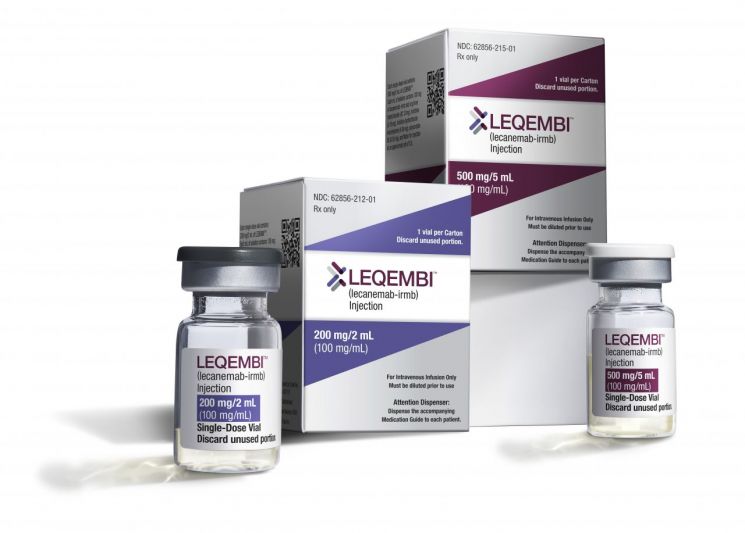 Biogen and Eisai's Alzheimer's dementia treatment 'Leqembi (generic name: lecanemab)' [Image source=AP Yonhap News]
On the 6th (local time), the FDA announced the formal approval of Leqembi. Following accelerated approval in January, this time it succeeded in obtaining full authorization. It became the second fundamental dementia treatment ever approved by the FDA, following Aduhelm's approval in July last year. Teresa Burakio, Acting Director of the FDA's Neuroscience Division, explained, "This action is the first proof that a drug targeting the fundamental progression of the fatal disease Alzheimer's has demonstrated clinical efficacy," adding, "(Leqembi) has been proven through clinical trials to be an effective and safe treatment for Alzheimer's patients."
In the previously announced Phase 3 clinical trial (CLARITY-AD) involving 1,795 patients with mild cognitive impairment (MCI) and mild Alzheimer's dementia, Leqembi succeeded clinically by showing a 27% reduction in cognitive decline compared to the placebo group based on the Clinical Dementia Rating-Sum of Boxes (CDR-SB) score at 18 months. Secondary endpoints were also met, and amyloid-related adverse events (ARIA) were confirmed to be within expected ranges. However, ARIA-H, a more severe adverse event involving brain hemorrhage, occurred in 17% of cases, alongside ARIA-E (brain edema). Notably, the FDA warned caution in prescribing Leqembi to patients taking blood thinners, as deaths occurred among such patients during the trial. Furthermore, since the incidence of ARIA is higher in patients carrying the APOE-ε4 gene, it emphasized the need to inform patients of ARIA risk through related testing before starting Leqembi treatment.
Unlike Aduhelm, which ultimately failed to overcome controversies regarding efficacy and safety, limiting insurance coverage to 'clinical trial participants' in the U.S. and facing rejection from the European Medicines Agency (EMA), Leqembi is expected to enter the market more rapidly due to confirmed safety and efficacy compared to Aduhelm. Aduhelm's CDR-SB decline reduction effect was only 22%, and ARIA-H incidence was as high as 28.3%, whereas Leqembi showed higher efficacy indicators and lower ARIA-H levels.
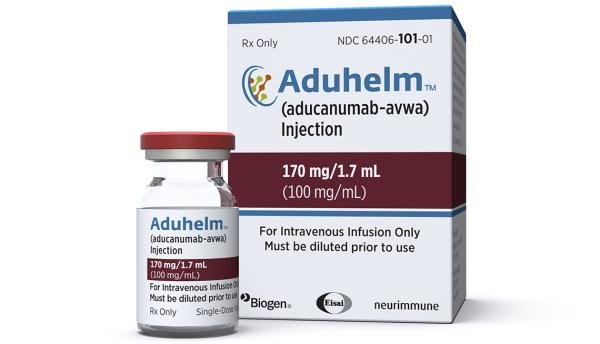
The Centers for Medicare & Medicaid Services (CMS), which manages U.S. public insurance, recently presented a specific stance regarding insurance coverage for dementia antibody treatments. Unlike accelerated approval drugs that only cover clinical trial use, CMS decided to cover antibody treatments with full approval through Medicare if patients agree to participate in a registry collecting real-world data (RWD). In other words, unlike Aduhelm, Leqembi will be eligible for broad Medicare coverage going forward.
Eisai, the developer, has set the wholesale acquisition cost (WAC) at $26,500 per year (approximately 35 million KRW), signaling determination not to repeat Aduhelm's failure. Considering that Aduhelm initially priced the drug at $56,000 (about 73.3 million KRW) and lowered it to $28,200 (about 37 million KRW) in January last year but still struggled to enter the insurance market, this price appears to reflect those challenges.
The Dementia Treatment Market Will Grow Larger... Lilly's 'Donanemab' Also Awaiting
As the number of dementia patients continues to increase, the dementia treatment market is also expected to grow rapidly. According to the World Health Organization (WHO), the global number of dementia patients is projected to surge from 55 million in 2019 to 78 million in 2030 and 139 million by 2050. According to pharmaceutical research firm Kotelis, the Alzheimer's dementia treatment market is expected to grow at an average annual rate of 29%, from $1.6 billion (about 2 trillion KRW) in 2020 to $5.7 billion in 2030 and $20 billion (about 26 trillion KRW) in 2050.
Global academic information service company Clarivate also listed Leqembi among 15 drugs expected to become blockbuster medicines with annual sales exceeding $1 billion by 2027, either launching or likely to be approved this year. Leqembi ranked 8th with expected sales of $1.02 billion (about 1.3352 trillion KRW). Additionally, Eli Lilly's Alzheimer's antibody treatment 'Donanemab' ranked 4th with expected sales of $1.34 billion (about 1.754 trillion KRW).
In May, Lilly released results from the Phase 3 clinical trial (TRAILBLAZER-ALZ 2) of Donanemab in early Alzheimer's patients, showing a 35% delay in cognitive and daily living ability decline compared to placebo and a 39% reduction in the risk of progression to the next disease stage. The integrated Alzheimer's Disease Rating Scale (iADRS), which evaluates cognition and daily living abilities such as driving, hobbies, and asset management, showed a 35% reduction in decline in the experimental group as the primary efficacy endpoint. The Clinical Dementia Rating-Sum of Boxes (CDR-SB), set as a secondary endpoint, showed a similar 36% reduction in decline over 18 months. Although direct comparison is difficult due to different trials, Donanemab demonstrated higher cognitive decline efficacy than Leqembi's CDR-SB reduction level. However, ARIA-H occurred in 31.4% of cases, and three deaths related to ARIA during the trial raised concerns.
Donanemab's accelerated FDA approval was previously rejected in January. At that time, the FDA denied approval due to limited patients followed for more than 12 months in Phase 2 trials. However, with 18 months of data secured in Phase 3, Lilly plans to apply for FDA approval within the year. Detailed clinical results will be disclosed at the Alzheimer's Association International Conference (AAIC) held in Amsterdam, Netherlands, from June 16 to 20.
© The Asia Business Daily(www.asiae.co.kr). All rights reserved.



















