The issue of regulating artificial intelligence (AI) has become a hot topic at the United Nations Security Council (UNSC). As concerns grow over the risks AI poses to international security, attention is focused on whether this will serve as a catalyst for the international community's regulatory efforts to take shape.
On the 3rd (local time), the UNSC announced at a press conference that "humanity stands at the brink of a leap in super-large-scale technology," and that it plans to hold its first meeting to discuss the threats AI may pose to global peace and security on the 18th.
Barbara Woodward, the UK Ambassador to the UN and the rotating president of the Security Council, emphasized, "We encourage a multilateral approach that addresses both the tremendous opportunities and risks of AI," adding, "This requires a global effort."
She noted the significant benefits of AI in assisting the UN's development programs, improving humanitarian relief efforts, supporting peacekeeping, and conflict prevention, stating, "AI could also help narrow the gap between developed and developing countries." However, she added that since AI also raises serious security issues, ways to address these must be discussed.
The upcoming meeting, chaired by UK Foreign Secretary James Cleverly, will hear views from international experts on the rapidly advancing AI technology and continue discussions among the 15 Security Council members on its impact.
UN Secretary-General Ant?nio Guterres will also participate in the meeting. He announced plans to establish an AI advisory board in September to concretize the UN's response strategy. As a model for a new UN body to address AI, he cited the International Atomic Energy Agency (IAEA), a knowledge-based organization that also holds some regulatory authority.
Last month, Secretary-General Guterres declared, along with scientists and experts, that AI poses an existential threat to humanity comparable to nuclear war and called on the world to respond.
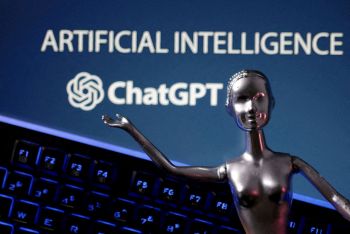
Generative AI, such as ChatGPT, which creates text and videos, has rapidly expanded in use since its emergence. However, warnings and calls for regulation have also been raised regarding the risks of AI beyond human control, including the flood of fake content and AI-caused security, economic, and criminal damages.
Geoffrey Hinton, a professor at the University of Toronto and known as the "godfather of deep learning," resigned from Google, saying he fears the day AI will turn into "killer robots." Industry leaders such as Sam Altman, CEO of OpenAI, and Mustafa Suleyman, co-founder of Google DeepMind, have also collectively warned about the dangers of AI.
Countries and major organizations worldwide are actively moving to control AI. The European Parliament, the legislative body of the European Union (EU), passed the world's first comprehensive AI regulation on the 14th of last month. The regulation includes a proposal to completely ban remote biometric recognition such as facial recognition using AI.
In the United States, with the presidential election next year raising awareness of AI-driven fake news, legislative efforts are accelerating at both congressional and executive levels. The White House regularly holds policy development meetings for the safe use of AI, and the US Senate recently began discussions on AI policy based on key principles such as security, accountability, democratic foundations, and explainability.
© The Asia Business Daily(www.asiae.co.kr). All rights reserved.
![Clutching a Stolen Dior Bag, Saying "I Hate Being Poor but Real"... The Grotesque Con of a "Human Knockoff" [Slate]](https://cwcontent.asiae.co.kr/asiaresize/183/2026021902243444107_1771435474.jpg)
















