Masayoshi Son, chairman of Japan's SoftBank Group, who invested early in artificial intelligence (AI), is reportedly being left out of the recent AI boom triggered by ChatGPT. The billionaire Son has mentioned AI more than 500 times in public since 2017 and invested over $140 billion in more than 400 startups. This highlights the challenges of AI investment, where massive spending does not guarantee knowing who the eventual winners will be.
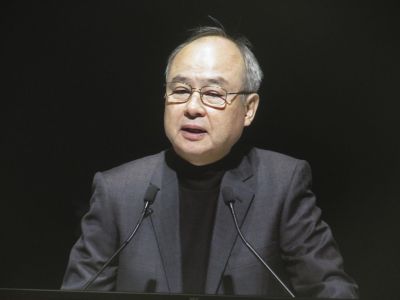
The Wall Street Journal (WSJ) reported on the 3rd (local time) that although Son declared SoftBank as an "investment company for the AI revolution," he missed the recent AI boom.
Six years ago, when launching the Vision Fund, the world's largest IT investment fund, Son declared, "We are not investing blindly. We are focusing on one theme: AI." Since then, over $140 billion has been invested in more than 400 startups. However, tangible results have yet to materialize. In fact, due to massive investment losses, he even disappeared from public appearances for several months.
In June, Son broke his silence by attending a shareholders' meeting for the first time in a while. There, he reaffirmed that "AI will reshape humanity" but admitted, "We made many mistakes and were bewildered" regarding AI investments. He also mentioned spending busy times exploring applications related to generative AI such as ChatGPT while not appearing publicly. WSJ stated, "Despite investing $140 billion in AI, Son has not achieved notable results" and "he is now trying to catch up with the trend again."
WSJ particularly noted that although Son emphasized the importance of AI by mentioning it over 500 times in official settings from 2017 until mid-last year, he still missed the AI investment trend. This investment misstep reflects the difficulties recent AI investors face. The outlet pointed out, "Even if funds are spread across dozens of companies and industry sectors, picking winners is not an easy game."
The main reason Son was inevitably sidelined in the recent AI boom is that he did not invest heavily in generative AI technologies like ChatGPT. According to market research firm PitchBook, among 26 generative AI startups valued over $1 billion, SoftBank has invested in only one company.
Moreover, the AI boom that led rallies in numerous tech stocks had little impact on 36 companies SoftBank invested in, including DoorDash and Coupang. On the contrary, Nvidia, in which SoftBank invested $4 billion in 2017 but sold its stake in 2019, saw its stock price soar tenfold afterward.
Investment targets were also cited as a problem. SoftBank claimed that 90% of the companies supported by the Vision Fund use AI technology, but it hardly invested in companies specialized in AI technology development. WSJ pointed out, "During years of investment, SoftBank avoided companies focused on generative AI technology development. Instead, it poured billions into companies that use AI and are expected to benefit from growth, such as autonomous driving technology firms."
Timing was also unfavorable. After SoftBank launched the $100 billion Vision Fund 1, generative AI technology development was still in its early stages for about six years, making it very difficult to select AI startups worth investing in. However, after SoftBank halted new startup investments following record losses from the tech stock crash in early 2022, generative AI companies began serious fundraising. In the latter half of the same year, OpenAI released ChatGPT.
The market now expects Son to launch a large-scale investment again. Recently, Son also hinted, "The time to counterattack is coming." ARM, acquired by SoftBank in 2016 for $32 billion, is currently benefiting from the AI boom. The market expects ARM's valuation to exceed $60 billion in an initial public offering (IPO) planned within a few months.
Victor Galiano, an analyst researching the SmartCarma platform, told WSJ, "ARM is well positioned to indirectly benefit from the AI boom," but added, "However, there are no other clear winners in SoftBank's current portfolio."
© The Asia Business Daily(www.asiae.co.kr). All rights reserved.

















