Chairman of Hydrogen Fusion Alliance
"No Good or Bad Technology"
"Hydrogen Incentives Should Be Reviewed Positively"
There are various methods to produce hydrogen, which is gaining attention as a carbon-neutral energy source. The methods are categorized by color based on the technology used. Hydrogen produced by reforming natural gas is called gray hydrogen; if the carbon emitted during this process is captured and stored (CCS), it is called blue hydrogen. Green hydrogen is made by splitting water using electricity from renewable energy, while pink hydrogen uses electricity from nuclear power. There is also purple hydrogen, which uses both heat and electricity from nuclear power. This is a concept that anyone new to the hydrogen economy is likely to encounter at least once.
However, there are those who argue that to truly enter the hydrogen era, the so-called 'hydrogen color theory' must be overcome. One such person is Moon Jae-do, chairman of the Hydrogen Convergence Alliance (H2KOREA), a leading domestic hydrogen industry promotion organization.
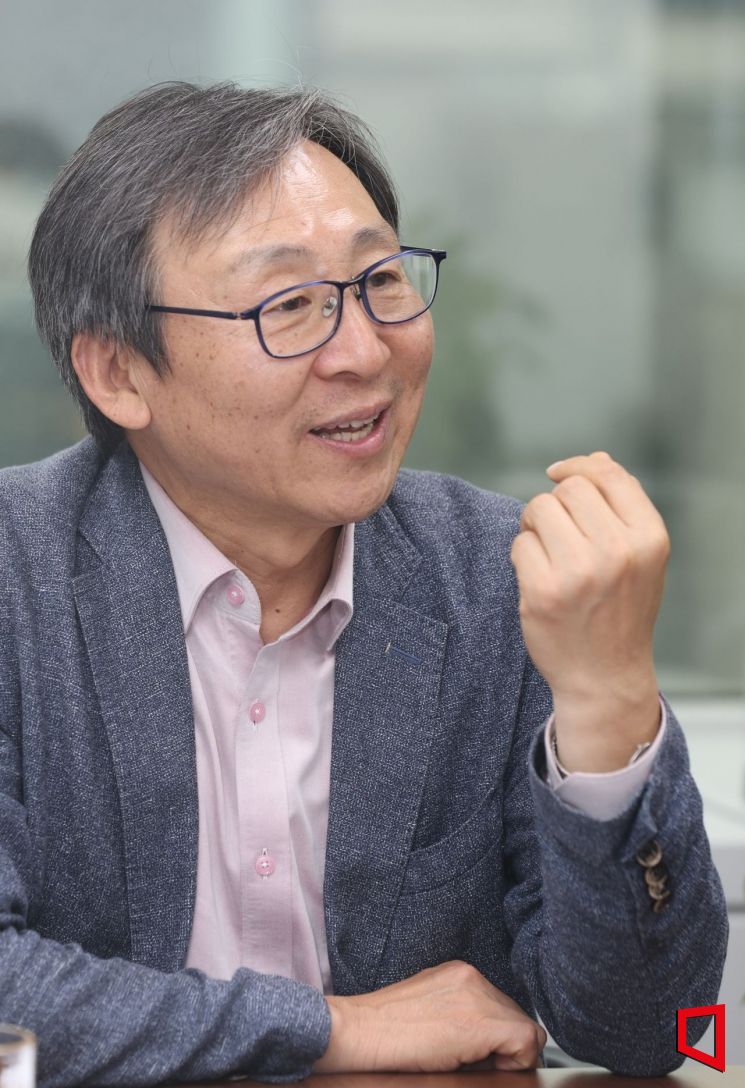
In an interview at his office in Gangnam, Seoul, on the 29th, Chairman Moon said, "They put colors on colorless hydrogen and talk as if rainbow-colored hydrogen is circulating beautifully, but from the perspective of companies engaged in the hydrogen business, it is a nightmare itself," adding, "It is not only practically impossible to produce hydrogen in different ways depending on the use, but it also only increases confusion."
He explained, "In Europe, there was controversy over green hydrogen being good and the rest being unacceptable, and the cause was the inability to escape the color theory," adding, "(The solution is) simply for each producer to use the technology best suited to them that minimizes carbon dioxide emissions during hydrogen production."
He continued, "Ultimately, it is true that we must move toward green hydrogen with zero carbon emissions, but the process is not easy," pointing out, "To mass-produce green hydrogen, large-scale power plants such as solar and wind farms must be established, and water electrolysis facilities must be built. Also, transportation means to carry the produced hydrogen must be in place. Massive investment must precede all this."
He also said, "For such projects to succeed, the demand side must commit to purchasing substantial quantities, but currently, there is no party willing to do so," and argued, "Since time is needed for demand to emerge and technology to develop, we must acknowledge reality and introduce a clean hydrogen certification system as a preliminary step." In other words, depending on the circumstances of the country or company, hydrogen produced using CCS or nuclear power should be recognized as clean hydrogen if verified through a certification system.
In South Korea, legislation for the clean hydrogen certification system is under review, and research on certification methodologies and incentives is ongoing. The government plans to designate a clean hydrogen certification body in the second half of this year and implement the certification system starting next year.
Overseas, efforts to introduce certification systems are also accelerating. The United Kingdom is negotiating with a target of 2025, and the European Union (EU) is in the stage of coordinating positions among member states. The United States provides tax credits for clean hydrogen (with lifecycle emissions within 4 kg) through the Inflation Reduction Act (IRA) and operates a practical form of certification.
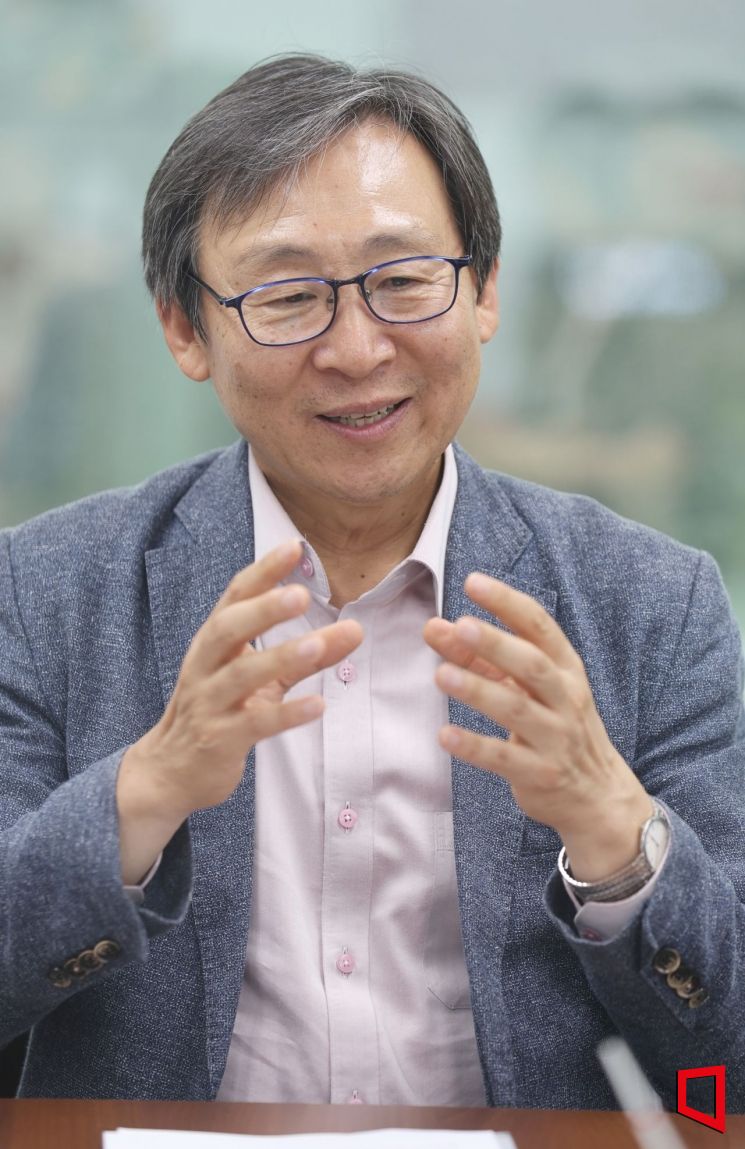
Chairman Moon said, "As each country tries to introduce certification systems, there is also the issue of global unification," adding, "It will likely become a global trend to recognize hydrogen as clean if carbon dioxide emissions are below a certain level, but many issues must be agreed upon, such as verifying lifecycle emissions using the same technology."
He emphasized that the government and companies must each fulfill their roles to build an ecosystem for advancing the hydrogen economy. He said, "Since hydrogen is a completely new field for everyone, technology and safety standards must be newly established," and added, "Companies demand quick resolution of uncertainties caused by regulations, but rushing could lead to unforeseen problems." He cited incentives as a representative example.
He said, "The United States supports the hydrogen industry through the IRA to gain future energy leadership, and we also need to consider this proactively," but noted, "In reality, the question is who will be supported; in other words, if hydrogen is produced using clean energy overseas, benefits could go to foreign operators." He explained that this could lead to controversy over providing subsidies to foreign operators and reducing carbon dioxide emissions.
He also advised companies to accelerate the transition to clean hydrogen. He said, "Currently, domestic companies in petrochemicals and semiconductors use about 2 million tons of hydrogen (gray hydrogen) annually, and if all switch to clean hydrogen, carbon emissions can be reduced accordingly," adding, "Steel and cement companies that have used coal should also continuously show interest and promote process transitions applying hydrogen."
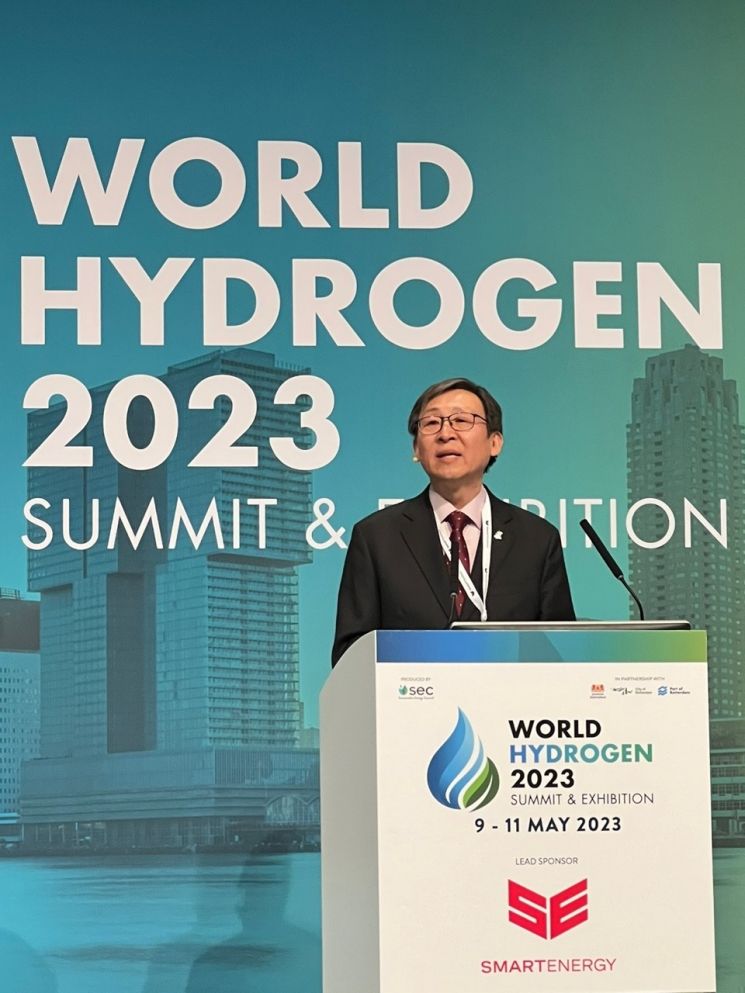
Chairman Moon is an expert in energy, trade, and industry. Born in 1959, he graduated from Gwangju Jeil High School and Seoul National University with a degree in economics, passed the 25th administrative examination, and held key positions in the Ministry of Trade, Industry and Energy. Since 2013, he has served as Secretary for Trade, Industry and Energy at the Presidential Secretariat, Second Vice Minister of Trade, Industry and Energy, and President of the Korea Trade Insurance Corporation. In 2019, he was appointed chairman of the Hydrogen Convergence Alliance.
© The Asia Business Daily(www.asiae.co.kr). All rights reserved.