Indian Government Strengthens Regulations on Chinese Companies to Protect Domestic Market
Restrictions on Use of Chinese Apps and Purchase of Communication Equipment
Chinese smartphone company Xiaomi, which was subjected to a tax recovery and seizure amounting to around 1 trillion won by Indian authorities, has laid off a large number of local employees in India.
On the 1st, Chinese science and technology media TaiMeiTi reported that Xiaomi, which has undertaken large-scale layoffs, reduced its workforce from 1,400-1,500 employees to 1,000. This amounts to a reduction of about 30% of its total staff.
According to local employees, Xiaomi recently laid off an additional 30 employees within a week. One employee predicted, "More workforce reductions may occur over the coming months."
Earlier, Xiaomi India was fined 6.53 billion rupees (approximately 105 billion won) by Indian tax authorities early last year for tax evasion allegations. Additionally, 55.5 billion rupees (approximately 892 billion won) were seized due to illegal overseas remittance charges.
India is comprehensively regulating Chinese companies that have entered its market, concerned about the rapid encroachment of Chinese firms in its domestic mobile phone market.
With a population of 1.4 billion, India's smartphone penetration rate is still only 54%. Because of this, India is considered a market with great potential.
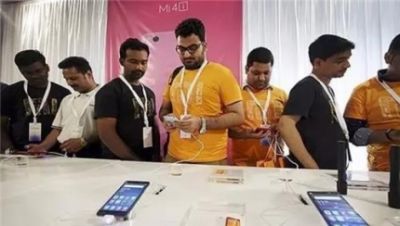
Chinese smartphone companies have entered India since 2014, dominating the low-cost smartphone market. According to last year's survey, two out of three Indian mobile phone users use Chinese-made phones. Among them, Xiaomi's market share reached 25%.
In response, Indian authorities began regulating Chinese companies following the escalation of conflicts between Indian and Chinese troops in the Galwan Valley near Ladakh in the Himalayas in June 2020.
Last year, following Xiaomi, Chinese mobile phone companies Vivo and Oppo were also fined 4.6 billion rupees (approximately 74 billion won) and 43.9 billion rupees (approximately 705.5 billion won), respectively, for tax evasion and other charges.
Furthermore, about 300 Chinese smartphone applications, including Tencent's WeChat and ByteDance's TikTok, were banned, and communication equipment from Huawei and ZTE (Zhongxing Telecommunications) is not being purchased.
Chinese-language media reported last month that the Indian Ministry of Electronics and Information Technology recently required Chinese smartphone companies operating in India to appoint Indian nationals as CEOs and other executives, allow Indian capital investment, and manufacture and assemble smartphones locally in India. It is speculated that the Indian government intends to strengthen control over Chinese companies and promote localization in the mid to long term.
Zhang Xiaolong, director of the Chinese Leading Science and Technology Research Institute, analyzed through the global market research firm Counterpoint that "although India is an attractive mobile phone market, from the perspective of Chinese companies, the risks are high, and there are considerable difficulties related to local culture and political environment."
Meanwhile, Xiaomi did not deny the recent news of mass layoffs of local employees but did not specify the exact scale of the workforce reduction.
Xiaomi India stated, "Like other companies, we adjust and optimize our workforce based on market conditions and workload forecasts." They added, "Outstanding employees are rewarded during biannual performance evaluations, but employees who do not meet company requirements may be subject to optimization."
© The Asia Business Daily(www.asiae.co.kr). All rights reserved.

















