Seoul apartment sale prices have risen for five consecutive weeks, but areas outside the Gangnam district are still unable to escape the price slump. Transaction volumes are also lower than during periods when apartment prices were rising. Nationwide, the decline in prices in provincial areas has expanded, maintaining the polarization of housing prices between the metropolitan area and the provinces. Some even express concerns that nationwide housing prices may fall further in the second half of this year.
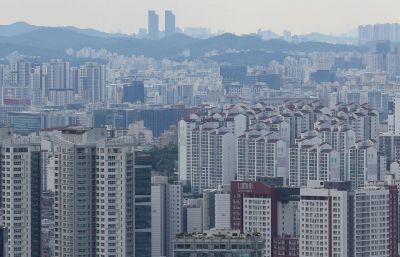
According to the Korea Real Estate Board's 'Weekly Apartment Price Trends' on the 28th, Seoul apartment prices rose by 0.04% in the third week of June (as of the 19th), increasing the rate of rise from the previous week (0.03%). Since turning to an upward trend in the fourth week of last month, prices have risen for five consecutive weeks, increasing by 0.18% during this period.
However, industry experts caution that it is premature to assume this trend marks the start of a full-scale price increase. This is because apartment prices in other Seoul regions outside the Gangnam area are still showing declines or stagnation. In fact, the apartment sale price change rate in the southeastern area, which includes the four Gangnam districts (Gangnam, Seocho, Songpa, and Gangdong), has risen for 10 consecutive weeks since turning positive in the third week of April, increasing by 1.02%. Meanwhile, other regions such as the southwestern area (-0.50%), northeastern area (-0.47%), northwestern area (-0.33%), and central area (-0.19%) have shown declines during the same period.
Transaction volume is also considered too low to be seen as an upward trend. According to the Seoul Real Estate Information Plaza on the same day, the number of apartment sale transactions in Seoul in May was 3,292. This is an increase compared to last year, when the transaction freeze was severe due to interest rate hikes, but still lower than during the real estate boom years of 2020 and 2021. It is even lower than the 4,065 transactions recorded in August 2021, which was considered the 'end phase' of the real estate boom.
Yeokyung Hee, senior researcher at Real Estate R114, explained, "The recovery is due to increased demand from buyers switching to premium areas like Gangnam, Mapo, and Yongsan, driven by the perception of a bottoming out, so it is difficult to say the overall market has revived." She added, "The transaction volume of apartments in Seoul is still far below the levels seen during the real estate boom, indicating a lack of clear upward momentum." Ye also forecasted, "In the second half of this year, a large supply of new housing is expected in various areas such as Eunpyeong, Gangnam, and Dongdaemun, which could create downward pressure on prices due to the impact of new occupancy."
Market buying sentiment remains subdued. According to the Real Estate Board, the apartment sale supply-demand index in Seoul for the third week of June was 84.6. Since the index baseline is 100, a figure below 100 means there are more sellers than buyers in the market.
There are even predictions that housing prices will fall further in the second half of the year. At the recent '2023 Second Half Construction and Real Estate Market Outlook Seminar,' the Korea Construction Industry Research Institute forecasted that nationwide housing sale prices will decline by 0.7% in the second half, with the rate of decline slowing, but will fall by 4.8% annually, showing a 'high-low-low' pattern. This year's forecast is similar to last year's nationwide annual decline of 4.7%.
Song Seunghyun, CEO of Urban and Economy, analyzed, "Gangnam apartment prices fell sharply during the downturn, so the recent rise appears more prominent due to the base effect." He added, "Given the large supply of new housing in the second half and unresolved issues with unsold apartments, it will be difficult for the real estate market to enter a full-fledged upward trend."
© The Asia Business Daily(www.asiae.co.kr). All rights reserved.

















