'Market Concentration' HHI ↑... Top 4 Companies' Share 44→60%
Number of Firms Decreases from 500 to 100... Startups like Nio Face Financial Difficulties
Analysis suggests that the world's largest electric vehicle market, China, is being reorganized around major electric vehicle companies such as BYD and Tesla. Although numerous startups like NIO emerged and fiercely competed with the support of the Chinese government, the domestic market's growth has recently slowed, leading to a shift toward a market dominated by large corporations.
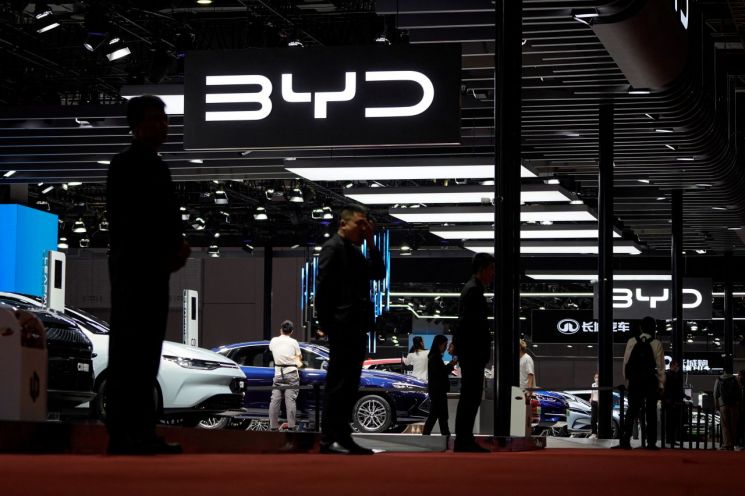
◆ China: From Competition to Oligopoly... BYD Widens Gap with Tesla
On the 27th, Bloomberg reported that the Herfindahl-Hirschman Index (HHI) for China's eco-friendly vehicle market exceeded 1500 in the first quarter of this year. Until the first quarter of last year, the HHI index for China's eco-friendly vehicle market was below 1000, but it has rapidly increased since last year, reaching 1586.1 in the first quarter of this year.
The HHI index is calculated by squaring the market shares of all participating companies and summing them, serving as an indicator to analyze the competitive structure of an industry and assess market concentration. Generally, an HHI below 1500 indicates a 'competitive market' with many participants, between 1500 and 2500 indicates a 'moderately concentrated market' with some market share concentration among participants, and above 2500 indicates a 'highly concentrated market' with monopolistic or oligopolistic characteristics.
As the Chinese market reorganizes, the sales share of the top four companies rose from 44% in the first quarter of 2020 to 60% in the first quarter of this year.
Among them, Bloomberg evaluated that BYD and Tesla have seized the advantage. Especially, until the first quarter of 2021, BYD and Tesla were neck and neck for the top market share, but since June 2021, BYD has secured a firm first place and gradually widened the gap. As a result, the market share gap between the two companies, which was only 3.3 percentage points in June 2021, expanded to 24.8 percentage points by the end of March this year (BYD 36.0%, Tesla 11.2%).
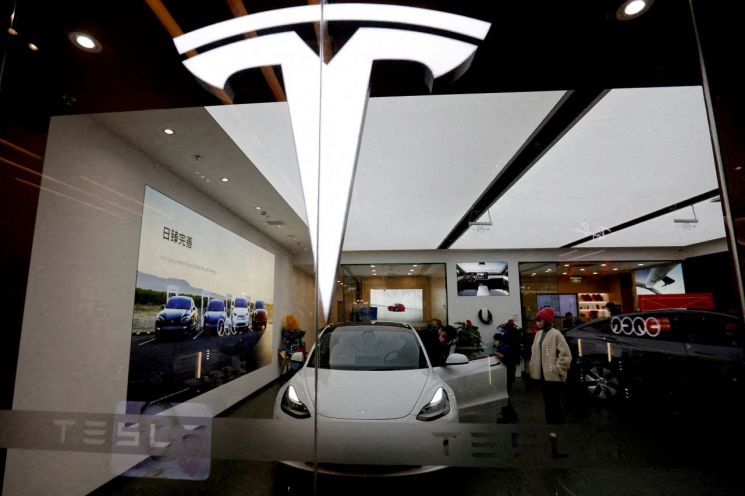
Bloomberg reported that "the number of Chinese electric vehicle companies, which was about 500 in 2019, has decreased to around 100." Wang Hanyang, an analyst at research firm 86 Securities Research Co., Ltd., stated, "About 80% of China's eco-friendly vehicle startups have been or are being pushed out of the market."
◆ Chinese Startups Shed Tears Amid Financial Difficulties and Poor Sales
A representative case is NIO, a Chinese electric vehicle startup once regarded as a 'Tesla killer.'
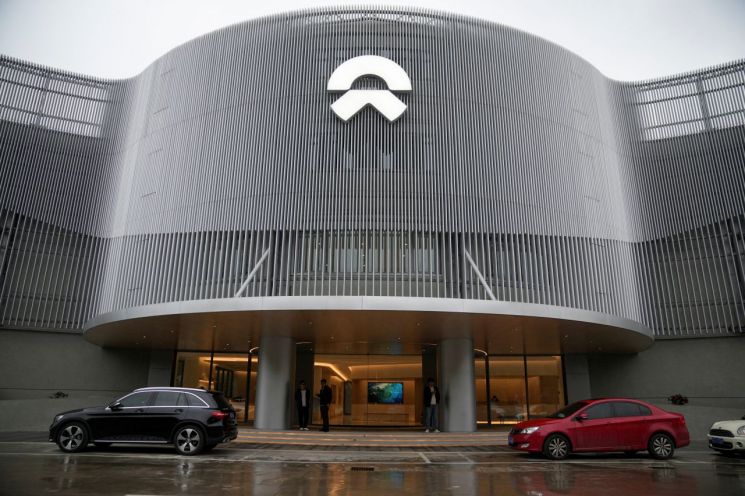
Founded in 2014, NIO has grown rapidly until recently under extensive support from the Chinese government. However, NIO is currently struggling financially. According to The Wall Street Journal (WSJ), as of the end of March this year, NIO's cash and other short-term liquid assets decreased to $5 billion, about one-third of the previous year. During the same period, its debt was $2 billion. William Li, NIO's CEO, predicted that the company would reach its break-even point by the end of 2024, a year later than initially expected.
NIO's difficulties stem from poor sales. NIO's new car sales margin dropped from 18% in the first quarter of last year to 5% in the first quarter of this year. While Tesla significantly reduced vehicle prices in the Chinese market, prompting other Chinese electric vehicle companies to follow suit, NIO took no significant action. Consequently, NIO's monthly vehicle deliveries decreased from about 10,000 units last year to 6,000 units in April and May this year.
Not only NIO but also other Chinese electric vehicle startups such as WM Motor and Xpeng are facing similarly difficult situations.
WM Motor halted most of its production and laid off employees earlier this year, withdrawing some stores due to cash shortages. Letin Auto, founded in 2008 and known for its $4,000 electric hatchback, went bankrupt in May after failing to secure funding. Xpeng launched a new model with improved autonomous driving features in January and decided to reduce prices by 10% on some models, but it has continued to suffer from poor sales since September last year.
◆ Is China Gradually Reducing EV Subsidies? "The Next Five Years Are Critical"
The changes in the Chinese electric vehicle market appear to be significantly influenced by government subsidies.
The Chinese government has supported the electric vehicle industry with large-scale subsidies and recently announced an extension of tax benefits for new electric vehicle purchases until 2027. However, Bloomberg reported signs that the government is reluctant to continue propping up struggling companies by continuously pouring in support. Initially, companies only needed to produce vehicles that met subsidy and regulatory requirements, but such vehicles are increasingly seen as inadequate in terms of performance and design to justify ongoing support.
Jochen Siebert of JSC Automotive noted that while features like autonomous driving and large interior screens were popular in the early stages of the electric vehicle market, safety and performance are now gaining attention, which could favor traditional automakers like Volkswagen. He added, "The next five years could be decisive."
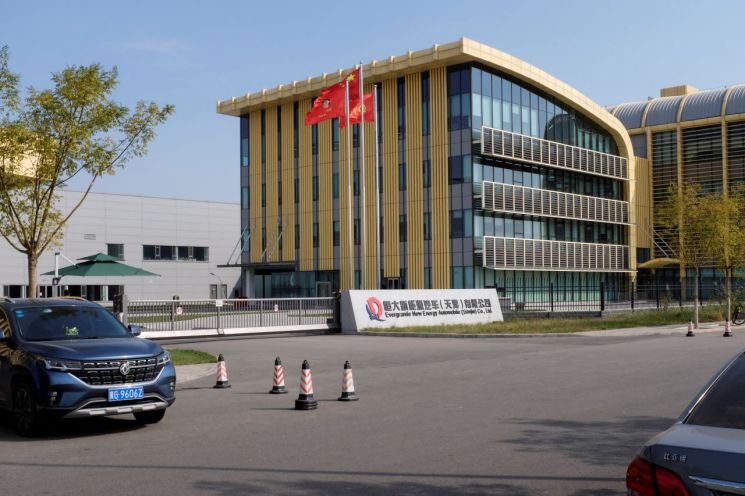
Joel Ying, an analyst at Nomura, told WSJ, "Not everyone can survive in the market," evaluating that startups are inherently more vulnerable compared to established large automakers that have internal combustion engine vehicles as cash cows.
◆ Unstable No.1 BYD, Buffett Sells More Shares
However, even BYD, which has expanded its influence in China, cannot be entirely optimistic.
American investment company Berkshire Hathaway, led by 'investment master' Warren Buffett, continues to sell its BYD shares. Berkshire Hathaway recently sold 2.53 million BYD shares listed on the Hong Kong stock market, amounting to approximately HKD 675.8 million (about KRW 112.8 billion). Berkshire Hathaway's stake in BYD once approached 20%, but it has now dropped to 8.98%.
Berkshire Hathaway, which has invested in BYD since 2008, has been selling shares since August last year. Including this sale, it has sold shares 12 times. At last month's annual shareholders meeting, Buffett said, "I have long felt that the automobile industry is very difficult," and "There are competitors worldwide, but being a winner once does not guarantee always being a winner." Earlier in April, he also expressed in an interview his intention to find better investment opportunities than BYD.
BYD's sales in the first quarter of this year were 120.173 billion yuan (about KRW 21.678 trillion), with a net profit of 4.13 billion yuan. These figures represent increases of 79.83% and 410.89% year-on-year, respectively, but compared to the fourth quarter of last year, they decreased by 23.1% and 43.5%, respectively.
© The Asia Business Daily(www.asiae.co.kr). All rights reserved.
![User Who Sold Erroneously Deposited Bitcoins to Repay Debt and Fund Entertainment... What Did the Supreme Court Decide in 2021? [Legal Issue Check]](https://cwcontent.asiae.co.kr/asiaresize/183/2026020910431234020_1770601391.png)

















