The 'Nurse and Care Integrated Service' Health Insurance Coverage Project Started in 2015
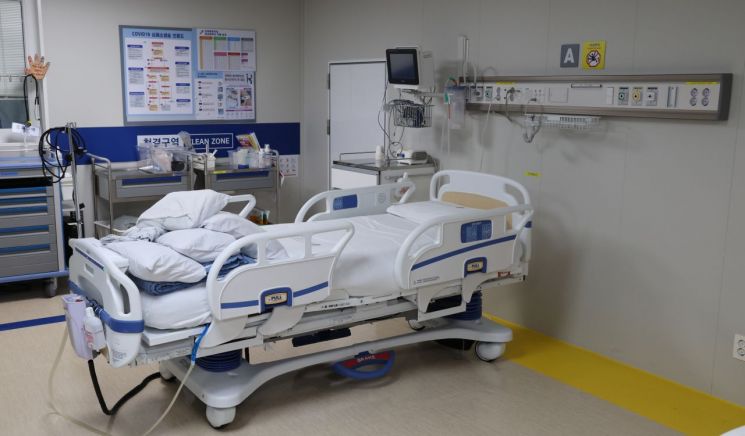
Mr. A (62), who underwent thyroid surgery last March, needed "third-party caregiving" as his entire family had to go to work. Normally, he would have had to pay over 100,000 won per day for caregiving, but he was able to receive nurse caregiving by paying only around 20,000 won per day for the hospital room fee. Mr. A said, "The nurse was a great help, acting like family when I needed to move or eat," and added, "I hope this service expands so that many people can benefit."
There are growing calls for the expansion of the integrated nursing and caregiving service, which promotes the "coverage of caregiving costs." An integrated nursing and caregiving service ward refers to a ward where professional nursing staff such as nurses and nursing assistants provide 24-hour nursing and caregiving instead of family members or caregivers. The health insurance coverage project started in 2015 with the aim of reducing patients' excessive caregiving costs while providing high-quality medical services. It is one of the highly satisfactory health care services, with medical institutions receiving up to twice the fees compared to general wards, benefiting both patients and caregivers.
However, according to a recent survey conducted by the Health and Medical Workers' Union targeting 29 medical institutions providing integrated nursing and caregiving services, only 28.4% of total beds were used as integrated nursing and caregiving service beds. Only six institutions had more than 50% of their beds designated for integrated nursing and caregiving services. Why hasn't the number of integrated nursing and caregiving service beds, which satisfy both patients and medical institutions, increased dramatically?
The shortage of nursing staff is cited as a cause. In integrated nursing and caregiving service wards, nurses must work busily in three shifts, handling their primary duties such as patient observation and medication, as well as nursing, care, and caregiving services. Moreover, if the number of patients per nurse exceeds 10, burnout accelerates. A nurse from an integrated ward in Seoul said, "As the scope of work increases, patient complaints also rise, leading to lower job satisfaction and higher turnover rates among nurses in integrated wards," adding, "The nursing and caregiving hospitalization fees from operating integrated wards do not necessarily translate into income for nurses."
Due to the chronic shortage of nursing staff, it is evaluated that in integrated wards, inpatients are skewed toward mild cases rather than severely ill patients who truly need caregiving. According to the National Health Insurance Service, as of the fourth quarter of last year, among 611 institutions operating integrated nursing and caregiving wards, only 12.9% of patients in service wards were classified as severe cases. This means that only about one in ten patients in integrated wards is severely ill.
According to the guidelines for the integrated nursing and caregiving service project, there are no admission restrictions based on patient severity. Field nursing staff emphasize that "establishing a patient-to-nurse ratio standard within integrated wards should come first." A Health and Medical Workers' Union official said, "Appropriate staffing standards by disease type and severity should be established for integrated wards, and measures such as improving awareness among patients and caregivers should be implemented to enable full expansion of the integrated service." The Ministry of Health and Welfare, the relevant authority, plans to announce improvement measures for the integrated nursing and caregiving service system next month.
© The Asia Business Daily(www.asiae.co.kr). All rights reserved.
![Clutching a Stolen Dior Bag, Saying "I Hate Being Poor but Real"... The Grotesque Con of a "Human Knockoff" [Slate]](https://cwcontent.asiae.co.kr/asiaresize/183/2026021902243444107_1771435474.jpg)
















