Yi Gijae, Yangcheon District Mayor, Leads Over 100 Direct Communication and Field-Centered Innovative Administration Sessions in His First Year
Major Achievements in Key Areas Including Mokdong Reconstruction Entering Full Swing and Expansion of Airport Noise Countermeasure Zones
In the Remaining Three Years, Efforts Will Focus on Solving Seven Major Pending Issues and Expanding Public Infrastructure Such as Transportation
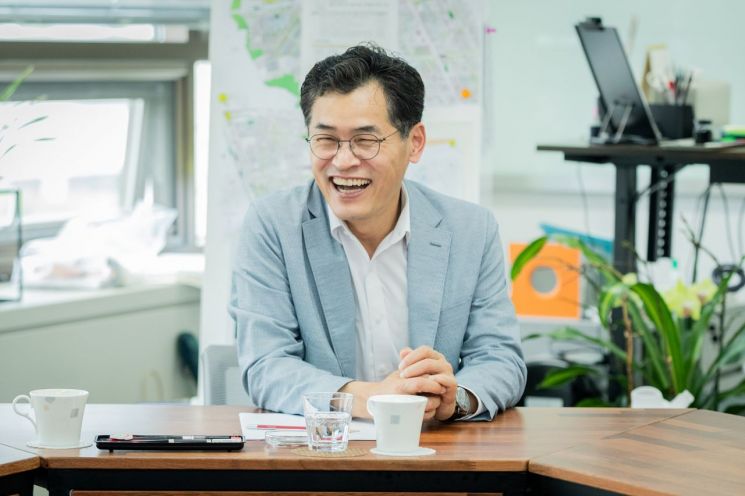
With the catchphrase “A Livable City, a Desirable Yangcheon,” Yi Gijae, the mayor of Yangcheon District in the 8th local government term, marked his first anniversary in office by stating, “The past year was a time to lay the foundation for a ‘New Era of Yangcheon.’ The remaining three years will be dedicated to significantly expanding outdated and insufficient public infrastructure and meticulously preparing to open a future city.”
Mayor Yi, known for his strong work drive and execution ability, has visited key sites across Yangcheon District more than 100 times since taking office, averaging twice a week. He has also not hesitated to directly visit related institutions such as the Ministry of Land, Infrastructure and Transport and Seoul City Hall to find solutions. Through these efforts, he has achieved significant results in major projects that once seemed distant, including passing safety inspections for old apartment reconstruction, expanding redevelopment projects for aging housing, and providing substantial support for residents affected by airport noise.
Mokdong Apartment Reconstruction Enters Full Swing, Redevelopment Projects Also Fully Launched
Given that 31.9% of housing in Yangcheon District is over 30 years old, urban renewal is urgently needed. Earlier this year, 12 complexes, including 11 Mokdong apartment complexes and the Sinwol Siyeong Apartments, successfully passed final safety inspections, marking the reconstruction projects’ entry into full swing. This achievement is attributed to Mayor Yi’s expertise in urban engineering and his persistent appeals to the Ministry of Land and Seoul City for the retroactive application of relaxed safety inspection standards. This not only shortened the project duration by 2 to 3 years but also reduced additional costs for residents.
In addition to reconstruction projects, redevelopment of aging housing is actively underway in 38 areas in various forms, including five private and public redevelopment projects, station area projects, street housing maintenance projects, and Moa Town. Notably, last year, four new districts were selected as candidates for the ▲Urban Public Housing Complex Project ▲Public Redevelopment Project ▲Rapid Integrated Planning Housing Redevelopment Project, significantly expanding redevelopment zones.
Practical Support Policies in Five Key Areas for Residents Affected by Airport Noise
Over the past year, efforts to expand practical support for residents in airport noise-affected areas such as Sinwol-dong have shone across multiple fields. The district proactively responded to the Ministry of Land’s “Airport Noise Impact Survey,” preventing the reduction of approximately 3,000 households in the airport noise countermeasure zone and instead increasing the number by about 450 households. Additionally, as the first local government in the nation, Yangcheon implemented a property tax reduction policy, establishing the maximum possible tax relief at the district level starting from the July property tax installment this year.
In April this year, the district opened the “Airport Noise Countermeasure Comprehensive Support Center” in Sinwol-dong, operated directly by the district, establishing a comprehensive and systematic damage support system. Particularly, the district set up its own airport noise monitoring systems at three key locations within the area to secure objective data for future practical compensation measures.
Furthermore, the district supports physical and mental damage compensation in various ways, including the nation’s first implementation of precise hearing tests and customized psychological counseling. Going forward, the district plans to continuously negotiate with the government to expand compensation measures that residents can feel, such as reducing late-night flight hours and increasing electricity subsidies reflecting real living costs.
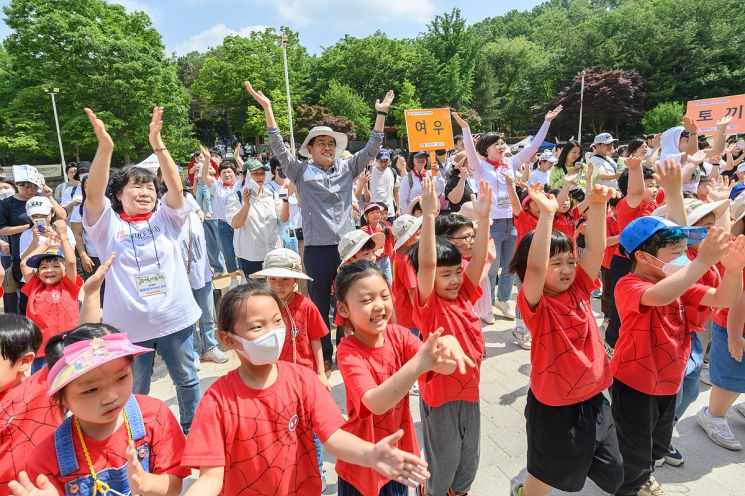 Lee Gijae, Yangcheon District Mayor, is participating in recreation together at Yangcheon Children's Forest.
Beyond Mokdong, Developing Yangcheon as an Educational City with a Specialized Education Brand
Yangcheon District is recognized as a representative educational city in Seoul, but its reputation has been largely centered around the academy districts in Mokdong. To overcome this limitation, the district plans to focus administrative efforts on creating a child-friendly environment, building lifelong education infrastructure, and nurturing future talents, aiming to develop the entire Yangcheon area into a happy educational city.
First, as the first in Seoul, the district signed agreements with 85 public and national daycare centers within the district to launch the “Yangcheon-style 24-hour Overnight Emergency Care” for infants and toddlers. To eliminate blind spots in elementary school aftercare, the “Our Neighborhood Care Center Yangcheon No. 5” was opened. To strengthen self-directed learning among local youth, the aging youth reading rooms in Sinwol 1-dong and Mok 4-dong were remodeled into public study cafes. Additionally, the Career and Vocational Experience Support Center’s functions will be expanded to integrate learning, college admission, and career guidance, providing equal educational opportunities.
Moreover, to enhance employment capabilities for unemployed youth, a new “National Qualification Exam Fee Support Project” was established. Within the year, the district plans to expand “Hub-type Lifelong Learning Centers” and build a “Lifelong Learning Integrated Portal Service” to broaden the base of lifelong learning. Particularly, in September, the district will host a nationwide “Future-Oriented Education Expo” aimed at strengthening future talent capabilities for the Fourth Industrial Revolution era, enhancing Yangcheon’s status as an educational city and leading global future talent development.
Creating a Healthy City and Providing Customized Welfare Services
Over the past year, the district supported various projects to ensure that all residents can enjoy a vibrant life. The 12th Yangcheon Marathon, revived after eight years, attracted about 4,600 participants nationwide who ran along the Anyangcheon Stream, creating a passionate sports festival. To realize Mayor Yi’s vision of transforming the Mokdong stadium and reservoir area into a “Complex Sports Park,” close coordination with Seoul City is needed to include this in the broader Western Seoul balanced development strategic plan.
Additionally, the district completed expansions of riverside walking paths along Anyangcheon, created loess trails, and developed family garden projects, providing popular resting spaces for families. Next year, the district plans to create the “Anyangcheon Riverside Big Deck” linked with the Shinmokdong Station Bike Lounge and establish the “MZ Sports Plaza” under the Mokdong Bridge for youth.
To foster a healthy pet culture, the existing dog rest areas have been enhanced, and additional mobile dog rest areas have been created. The number of dog rest areas currently operating at three locations will be expanded to ten by 2025. Furthermore, as the first district in Seoul to operate a “Visiting Pet Plant Care Service” and provide “Total Pet Plant Services,” Yangcheon aims to become a true “Special Pet District.”
The district is expanding customized care and support for socially vulnerable groups such as low-income families, seniors, people with disabilities, and youth to prevent social exclusion. To proactively identify households at risk in welfare blind spots, the district signed cooperation agreements with ten local institutions, including post offices, to strengthen a detailed welfare safety net and resource linkage. A new “Senior Safe Housing Environment Improvement Project” was introduced to install anti-slip safety equipment for seniors at high risk of falls. Starting with the reopening of the Haemaji Senior Dining Hall in May this year, four aging senior dining halls will be sequentially remodeled by 2025.
Care services for people with disabilities have been expanded by increasing support personnel from about 80 to 120 to prevent service blind spots. The district also operates sports classes for people with disabilities to promote healthy physical activities. Plans are underway to improve accessibility and convenience for people with disabilities by establishing a dedicated rest area for the visually impaired and relocating the office of the Disabled Persons’ Association. Additionally, the “Free Reserve Forces Training Transport Bus Support Project,” introduced for the first time in Seoul in March this year, has been recognized as a model youth policy improving reserve forces’ mobility and is expected to be expanded nationwide.
Full Effort to Expand Transportation Infrastructure Including the Mokdong Line and Invest in Public Facilities
Mayor Yi stated, “The remaining three years will be dedicated to delivering definite results for Yangcheon’s next 50 years,” adding, “In the second year, we will concretize public facility investments necessary for building urban infrastructure public facilities to prepare for the future city.” In particular, to actively respond to population growth due to reconstruction and redevelopment, expanding transportation infrastructure such as the Mokdong Line, the Gangbuk Transversal Light Rail Transit, and establishing the Sinwol Intersection Station were identified as the top priorities during the remaining term.
© The Asia Business Daily(www.asiae.co.kr). All rights reserved.
![Clutching a Stolen Dior Bag, Saying "I Hate Being Poor but Real"... The Grotesque Con of a "Human Knockoff" [Slate]](https://cwcontent.asiae.co.kr/asiaresize/183/2026021902243444107_1771435474.jpg)


















