Mass Appearance in Bukhansan and Eunpyeong-gu Areas Last Year
"Indiscriminate Pest Control Harms Ecosystem as They Are Beneficial Insects"
Last summer, the 'Love Bug' that was rampant around Bukhansan, including Eunpyeong-gu in Seoul and Goyang-si in Gyeonggi Province, has recently appeared all over Seoul, causing discomfort among citizens.
With the massive outbreak of Love Bugs, pest control complaints surged, keeping district offices busy. Due to the flood of complaints, some local governments such as Yeongdeungpo-gu and Seongdong-gu posted notices on their websites introducing the ecological habits and control methods of the Love Bug. The number of people buying pest control products also increased.
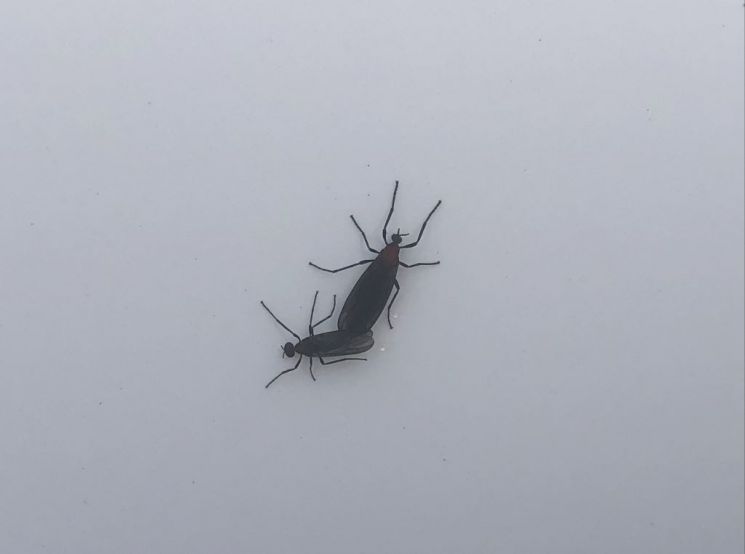
The official name of the Love Bug is the red-backed velvet fly, belonging to the family of hairy flies in the order Diptera. It mainly inhabits southern China and places like Okinawa, Japan, and like other hairy flies, males and females usually travel in pairs, hence the name 'Love Bug.'
Experts believe that the Love Bugs that appeared massively last year around Eunpyeong-gu, Seoul, and Bukhansan have gradually spread to surrounding areas.
According to Yonhap News, Professor Shin Seung-kwan of the Department of Biological Sciences at Seoul National University analyzed, "Some of the Love Bugs that appeared in large numbers near Eunpyeong-gu, Seoul, and Goyang-si, Gyeonggi Province last year likely flew away, while others hitched rides on vehicles or subways, spreading far."
Love Bugs seem to have strong survivability and can easily breed even in urban areas.
Professor Shin explained, "Love Bugs can survive with just a certain amount of fallen leaves, so they can live in small urban parks or even just street trees."
Professor Shin estimated that during pest control in Eunpyeong-gu in 2021, the number of natural enemies such as mantises decreased, leading to a large-scale maturation of Love Bug larvae. A female Love Bug typically lays 300 to 500 eggs.
Love Bugs do not directly harm humans; rather, they are beneficial insects that help purify the environment. They enrich the soil and adult Love Bugs also play a role in pollination.
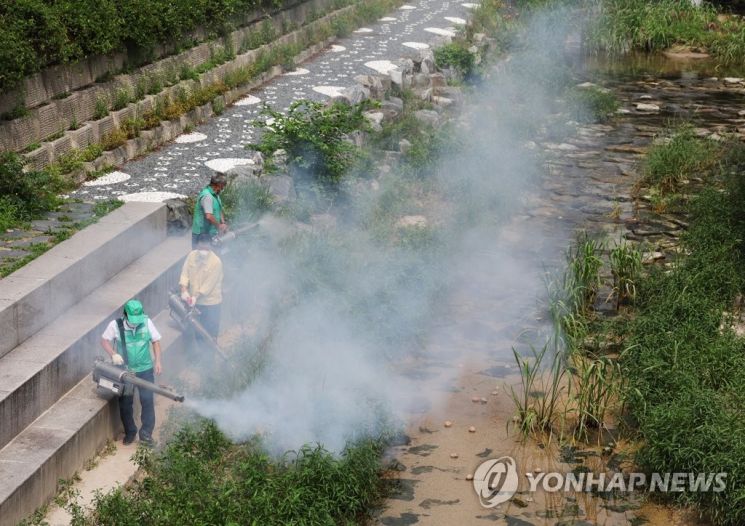 In preparation for the massive outbreak of lovebugs last July, pest control work was carried out in Seongbuk-gu.
 [Photo by Yonhap News]
Experts suggest that indiscriminate pest control can cause side effects and recommend selective pest control limited to living spaces rather than comprehensive extermination.
Professor Shin advised, "Considering the Love Bug's preference for ultraviolet light, it is effective to install streetlights that block UV rays in urban areas or to place sticky traps on window frames where Love Bugs gather at home."
© The Asia Business Daily(www.asiae.co.kr). All rights reserved.


















