Husband Also Agrees... Court Grants Petition
Hope for Both Korean and Vietnam Identities
A Vietnamese woman who acquired Korean nationality after marrying a Korean man and established her own surname and bon-gwan successfully changed her son's surname and bon-gwan to match hers.
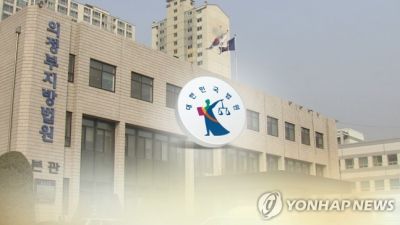
On the 23rd, the Uijeongbu District Court announced that the petition filed by A, a Vietnamese immigrant woman, to change her son's surname and bon-gwan to her own was accepted.
Usually, changes to a child's surname and bon-gwan occur in remarried families where the child takes the surname of a stepfather or adoptive father, or in families where the mother raises the child alone after divorce or bereavement, making this petition unusual.
In 2016, A was attending Hanoi University in Vietnam when she met B, a Korean national visiting Vietnam, and they got married. After moving to Korea, A settled in Yangju, Gyeonggi Province, and gave birth to a son in 2018. At that time, the son was registered in the family registry under the husband's surname and bon-gwan.
Later, in 2021, A acquired Korean nationality, and last year, she created and legally changed her surname to 'A' and established her bon-gwan.
The couple educated their son to embrace both Korean and Vietnamese identities and sent him to study in Vietnam every vacation.
A wanted her child to have an identity rooted in the mother's homeland lineage and for the descendants of the surname and bon-gwan established by a foreign immigrant woman in Korea to continue for generations.
Accordingly, she petitioned the court for permission to change her son's surname and bon-gwan from the father's to the mother's.
Her husband, B, also actively supported the change of their child's surname and bon-gwan.
B expressed respect for his wife for trusting him despite his older age and moving to a distant foreign country, stating that he regularly shares household chores and childcare and strives for a gender-equal family.
The court judged that the positive effects of changing the surname and bon-gwan outweighed any negative impacts.
Although there was concern that changing to a surname and bon-gwan indicating Vietnamese descent might subject the son to unnecessary prejudice, the court stated, "Such concerns should not be grounds to disregard the constitutional interests of personal dignity of family members and gender equality," and accepted A's petition.
Furthermore, the court added, "There is no regulation that a child's surname and bon-gwan can only be changed when family relationships change or new family relationships are created," and noted, "This surname change is expected to further strengthen emotional integration within the family."
Meanwhile, as of 2021, the number of children in multicultural families in Korea reached 290,000. According to Statistics Korea data released in May, the proportion of children born to multicultural families among all newborns in Korea increased from 5.2% in 2017 to 5.5% in 2021.
According to the ‘Youth Statistics’ released by the Ministry of Gender Equality and Family in May, the number of multicultural students was 169,000 in 2022, a 5.4% increase from the previous year. While the total number of elementary, middle, and high school students in Korea is decreasing, the number of multicultural students continues to rise, more than tripling since 2013.
© The Asia Business Daily(www.asiae.co.kr). All rights reserved.
!["The Woman Who Threw Herself into the Water Clutching a Stolen Dior Bag"...A Grotesque Success Story That Shakes the Korean Psyche [Slate]](https://cwcontent.asiae.co.kr/asiaresize/183/2026021902243444107_1771435474.jpg)
















