"Signs of a 'liquidity trap' are emerging in China, the world's second-largest economy."
During the Great Depression in the United States in the 1930s and Japan's prolonged stagnation in the 1990s, despite flooding the market with money and lowering interest rates to unprecedented lows, the real economy failed to revive. Even as loan interest rates dropped to historic lows due to rate cuts, funds did not flow into corporate investment or household consumption. Amid this, economic growth rates plummeted, and production and export contractions became increasingly severe.
On the 20th (local time), the US news outlet Axios diagnosed that "China's economy is in a macroeconomic situation known as a liquidity trap, where consumption and investment do not increase despite interest rate cuts, similar to past cases of the Great Depression and Japanese-style deflation (price declines amid economic stagnation)."
In recent years, China has experienced rapid outflows of foreign capital due to stringent regulations on big tech and real estate, and severe consumption slumps due to lockdown measures amid the COVID-19 pandemic. The export-driven growth model took a direct hit as the trade war with its largest trading partner, the United States, intensified, and the bursting of the real estate bubble led to a historic downturn lasting one and a half years.
Bank lending has also shrunk. According to the People's Bank of China, new bank loans in China in April amounted to 718.8 billion yuan, shrinking to one-fifth (19%) of March's 3.89 trillion yuan. This is half the market expectation of 1.4 trillion yuan.
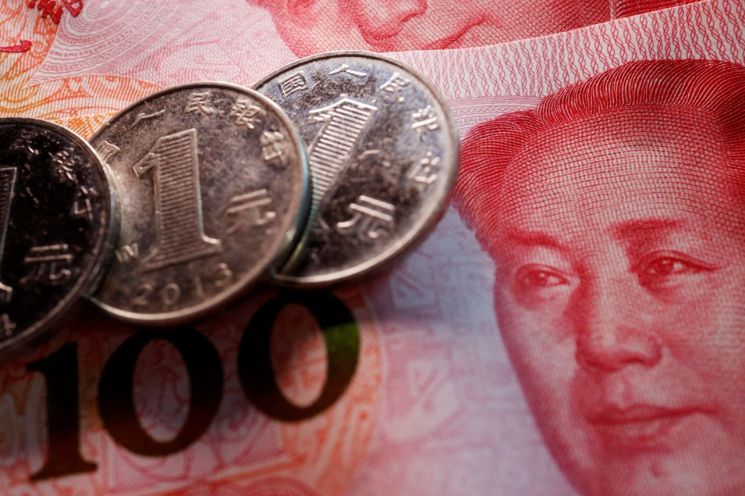
The Chinese government ultimately pulled out the interest rate cut card to stimulate the economy. On the 15th, the People's Bank of China abruptly lowered the loan prime rate (LPR), which effectively serves as the benchmark interest rate, by 0.1 percentage points for the first time in 10 months. The 1-year LPR fell to 3.55% per annum, and the 5-year LPR to 4.20% per annum.
Axios described the rate cut decision as "an attempt to recover the economy from the economic shockwaves and geopolitical crises following the COVID-19 pandemic," adding that "China is undergoing its most significant economic transformation since its transition to a market economy in the 1980s."
As the economic recovery shows slow progress, the plan is to boost loan demand through monetary easing, but whether this gamble will be effective remains uncertain. China's economic growth has slowed compared to the beginning of the year, deepening concerns about stagnation. Retail sales, industrial production, trade, and investment in May all fell short of market expectations, and the youth unemployment rate hit a record high of 20.8%, exacerbating employment difficulties.
Goldman Sachs lowered its GDP growth forecast for China from 6% to 5.4%, stating that China's aggressive growth momentum will come to a halt. Earlier, Wall Street investment banks such as Bank of America and JP Morgan also revised their growth forecasts downward from 5.5?6.3% to 5.1?5.7%. Goldman Sachs noted, "Considering past monetary policy cases such as the 2008 global financial crisis, 2016, and the 2020 COVID-19 pandemic, the likelihood of the Chinese government implementing aggressive fiscal policies is limited."
Having gone all-in on economic stimulus over recent years, the Chinese government’s national debt has ballooned, making bold fiscal policies difficult to implement. The New York Times (NYT) pointed out, "In recent years, massive monetary easing to escape the pandemic-induced recession has caused government debt to rise to uncontrollable levels," adding, "With the increase in national debt, it is not easy to implement bold fiscal policies, so solutions to accelerate the rebound of the Chinese economy are elusive."
© The Asia Business Daily(www.asiae.co.kr). All rights reserved.

















