The 11th Round of Sanctions on Russia Expected Soon
Chinese Companies Assisting Sanction Evasion Also Targeted
The European Union (EU) has reached a provisional agreement on the 11th round of sanctions against Russia, aimed at blocking the circumvention of export bans by rerouting prohibited products through third countries. This move comes in response to concerns that exports to Russia via some third countries, such as those in Central Asia, have continued despite the prolonged sanctions. It is expected that some Chinese companies, which have been responsible for these rerouted exports, will also be targeted by the sanctions, potentially intensifying diplomatic tensions with the Chinese government.
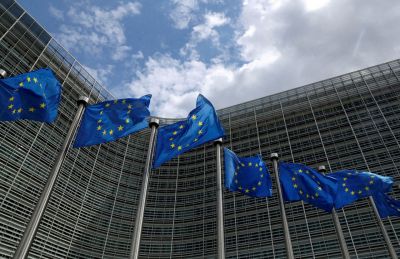
According to Euronews on the 21st (local time), the Swedish government, which holds the rotating presidency of the EU for the first half of this year, announced on Twitter that "EU ambassadors agreed on the 11th round of sanctions against Russia at the Permanent Representatives Committee meeting." The main point of these sanctions is to block the rerouting of goods banned within the EU to Russia through certain third countries, including those in Central Asia. However, as the EU Council has not yet given final approval, detailed information has not been disclosed.
Euronews cited diplomats who requested anonymity, stating, "The new sanctions list includes three companies based in China," and noted, "This is the first time Chinese companies have been directly targeted by EU sanctions against Russia."
Earlier, according to the Hong Kong South China Morning Post (SCMP), five Chinese companies previously listed in the EU sanctions were removed from the list due to pressure from the Chinese government. Euronews reported, "More Chinese companies were involved in evading sanctions against Russia, but only some were included in the sanctions list due to Chinese pressure."
Since the outbreak of the Ukraine war, there have been ongoing concerns within the EU that key strategic materials and products subject to export bans have continued to be exported to Russia. Discussions to prevent rerouted exports have been ongoing. Within the EU, it is believed that, in addition to Chinese companies, companies from Central Asian countries such as Kazakhstan and Uzbekistan, as well as companies from Middle Eastern countries like the United Arab Emirates (UAE), have been primarily responsible for these rerouted exports.
In particular, Central Asian countries have seen an abnormal surge in imports of EU products since the outbreak of the Ukraine war, raising suspicions that they may be major channels for circumventing sanctions against Russia.
For the first time, measures to control the export of products that could potentially be used for military purposes and the transfer of sensitive technologies to third countries are expected to be included. This also suggests, for the first time, the possibility of applying sanctions extraterritorially to third countries closely linked to Russia.
Ursula von der Leyen, President of the European Commission, welcomed the provisional agreement on the day, emphasizing, "The anti-circumvention tool will prevent Russia from obtaining sanctioned items." The EU Council plans to seek final approval based on the provisional agreement as early as the same day, and if confirmed, the new sanctions are expected to take effect from the 23rd.
© The Asia Business Daily(www.asiae.co.kr). All rights reserved.
![Clutching a Stolen Dior Bag, Saying "I Hate Being Poor but Real"... The Grotesque Con of a "Human Knockoff" [Slate]](https://cwcontent.asiae.co.kr/asiaresize/183/2026021902243444107_1771435474.jpg)
















