Ministry of Gender Equality and Family Announces Results of 'Youth Media Use Harmful Environment Survey'
It was found that 40% of elementary school students have experienced watching ‘adult videos.’ The probability of adolescents being asked for identification when purchasing alcohol or cigarettes was less than 20%.
The Ministry of Gender Equality and Family announced on the 22nd the results of the ‘2022 Survey on Harmful Media Environment for Youth,’ conducted on 17,140 youths attending elementary (grades 4-6), middle, and high schools nationwide.
This survey is a nationally approved statistic conducted every two years under the ‘Youth Protection Act’ to provide basic data necessary for establishing youth protection policies regarding media use and harmful environments.
In particular, this time, the survey was conducted with newly added items such as detailed experiences of violence in online spaces, personal information damage experiences, online gambling games, microloan services (proxy payment), and experiences with major hallucinogenic substances and drugs (appetite suppressants (Nabi-yak), painkillers (Fentanyl patch)).
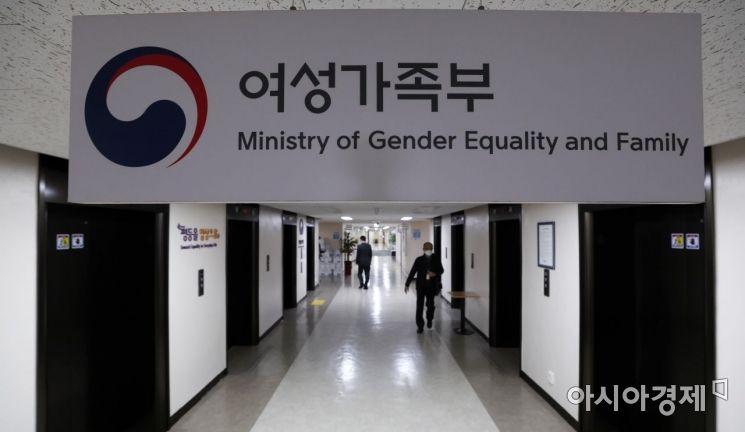 President-elect Yoon Suk-yeol reiterated his pledge to abolish the Ministry of Gender Equality and Family, stating, "Hasn't the ministry fulfilled its historical mission by now?" Meanwhile, on the 14th, the Ministry of Gender Equality and Family at the Government Seoul Office, facing a crossroads regarding its existence, is stirring unrest amid a restless atmosphere. Photo by Kim Hyun-min kimhyun81@
The survey results showed that youth’s use of online videos such as ‘Internet personal broadcasts and video sites’ (96.7%) continues to increase steadily, and among elementary school students, the usage rate of ‘extended virtual worlds (Metaverse)’ was 70.6%, higher than that of middle school students (37.3%) and high school students (15.2%).
The overall youth ‘adult video usage rate’ was 47.5%, an increase compared to 37.4% in 2020, with the usage rate among elementary school students steadily rising to 40.0%.
The rate of youths using ‘someone else’s ID’ when using the Internet was 5.8%, and the rate of using ‘someone else’s resident registration number’ was 1.7%. Among these, the experience rate of youths who used harmful media such as gambling games was higher (20.7% for those who used someone else’s ID, 9.8% for those who used someone else’s resident registration number) than those who did not.
Additionally, the ‘violence victimization rate’ was 16.3%, with the top type of victimization being ‘verbal violence’ (offline 10.6%, cyber space 7.3%). The ‘sexual violence victimization rate’ was 5.5%, with the most common type being ‘sexual humiliation through words, gestures, or looks’ (2.5%).
As youths’ online activities increased, the proportion of ‘people attending the same school’ as major perpetrators of violence and sexual violence decreased, while the proportion of ‘people newly met online’ (17.3%) increased.
Youth ‘drinking experience’ was 13.7%, up from 11.6% in 2020, while ‘smoking experience’ decreased to 4.2%.
Among youths who have directly purchased alcohol and cigarettes, the rate of being asked for identity or age verification for adult authentication at major purchase locations such as ‘convenience stores, shops, supermarkets’ was only 18.5% for alcohol and 16.2% for cigarettes.
The newly surveyed hallucinogenic substances and drugs showed that ‘appetite suppressant (Nabi-yak) usage experience’ was 0.9%, and ‘painkiller (Fentanyl patch) usage experience’ was 10.4%, mostly purchased through prescriptions at hospitals (Nabi-yak 62.7%, Fentanyl patch 94.9%).
Among youth-prohibited entry and employment establishments, ‘multi-rooms and room cafes’ showed the highest usage rate at 13.8%, but the rate of youths aware of usage methods such as entry permission or usage time was low at 11.1%.
Youth ‘part-time job experience rate’ was 7.3%, an increase from 4.6% in 2020 when it sharply declined due to COVID-19, while the ‘delivery part-time job experience rate’ sharply decreased to 1.8% compared to 15.2% in 2020.
Among youths with part-time job experience, the rate of not receiving minimum wage significantly decreased to 12.6%, and the experience rate of unfair treatment and conditions also continued to decline.
The Ministry of Gender Equality and Family plans to vigorously promote the ‘Measures to Strengthen Youth Protection from New and Emerging Harmful Environments,’ jointly announced with related ministries in May, reflecting the main results of this survey.
To early detect youths who are victims of violence, online counseling will be strengthened by visiting online media preferred by youths (extended virtual worlds, KakaoTalk open chat rooms), and continuous monitoring will be conducted on suspicious activities such as illegal distribution of obscene information and grooming-type sexual crimes (online grooming).
Furthermore, to prevent and block youth gambling addiction, cooperation with the Ministry of Education, the Gambling Industry Integrated Supervision Commission, and others will be strengthened to crack down on overseas illegal sites. Starting this year, gambling problems will be diagnosed for first-year middle and high school students to identify at-risk youths early and connect them to counseling and healing programs.
Park Nan-sook, Director of the Youth and Family Policy Office at the Ministry of Gender Equality and Family, said, “As recent changes in the media environment accelerate, youths are spending more time online from a younger age and are exposed to various harmful factors such as drugs and gambling. Based on the analysis of this survey’s results, we plan to further strengthen policies to safely protect youths.”
© The Asia Business Daily(www.asiae.co.kr). All rights reserved.

















