Research Report from Nepal Integrated Mountain Development International Center
"Glacier Melting Rate Faster Than Expected"
A study has found that up to 80% of glaciers in the Himalayan highlands could disappear due to global warming.
According to foreign media on the 20th (local time), researchers at the International Centre for Integrated Mountain Development (ICIMOD) in Kathmandu, Nepal, stated in a report on the Hindu Kush mountain glaciers released that day that if the Earth's temperature rises by 1.5 to 2 degrees Celsius compared to pre-industrial levels, 30 to 50% of the glaciers in the region will disappear by 2100.
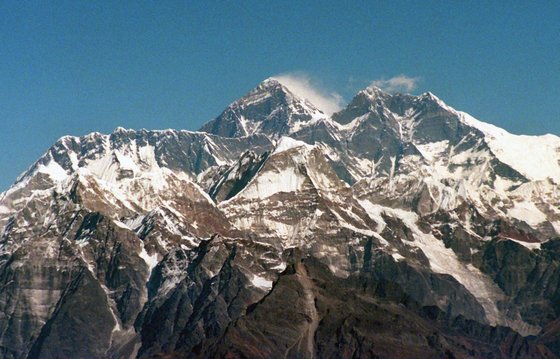 Himalaya Everest. The photo is not related to the specific content of the article. Photo by EPA·Yonhap News
The report also analyzed that if the temperature rises by 3 to 4 degrees Celsius compared to pre-industrial times, glaciers in the eastern Himalayas could disappear by 75% to 80%.
The Hindu Kush mountain range spans South Asia and the border regions of China, including Afghanistan, Pakistan, Nepal, India, and Bhutan, and contains many high Himalayan peaks and glacier areas.
Phillipus Wester, an environmental scientist leading the study, said, "It is expected that ice melts as it gets warmer, but the rate of melting is much faster than anticipated." According to the report, glaciers in the region between 2011 and 2020 were lost 65% faster than in the previous decade.
The ICIMOD report pointed out that the water volume of 12 rivers originating from this region, including the Ganges and Indus rivers, will reach their peak around the middle of this century, which could increase the frequency of floods in lowland areas. In fact, Pakistan, which experienced the worst historic floods in 2022, cited heavy rainfall and meltwater from high mountain glaciers as major causes of the flooding.
There are also concerns that water supply will ultimately decrease after the floods. Jacob Steiner, a researcher at ICIMOD, said, "If the rate of glacier melting reaches its peak and the meltwater decreases, future hydropower plants may face a shortage of water necessary for their originally intended use."
© The Asia Business Daily(www.asiae.co.kr). All rights reserved.
![User Who Sold Erroneously Deposited Bitcoins to Repay Debt and Fund Entertainment... What Did the Supreme Court Decide in 2021? [Legal Issue Check]](https://cwcontent.asiae.co.kr/asiaresize/183/2026020910431234020_1770601391.png)















