Diagnostic device and digital healthcare companies are increasingly entering the continuous glucose monitoring (CGM) market, which allows real-time blood glucose measurement through sensors attached to the body. This is because CGM offers greater convenience compared to traditional self-monitoring blood glucose devices that require blood sampling each time, and the market is showing high growth rates.
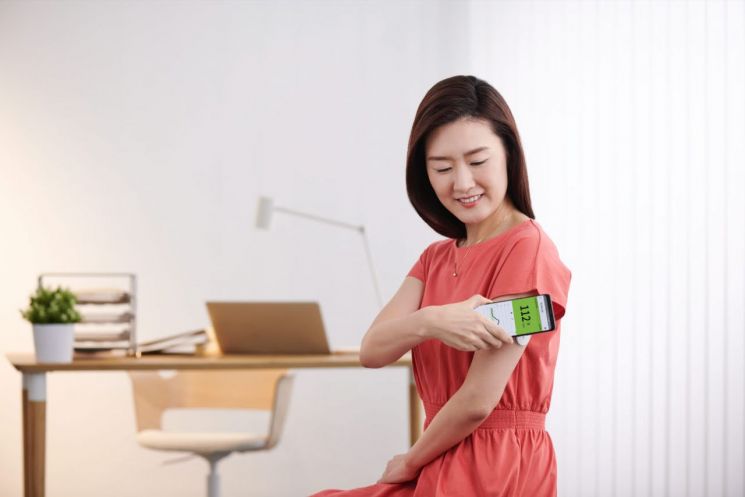 A person measuring blood sugar by touching a smartphone to the sensor of the continuous glucose monitor 'FreeStyle Libre' attached to the arm.
 [Photo by Daewoong Pharmaceutical]
According to industry sources on the 20th, Daewoong Pharmaceutical's distribution of Korea Abbott's CGM ‘FreeStyle Libre’ to domestic hospitals, clinics, and pharmacies has surpassed 600,000 units in cumulative sales within three years of its launch. Libre is a patch the size of a 500-won coin attached to the arm, and by holding a smartphone near it, users can check their blood glucose levels in real time. Notably, it checks blood glucose every 15 minutes for two hours after meals, allowing easy tracking of postprandial blood glucose changes in patients.
There are also cases where CGM is linked with healthcare services by utilizing its real-time blood glucose measurement capability. Kakao Healthcare plans to launch a digital healthcare platform featuring blood glucose management functions using CGM as a key service in the fourth quarter of this year. To this end, it has partnered with domestic and international CGM companies such as i-SENS and Dexcom. In March, i-SENS submitted a medical device approval application for its CGM ‘CareSens Air’ to the Ministry of Food and Drug Safety.
The reason companies are continuously launching CGM-related measuring devices and healthcare services is that CGM offers a more convenient measurement method than traditional self-monitoring blood glucose devices and enables real-time measurement. Self-monitoring blood glucose devices require patients to prick their fingertips for blood sampling each time, causing pain and inconvenience. In contrast, CGM causes almost no pain upon attachment and allows easy checking of blood glucose levels through smartphone applications. Unlike self-monitoring devices that measure blood glucose only at the time of sampling, CGM provides real-time blood glucose monitoring, which is a distinguishing feature.
Beyond measurement, there is also a method of using real-time blood glucose data measured by CGM for insulin injection. Medtronic, a global medical device company in the U.S. that owns the CGM ‘Guardian 4,’ acquired IoFlow, a domestic wearable insulin pump company, last month. An insulin pump is a device that continuously supplies insulin into the body. IoFlow’s patch-type insulin pump ‘IoPatch’ monitors and adjusts the patient’s insulin injection amount in real time via a smartphone app. When used together with CGM, it can create a synergistic effect by injecting insulin based on real-time blood glucose values.
The CGM market size is also showing growth every year. According to global market research firm ResearchAndMarkets, the global CGM market is expected to grow from $4.6 billion (approximately 5.9 trillion KRW) in 2019 to over $31.1 billion (approximately 39.9 trillion KRW) by 2026. The compound annual growth rate (CAGR) during this period is expected to reach 27.3%.
However, some limitations remain, such as the price of continuous glucose monitors being burdensome for some patients and limited insurance coverage. Currently, under the health insurance coverage criteria, CGM reimbursement is supported only for type 1 diabetes. Patients with type 2 diabetes, who account for about 90% of all diabetes patients, are not eligible for reimbursement. Considering that CGMs sold domestically need to be periodically replaced after a certain period of attachment, the patient’s financial burden increases accordingly. Type 1 diabetes, an autoimmune disease, occurs due to problems in insulin production, while type 2 diabetes is an acquired disease where insulin is produced but does not function properly.
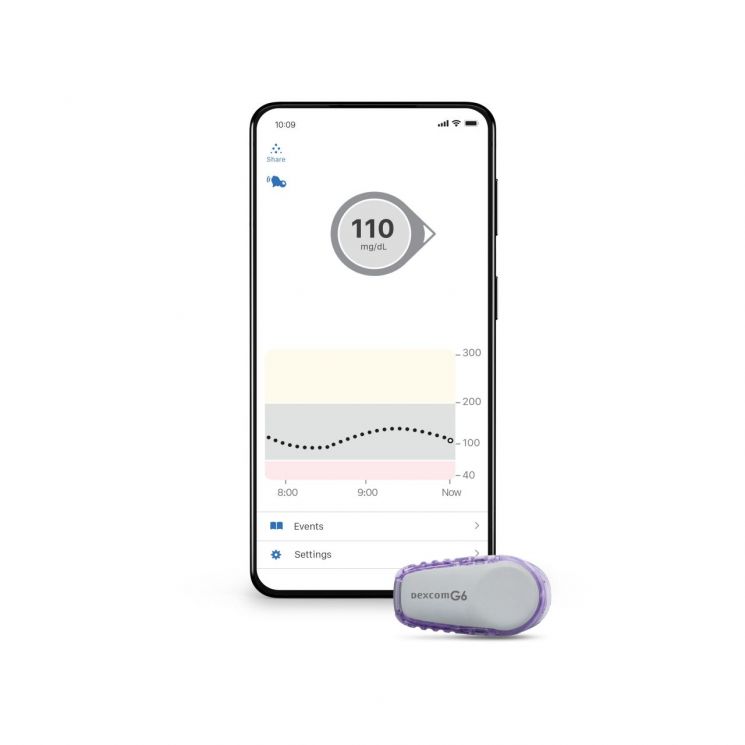
In response, companies are also making efforts to reduce patient burdens. Huons, which sells Dexcom’s CGM ‘Dexcom G6’ in Korea, decided earlier this month to provide transmitters free of charge to type 1 diabetes patients and some type 2 diabetes patients. A transmitter is a device that transmits blood glucose data measured by the sensor attached to the body to the user’s device such as a smartphone.
© The Asia Business Daily(www.asiae.co.kr). All rights reserved.


















