[Global Focus] Geopolitical Risks Bring Mixed Fortunes to Global Stock Markets
Due to the Russia-Ukraine war and the heightened geopolitical risks, including the increasingly clear conflict between the United States and China, stock markets around the world are experiencing mixed fortunes. While the stock markets of the United States and its ally Japan, positioned on one side of the conflict, continue to rise, China, on the opposing side, is recording historic declines. Following money moves driven by geopolitical conflicts and compounded by domestic stock market variables, the outlook for the stock markets in the second half of this year remains shrouded in uncertainty.
Worsening International Situation... Divergent US-Japan and China Stock Markets
The US stock market has performed well despite the increasingly clear ‘new Cold War’ dynamic between the US and China following the Russia-Ukraine war. Since Russia’s invasion of Ukraine on February 24, 2021, the S&P 500 index has risen more than 12% as of the 16th. The Nasdaq index also increased by 6.4%. The S&P 500 index has shown a boom exceeding expectations, rising nearly 15% just this year. As a result, the S&P 500’s gain in the first half of the year (based on closing prices on the 16th) marked the highest increase in 20 years.
Despite the prolonged Russia-Ukraine war, the upward trend in the US stock market has not faltered. For over 10 months since the outbreak of the war, the S&P 500 index has traced an upward curve. The international situation, which has become the worst since World War II due to threats to energy and food security, has instead served as an opportunity for the US to expand its influence and check China.
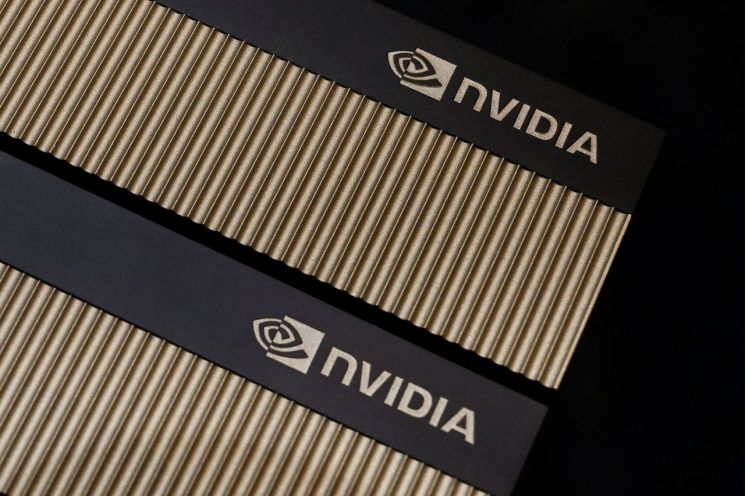
The structural characteristic of the US stock market, where seven major IT stocks?Apple, Nvidia, Tesla, Alphabet, Microsoft (MS), Meta, and Amazon?account for one-quarter of the total market capitalization, is also analyzed as a factor that has shielded it from the effects of the Russia-Ukraine war. David Rosenberg, founder of Rosenberg Research and a well-known Wall Street economist, evaluated that "the US stock market is moving based on short-term momentum rather than long-term geopolitical factors."
What is actually affecting the US stock market is the high-intensity tightening that has continued for about a year. Due to the tightening, a decline in corporate profits is inevitable. Jeremy Siegel, a leading bull on Wall Street and professor at the University of Pennsylvania’s Wharton School, warned, "The recent bull market does not mean we have escaped a recession," adding, "The US stock rally will soon end." The National Bureau of Economic Research (NBER) projected a 99.15% chance that the US economy will enter a recession this year. The Federal Reserve (Fed) froze interest rates this month considering economic slowdown, but through the dot plot, it has signaled two rate hikes this year.
Michael Wilson, Morgan Stanley’s chief US equity strategist, also warned of a market downturn, saying, "The winning streak of many mega-cap companies (with market caps over $200 billion) represented by Tesla and Nvidia points to greater pain ahead." There is also a forecast that the ‘FOMO (Fear Of Missing Out)’ sentiment, betting on further rises fearing missing out on the US stock rally, will hasten the market’s decline. Ed Cole of Man GLG Partners warned, "If investors gripped by FOMO continue their buying spree, it won’t take long for positions to reverse," adding, "Going all-in is risky."
Global Adversities Turn into Opportunities for Japan’s Stock Market
During the same period, Japan’s stock market showed a more dynamic trend than the US. The Nikkei 225 index, representing the Japanese stock market, rose more than 12% after the Russia-Ukraine war. The TOPIX index also increased by nearly 20%.
The Nikkei 225 index surged more than 29% since the beginning of the year, breaking out of the box range that had lasted for over a year since the war’s outbreak. The upward trend strengthened further after April, surpassing the 33,000 mark this month based on closing prices, and the TOPIX index also exceeded 2,300. This is the highest record in 33 years since the collapse of the bubble economy in July 1990.
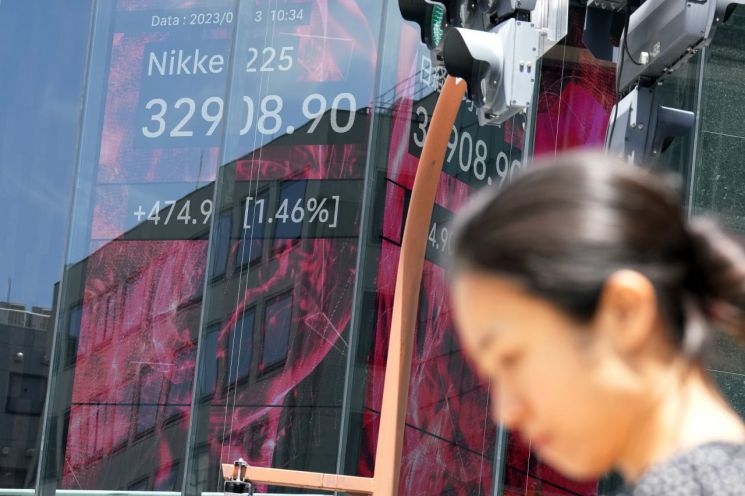
The dramatic rebound in Japan’s stock market was largely influenced by the ‘US-China conflict.’ Expectations that Japan would benefit as a byproduct in the semiconductor sector, where US-China tensions have intensified, lifted the stock market. Japan’s strengths?advanced technology and geopolitical stability?were highlighted during the US-led semiconductor supply chain restructuring, and major companies announced investment plans in Japan.
Foreign investors have maintained a net buying trend since October last year. According to the Tokyo Stock Exchange, foreign investors net purchased Japanese stocks worth 1 trillion yen (about 9 trillion won) in the first week of this month. The net foreign buying amount over the past 10 weeks reached 4.84 trillion yen, far surpassing the highest record (3.34 trillion yen) during the ‘Abenomics rally.’ The worsening international situation is acting as a growth driver for Japan’s stock market.
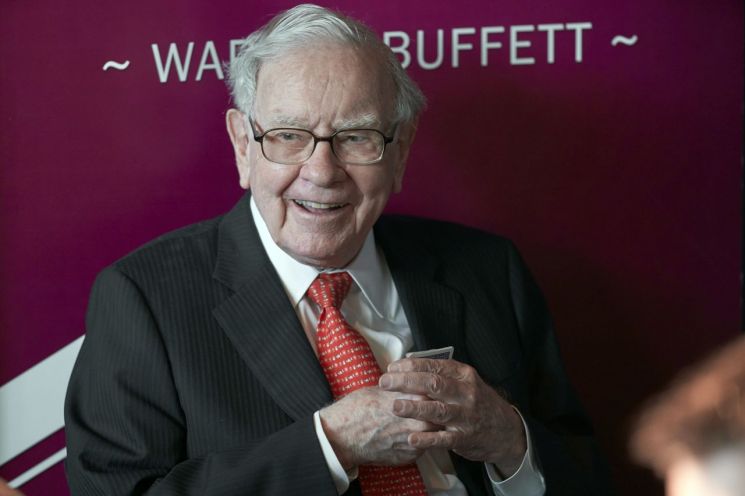
Wall Street is also paying attention to Japan. Warren Buffett, chairman of Berkshire Hathaway, identified Japan as the largest investment destination outside the US. He sold his shares in Taiwan’s TSMC and concentrated on buying shares of Japanese general trading companies such as Mitsubishi, Itochu, and Sumitomo Corporation.
With improving corporate earnings and strengthening fundamentals, there is analysis that Japan’s stock market will not be just a short-term boom. Koji Toda, senior fund manager at Lido Asset Management, said, "The end of deflation in the Japanese economy and a relatively strong investment environment are turning attention to Japanese stocks, which have been undervalued for a long time."
Frozen Chinese Stock Market... Worsening Amid ‘Peak China’ Theory
On the other hand, the Greater China stock markets are severely shaken. Since the outbreak of the Russia-Ukraine war, major indices in the region?the Shanghai Composite Index and the Hang Seng Index?have plunged by 11.44% and 43.56%, respectively. China’s geopolitical position is opposite to that of the US, while it is a strategic partner with Russia, which invaded Ukraine, in anti-US cooperation, increasing volatility.
Foreign investors, who played a major role in boosting the Chinese stock market, have withdrawn funds amid escalating geopolitical conflicts, causing sharp declines in stock prices. According to the Geopolitical Risk Index (GPR) by US Fed economists Dario Caldara and Matteo Iacoviello, China’s GPR index stands at 280.05%, about twice that of the US (122.51%) and Japan (143.3%).

Moreover, the ‘Peak China’ theory?that China’s growth has passed its peak?has intensified capital flight from China. Although expectations for reopening (economic resumption) grew after China abandoned its strict zero-COVID policy at the end of last year, actual economic indicators have shown a downward trend. Both production and consumption indicators have slowed, and youth unemployment rates have hit record highs day after day.
According to China’s National Bureau of Statistics, industrial production in May increased by only 3.5% year-on-year, a significant deterioration from the previous month’s 5.6%. It also fell short of market expectations (3.8%). The unemployment rate remained steady at 5.2% for three consecutive months since March. Notably, the youth (ages 16?24) unemployment rate reached 20.8%, breaking the previous record of 20.4% set the month before.
The real estate market, which was the foundation for China’s high economic growth, is facing a deepening crisis. US investment bank Goldman Sachs stated, "As the downturn in China’s real estate market intensifies, it will continue an ‘L-shaped’ recession for several years," citing demographic demand decline, shifts in government stimulus policy focus, and weakened home-buying ability as reasons. Bloomberg Economics also analyzed that real estate developers, accounting for about 12% of China’s GDP, are at risk of default.
© The Asia Business Daily(www.asiae.co.kr). All rights reserved.
![User Who Sold Erroneously Deposited Bitcoins to Repay Debt and Fund Entertainment... What Did the Supreme Court Decide in 2021? [Legal Issue Check]](https://cwcontent.asiae.co.kr/asiaresize/183/2026020910431234020_1770601391.png)


















