Concerns Raised Over China's Global Electric Vehicle Expansion
"China, Not GM or Toyota, Is the Competitor"
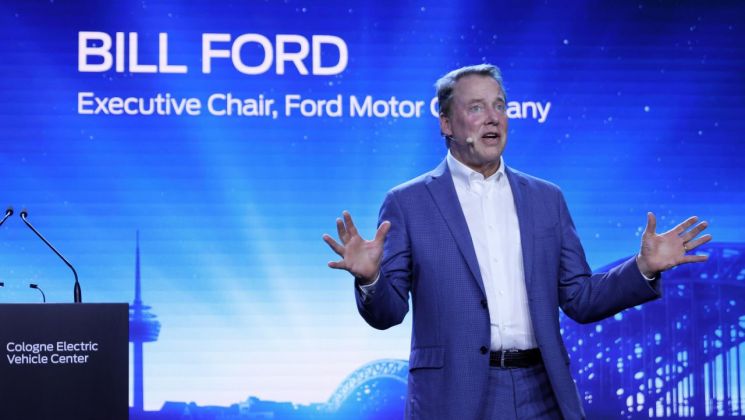
As the United States and China compete in the electric vehicle market, Bill Ford Jr., chairman of the American automaker Ford, expressed the view that the U.S. is not yet ready to compete with China.
According to Bloomberg and other foreign media on the 18th (local time), Ford said in an interview with CNN, "China has developed electric vehicles very quickly in a short period of time and is now mass-producing and exporting them," adding, "Since Chinese electric vehicle companies may enter the U.S. market someday, we need to be prepared."
Ford continued, "We need to be ready to compete with them, but the U.S. is still late in timing and needs more time for full-scale competition."
Jim Farley, CEO of Ford, also stated, "Ford's competitor is no longer GM or Toyota, but China," and evaluated, "China is the strongest player in the electric vehicle market." He analyzed, "For Ford to beat Chinese companies, it needs a unique brand or lower selling prices."
Ford competes with General Motors (GM) for first and second place in total vehicle sales in the U.S., but when it comes to electric vehicles alone, it is lagging behind other companies such as Tesla, GM, Hyundai, and Volkswagen. Moreover, as Ford's chairman expressed concern, Chinese-made electric vehicles are rapidly entering the global market.
Currently, China is regarded as reshaping the global automotive industry. The overseas shipment volume of vehicles produced in China has tripled since 2020. In the first quarter of this year alone, 1,069,000 vehicles were exported, an increase of 58% compared to the first quarter of last year. Last year, overseas shipments reached 2.5 million units, ranking second in the world.
Reflecting this situation, Ford recently appears to be strengthening cooperation with China. Earlier in February, Ford announced plans to build an electric vehicle battery plant in Michigan, USA, in partnership with CATL, China's largest battery company. Approximately $3.5 billion (4.47 trillion KRW) is expected to be invested for this purpose.
Meanwhile, the U.S. government has expressed concerns about cooperation between domestic and Chinese companies, stating that it ultimately would not benefit the American automotive industry. Pete Buttigieg, U.S. Secretary of Transportation, said in a Bloomberg interview on the same day, "The U.S. must take measures to compete with China, which holds an advantage in the electric vehicle battery market," and emphasized, "We need to build refining capabilities for key battery raw materials such as lithium."
© The Asia Business Daily(www.asiae.co.kr). All rights reserved.

















