"No Work-Life Balance" Growing Complaints Among US Employees
Ryu Deoin Chairman: "Semiconductor Industry Requires Passion"
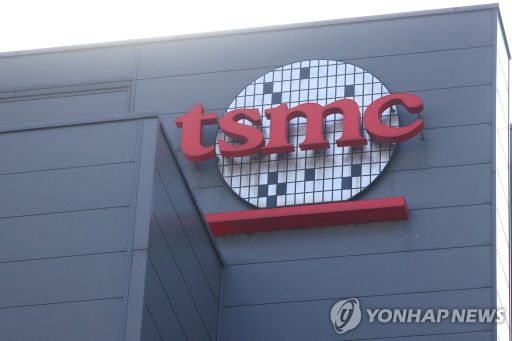
TSMC's U.S. branch is receiving a 'star rating bombardment' from its employees. This is because the company's culture of intense work environments, mandatory overtime, and additional work does not suit American workers.
The U.S. economic media outlet Fortune recently reported that TSMC has been hit with a barrage of low star ratings on the American workplace review website 'Glassdoor.' Currently, the employee recommendation rate at TSMC's U.S. branch is only 27%, in stark contrast to the 85% received by another American semiconductor company, Intel.
Some employees have left direct reviews exposing TSMC's 'harsh' work culture. One anonymous employee claimed, "I couldn't go home for a month and kept sleeping at the office."
Another employee said, "Weekend work is common, and a 12-hour workday is standard," adding, "Work-life balance can be said to be virtually nonexistent." There were also reactions stating, "TSMC is not ready to operate in the U.S."
TSMC management expressed bewilderment at these reactions from American employees.
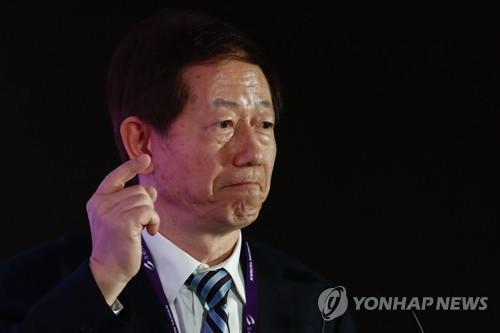
On the 7th (local time), after the shareholders' meeting, TSMC Chairman Liu Deyin stated in a press conference, "Those who are unwilling to work night shifts should not enter the semiconductor industry."
In an interview with another Taiwanese local media outlet, he said, "I am ready to discuss work culture," but added, "only if it aligns with TSMC's core values."
Chairman Liu repeatedly emphasized, "To work in the semiconductor industry, one should not simply aim for a high salary," and "one must be passionate about semiconductors themselves."
Meanwhile, TSMC is establishing two factories in Arizona, USA, for 3-nanometer (nm) and 4nm processes. The first factory is scheduled to begin full operation in 2024, and the second in 2026.
Employees who will work at the U.S. factories are currently undergoing 6 to 12 months of training in Taiwan. This is because it is difficult to recruit engineers in the U.S. with the level of know-how and knowledge required by TSMC.
The media also forecasted, "Due to American employees' negative reviews of the corporate culture, TSMC's talent acquisition may face further setbacks."
Earlier, the U.S. Biden administration passed the 'Chips Act,' securing approximately $50 billion in semiconductor industry subsidies from national funds. With the government's active subsidy policy, many semiconductor companies such as TSMC, Intel, Samsung Electronics, and IBM have planned to build factories and produce semiconductors in the U.S.
However, there are also many skeptical views regarding the U.S. semiconductor strategy. Morris Chang, the founder of TSMC and known as the godfather of Taiwan's semiconductor industry, criticized last year’s U.S. policy as "naive."
He explained, "Building a commercially successful semiconductor industry is not achieved by a single large investment. The semiconductor industry develops rapidly, requires a large workforce, and demands high precision in assembly." He also warned that the much more relaxed American work culture compared to Taiwan, along with various regulations and service costs, would become obstacles.
© The Asia Business Daily(www.asiae.co.kr). All rights reserved.
![Clutching a Stolen Dior Bag, Saying "I Hate Being Poor but Real"... The Grotesque Con of a "Human Knockoff" [Slate]](https://cwcontent.asiae.co.kr/asiaresize/183/2026021902243444107_1771435474.jpg)

















