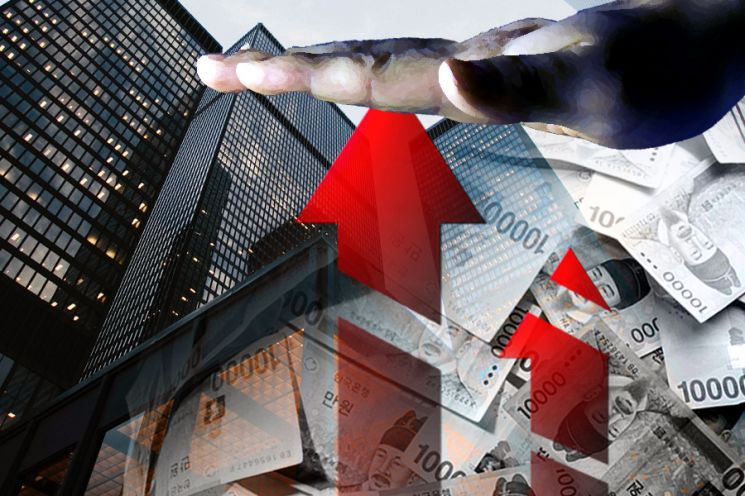
The Bank of Korea explained that when the inflation rate rises by at least 2.0~2.3% or more, households and businesses become more attentive to prices. In such cases, since the inflation expectations of economic agents become unstable, the central bank emphasized that monetary policy should focus on price stability until the inflation rate sufficiently approaches the target level.
In the 'Price Stability Target Operation Status Review' released on the 19th, the Bank of Korea stated, "During periods of high inflation, if current inflation rates and future outlooks are not accurately reflected in wage negotiations or price setting, it can lead to significant losses, thus increasing attention to prices."
According to the Bank of Korea, during periods when the inflation rate is sufficiently low, households and businesses tend not to pay much attention to price conditions when making consumption and investment decisions. Former U.S. Federal Reserve Chairman Alan Greenspan defined price stability as "an environment where the level and volatility of inflation are low enough that households and businesses do not need to pay much attention to inflation in their decision-making processes."
To empirically analyze this phenomenon, the Bank of Korea examined how the price attention of economic agents changes according to the inflation rate level, and then compared how the response of expected inflation to price shocks differs between periods of high and low price attention.
First, estimating the relationship between the frequency of searches for "price," "inflation rate," and "inflation" on Google or Naver and the previous month's Consumer Price Index (CPI) inflation rate (year-on-year), it was found that when the inflation rate exceeds the 2.0~2.3% level, the search volume tends to increase proportionally with the inflation rate.
This is interpreted to mean that when inflation exceeds 2.0~2.3%, public interest in prices increases.
Additionally, using the methodology of Taylor Goodspeed, former Chair of the White House Council of Economic Advisers, the Bank of Korea analyzed changes in price perception errors according to the previous month's CPI inflation rate and found that when the inflation rate rises above 2.6%, perception errors regarding the inflation rate statistically significantly decrease.
The Bank of Korea explained, "This suggests that when the inflation rate exceeds around 2.6%, economic agents' attention to prices increases."
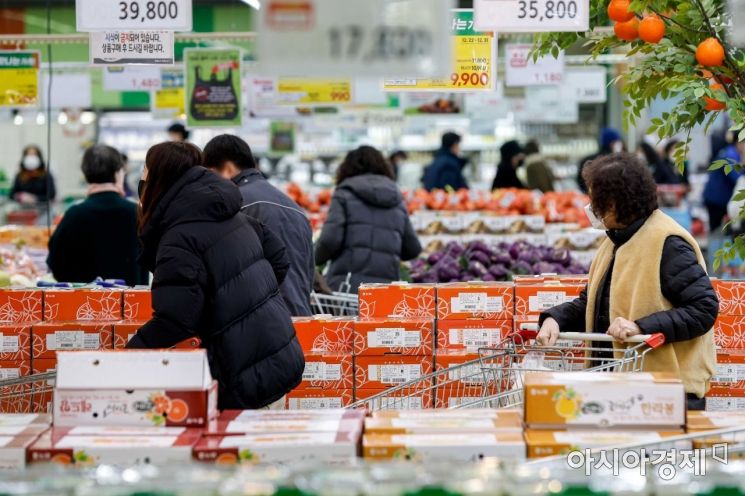
As the inflation rate rises above a certain level, economic agents' attention to prices increases, so price-related information and shocks are immediately reflected in the formation of expectations by economic agents, causing expected inflation to become unstable.
In fact, the Bank of Korea's analysis showed that when the inflation rate exceeds a certain level and price attention increases, the impact of price shocks on expected inflation is greater and lasts longer.
When the inflation rate exceeds the level that stimulates price attention, the response of expected inflation to price shocks was significantly larger for 2 to 3 quarters compared to periods of low price attention, and the period during which significant responses appeared was estimated to be about 3 to 4 quarters longer.
Based on these analysis results, the Bank of Korea explained, "The central bank needs to focus on price stability until there is confidence that inflation will converge to the price target in situations where the upward trend in prices is expected to exceed the target level for a considerable period."
© The Asia Business Daily(www.asiae.co.kr). All rights reserved.


















