Experience-Only Stores Without Selling Products
Most Purchases Made Through Online Orders Due to COVID-19
In Japan, so-called "stores that don't sell," where customers can only experience products before buying without actual in-store sales, are gaining popularity. These experiential stores are increasing based on the strategy that not burdening customers with the pressure to purchase can actually stimulate consumer sentiment. As cases of customers trying products at experiential stores and then purchasing them online have significantly increased, consulting inquiries for opening such non-selling stores are flooding in.
On the 19th, Nihon Keizai Shimbun (Nikkei) reported that Beta Japan, which handles experiential stores, has recently been focusing on corporate consulting business. With the rapidly growing popularity of Beta Japan's "stores that don't sell," the company plans to create new revenue by selling this know-how to external companies.
Accordingly, Beta Japan launched a service called "BuyBeta." BuyBeta provides companies that want experiential stores with software (SW) to manage data and tablet PCs, and also supports staff hospitality training, store design, and consulting on customer attraction events. This year, they plan to transfer this know-how to 30 stores.
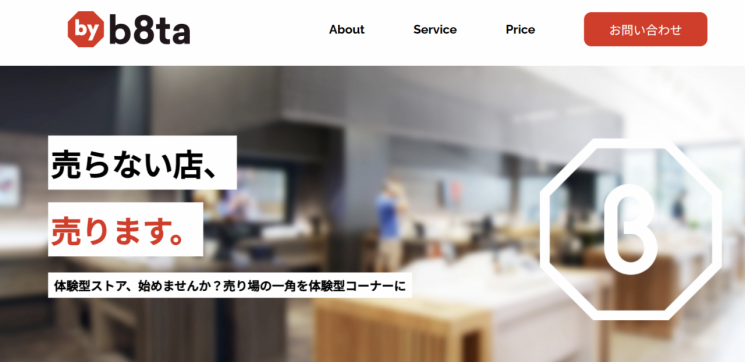 Japan Baibeta homepage. It introduces experiential store consulting with the phrase "Selling a store that does not sell." (Photo by Japan Baibeta homepage)
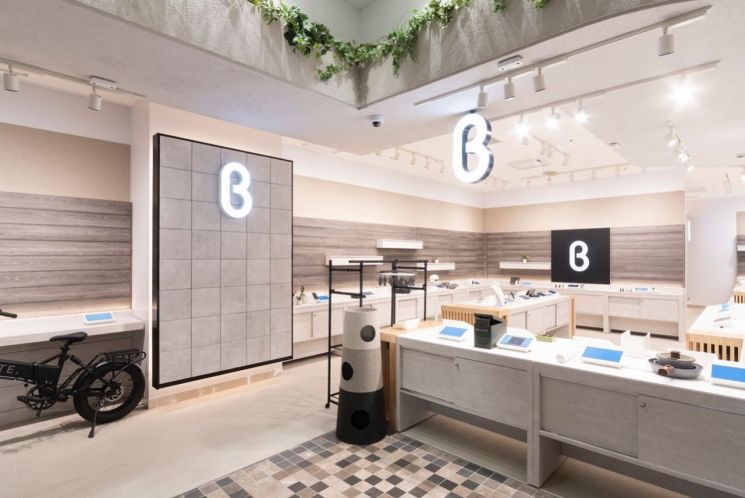
Beta Japan, which entered Japan from the United States in 2020, introduced the "store that doesn't sell," where home appliances or cosmetics are not sold but only experienced. Beta has opened four branches in Japan, including Tokyo and Osaka, and has rented parts of experiential stores to other companies, collecting participation fees under the name of rent. Recently, requests and consultations for external companies to enter have increased sharply, prompting consideration of such services, Nikkei reported.
In April, Nissan Motor Koriyama branch created a corner to experience new products with the help of BuyBeta. They exhibited small car vacuum cleaners, child car seats, and portable disaster prevention goods. Staff at this location explain features using tablet PCs, which analyze and record the gender and age group of people standing in front of products through built-in cameras using artificial intelligence (AI). Purchasing displayed products is not possible here; only experiencing is allowed. For customers wishing to purchase, the store guides them on how to buy online.
During the same period, the cosmetics experiential store "Yuitsu by My Gakuya," which opened in Nagoya, requested staff training from BuyBeta before opening. BuyBeta trained staff to alternate between "limited questions," which customers can answer with "yes" or "no," and "expanded questions," which allow free responses, during customer interactions, and also conveyed methods for setting goals for experiential stores.
Takuji Kitagawa, CEO of Beta Japan, stated, "Our unique strength lies in creating an environment where customers are not pressured to purchase, thereby drawing out their true feelings." CEO Kitagawa also plans to offer a service dispatching Beta Japan staff to consulting stores in the future.
The background to the popularity of stores that don't sell includes the COVID-19 pandemic. As people preferred online transactions over purchasing goods at offline stores, the e-commerce market rapidly grew. According to the Ministry of Economy, Trade and Industry, the e-commerce market size in 2021 was about 13 trillion yen (117 trillion won), a 30% increase compared to 2019 before COVID-19. As the tendency to purchase products online strengthened, companies maximized the differentiation of offline stores through "stores that don't sell."
Nikkei reported, "In an era where product purchases are sufficiently handled by e-commerce, offline stores need to seek the value of experiences that can only be had there."
© The Asia Business Daily(www.asiae.co.kr). All rights reserved.


















