Realizing Investment Expansion While Securing Government Subsidies
"Bold Expansion Bets" Despite Performance Challenges
U.S. semiconductor company Intel is pouring out investment news worldwide. The business expansion and increased investment efforts pursued since the return of CEO Pat Gelsinger in 2021 are materializing as government subsidy negotiations conclude. Intel, based in Arizona, U.S., is continuing bold bets in Poland, Israel, and Germany.
According to Bloomberg and others on the 18th (local time), Israeli Prime Minister Benjamin Netanyahu announced that Intel will invest $25 billion (about 32 trillion won) to build a semiconductor factory in Israel. Prime Minister Netanyahu described it as "the largest foreign investment ever" and "a tremendous achievement for the Israeli economy."
Intel also confirmed the investment, stating it is "to expand production capacity within Israel." However, specific details such as the investment scale or targets were not mentioned. Although Prime Minister Netanyahu cited the investment amount as $25 billion, it is reported that this includes the $10 billion Intel announced earlier in 2021.
Intel has been operating in Israel since 1974. It has research and development (R&D) centers in Haifa, Jerusalem, Yakum, and Petah Tikva. In Kiryat Gat in southern Israel, Intel has a factory described as a "state-of-the-art production facility," and the Jerusalem facility houses the Mobileye development center responsible for the automotive business.
Bloomberg, citing sources, reported that Intel's new investment in Israel is likely to be used for wafer manufacturing. The new factory is expected to be completed by 2027 and operate at least until 2035. The Israeli government expects this investment to create thousands of additional jobs beyond the 12,000 employees Intel currently has.
This news of Intel's investment in Israel came just two days after the announcement of its investment decision in Poland. Earlier, on the 16th, Intel announced it would invest up to $4.6 billion to build a semiconductor factory in Poland. The factory near Wrocław, Poland, will handle semiconductor reprocessing, packaging, and testing for back-end processes and is scheduled to start operations in 2027.
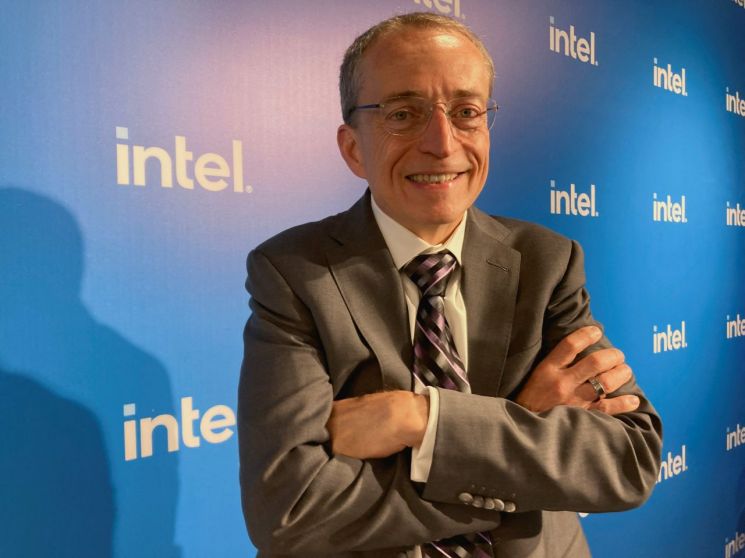
CEO Gelsinger said, "Poland is ideal for collaborating with Intel's European bases in Germany and Ireland," adding, "It is less costly compared to other manufacturing locations worldwide."
News of Intel's investment in Germany is also expected to be announced soon. Intel owns a large semiconductor factory in Magdeburg and plans to invest an additional 17 billion euros to expand production capacity. Intel has been negotiating subsidies with the German government, and recent local reports suggest that both sides are likely to agree to increase the previously agreed subsidy from 6.8 billion euros to 9.9 billion euros.
Bloomberg expects the announcement of German subsidy support for Intel's factory investment to be made as early as the 19th. German Chancellor Olaf Scholz is scheduled to meet CEO Gelsinger in Berlin on the 19th.
Since CEO Gelsinger's appointment in 2021, Intel has been pouring out investments. Declaring a re-entry into the foundry business, Gelsinger announced investments in Arizona, New Mexico, and Oregon in line with the Biden administration's semiconductor dominance efforts. Subsequently, Intel decided to build factories and R&D centers outside the U.S., in Europe and the Middle East. In March last year, Intel announced a massive investment of 80 billion euros over the next decade for semiconductor production and R&D in Europe.
Recently, Intel announced the establishment of a data center semiconductor research institute in Seoul.
Bloomberg evaluated, "CEO Gelsinger is making bold expansion bets while the legendary chipmaker Intel is facing difficulties." Once dominant in the semiconductor market based on PC chips, Intel has not been prominent in the foundry (semiconductor contract manufacturing) sector.
Intel recorded its largest quarterly loss in the first quarter of this year. This was due to expanded production and investment in manufacturing plants and the failure of PC chip sales to recover. Intel is also likely to record a loss in the second quarter of this year.
Bloomberg also mentioned U.S. semiconductor company Micron, which is also pouring out investments alongside Intel, stating, "Companies are utilizing foreign government subsidies aimed at stabilizing semiconductor supply within their own territories and attracting jobs. (These investments) are the fruits of diplomacy."
© The Asia Business Daily(www.asiae.co.kr). All rights reserved.
![User Who Sold Erroneously Deposited Bitcoins to Repay Debt and Fund Entertainment... What Did the Supreme Court Decide in 2021? [Legal Issue Check]](https://cwcontent.asiae.co.kr/asiaresize/183/2026020910431234020_1770601391.png)
















