Kia's Software Subscription Service Marketing Strategy
Conservative Approach Based on Competitors' Negative Cases
Benefits for Consumers in the SDV Era Software Subscription Service
Price Drop of Empty Cars...Automobile Industry Ponders Cost Reduction Measures
Kia has established a conservative internal policy to reduce consumer resistance to software subscription services. The strategy is to offer subscription products only for certain convenience features or services that allow users to express personal preferences and individuality.
At the Kia EV9 working-level meeting held on the 13th, a representative from the domestic product team stated, "From the customer's perspective, we will focus on commercializing some customizable or on-demand features and improvements." He added, "We will not commercialize basic convenience and safety specifications as subscription products to avoid causing inconvenience to customers."
In May of this year, Kia launched the flagship electric sport utility vehicle (SUV) EV9 and officially started the 'FoD (Features on Demand)' service, which allows customers to selectively purchase desired software (SW) features. The service began with three products: remote smart parking assist, grille lighting patterns, and video/music streaming services, with plans to gradually increase the number of products.
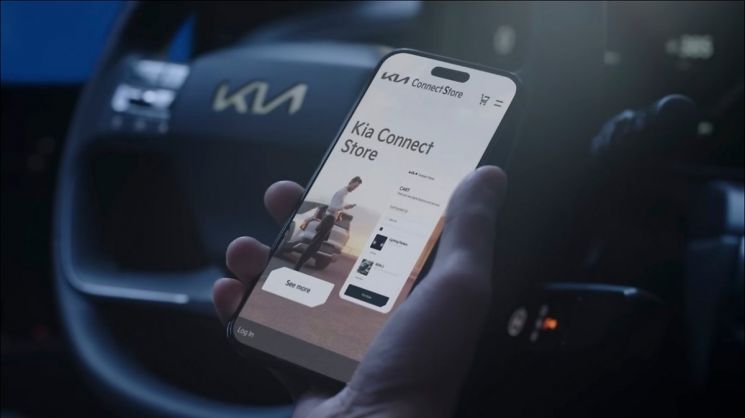
Reasons Why SW Subscription Services Spark Consumer Resistance
The reason Kia cautiously entered the subscription service market with a limited number of products is due to referencing negative cases from competitors. Imported car manufacturers such as Tesla, Mercedes-Benz, and BMW have already implemented various SW subscription services, and during this process, they faced public backlash.
Mercedes-Benz launched a subscription product in Korea that costs 500,000 KRW per year, which expands the rear-wheel steering angle up to 10 degrees. Last year, BMW announced plans to charge a monthly subscription fee for heated seats and steering wheels, which drew consumer complaints. When negative public opinion was detected among domestic consumers who consider heated and cooling seats essential, BMW quickly clarified that this applied only to Europe.
The reason these subscription products sparked consumer resistance is the perception that high-end hardware (HW) features are locked behind software paywalls. For example, a vehicle purchased with rear-wheel steering capable of 10 degrees is limited to 4.5 degrees, and activation requires additional payment. The same applies to heated seats. It is difficult for domestic consumers to accept marketing that charges extra to activate heating in seats that already have heating installed.
Consumers of Hyundai and Kia vehicles, which offer various vehicle options, have even stronger resistance to SW subscriptions. For the Kia EV9 (4WD Earth trim), the additional price for full HW options reaches 8.8 million KRW. Having already paid nearly 10 million KRW for options, adding SW subscription fees inevitably causes discomfort among consumers.
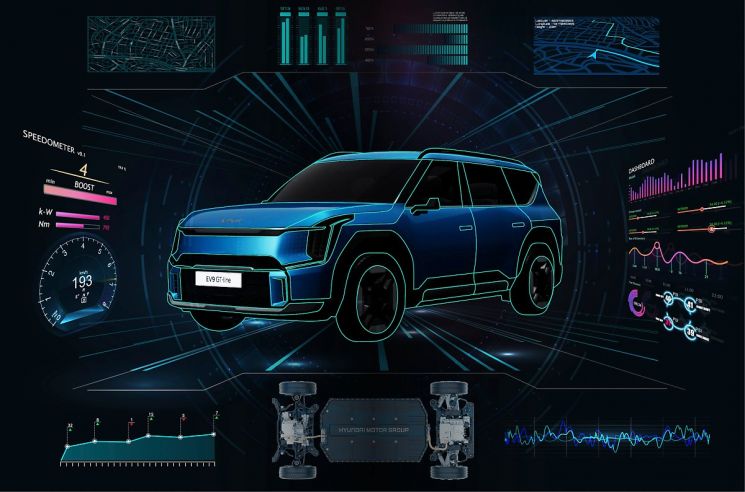
In the SDV Era, 'Base Model' Prices Will Decrease
So, does the SW subscription service offer any real benefits to consumers? Experts analyze that in the full-fledged SDV (Software-Defined Vehicle) era, subscription services will actually benefit consumers.
HW options are decided once at the time of delivery and cannot be changed, but SW subscriptions allow consumers to try only the desired features first and cancel later. However, for consumers to truly benefit, the price of the 'base model' must decrease. Only then will there be no burden in paying additional SW subscription fees.
Currently, automakers produce vehicles customized according to HW options. When the SDV era arrives, shifting to SW-centric options, all base model specifications can be delivered uniformly. High-level SW implementation requires enhanced vehicle brain performance, including automotive semiconductors and various sensors. However, economies of scale from bulk purchasing and production line unification can reduce costs. Additionally, individual options that were previously difficult to mass-produce due to lack of popularity may be implemented in SW form.
Professor Yoo Seung-han of Korea University of Technology and Education said, "With the activation of SW subscription services, cars will become a platform like smartphones," adding, "Consumers will gain higher utility, and manufacturers will benefit from improved profitability, creating a win-win opportunity."
© The Asia Business Daily(www.asiae.co.kr). All rights reserved.
![Clutching a Stolen Dior Bag, Saying "I Hate Being Poor but Real"... The Grotesque Con of a "Human Knockoff" [Slate]](https://cwcontent.asiae.co.kr/asiaresize/183/2026021902243444107_1771435474.jpg)

















